
An Australian parliamentary committee has recommended the federal government adopt the U.N.’s frameworks on dealing with climate change misinformation.
On March 24, the Greens and Labor-led Select Committee on Information Integrity on Climate Change and Energy released its final report—along with three dissenting reports—after months of submissions and oftentimes contentious public debate.
The report, Integrity Gap: Restoring Trust in the Climate and Energy Debate, recommended the Australian government “support and adopt the United Nations Global Principles on Information Integrity and work to coordinate the application of these principles across government.”
The Principles cover areas like incentivising compliance from tech and ad industries, and supporting public interest journalism.
The second recommendation called for the official endorsement of the UNESCO Declaration on Information Integrity on Climate Change launched last year, which calls for action against the alleged impact of “disinformation, misinformation, denialism, deliberate attacks on environmental journalists, defenders, scientists, researchers and other public voices …”
Of the 21 recommendations, others suggest better media literacy, supporting the National Health and Medical Research Council to research the effects of wind turbines on human health, scrutiny into corporate interests that could “interfere with educational integrity.”
One recommendation calls for regulation aimed at identifying “psychosocial harms” from climate misinformation.
‘Climate Obstruction’ Claims
The issue of “climate obstruction” was noted in the report several times, where contrary public opinion or policies is deemed to hinder climate action.
“Perhaps the most direct impact of false and misleading information is that it delays energy projects, Australia’s clean energy transition, and action on climate change, confusing the public’s understanding of climate change as well as reducing support for climate policy,” the report noted.
The report also claimed differing opinions on climate change led to public safety risks.
“There’s a lot of aggressive rhetoric within those spheres,” said Caroline Gardam, a digital media expert at the Queensland University of Technology.
“Some of that is, ‘We will not consent.’ That general conspiratorial milieu—it’s described as that—poses a threat to society in the fact that that is where there are conversations around anti-government, anti-authority and anti-science themes.
“Particularly, this is within a very small tail of what we see online.”
Right-Leaning Senators Say Climate Science Should be Open to Challenge
The report’s release came with its detractors with three senators from the right side of politics objecting to its conclusions.
One Nation Senator Malcolm Roberts argued there was not enough objective data provided to him on the effects of climate change.
“[Energy] Minister Chris Bowen’s department could not provide me with scientific proof climate is changing,” he wrote.
“Instead, officers deferred to the U.N. Intergovernmental Panel on Climate Change.”

Roberts said some of the Panel’s reports relied on assumptions including “likelihoods” and “confidence levels” in its findings, rather than statistical rigour.
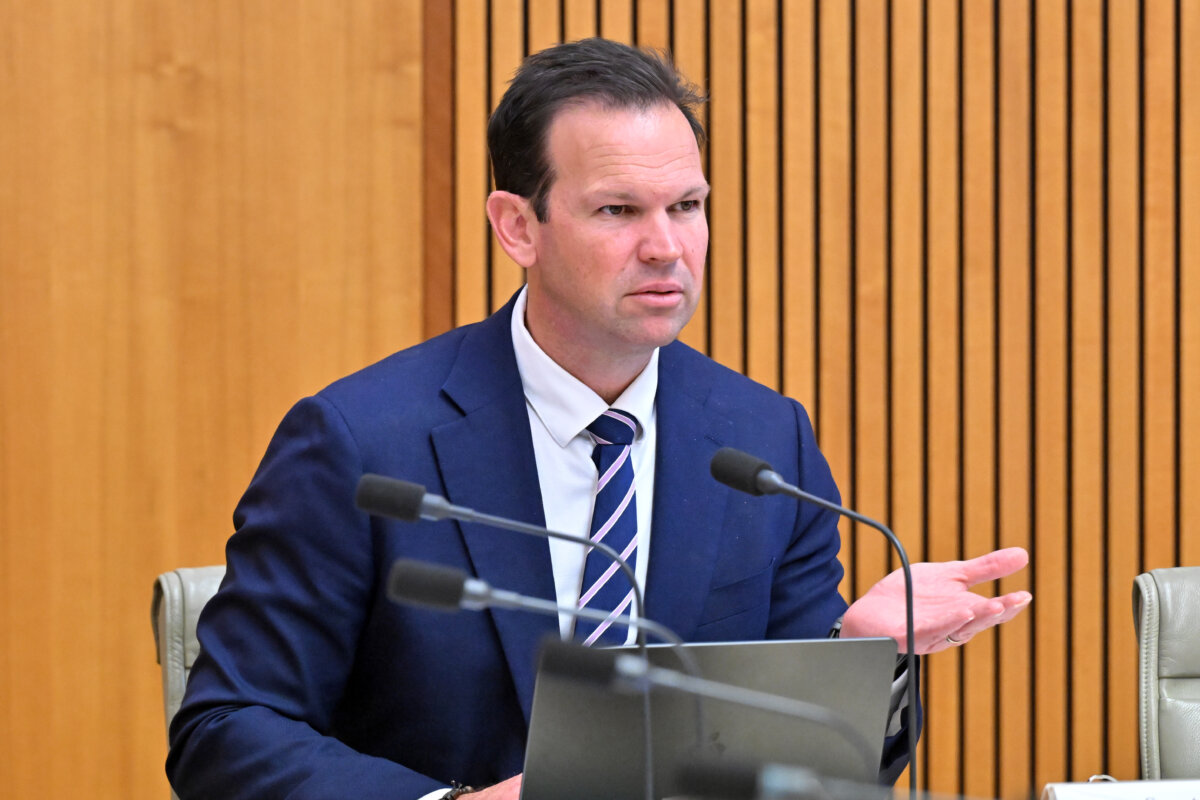
Nationals Party Leader Matt Canavan questioned the purpose of the Committee, accusing it of silencing criticism of climate science.
“This inquiry was conducted on the premise that there are certain inviolable truths about the workings of our planet, the precise impact of the burning of fossil fuels and even the cost of different energy technologies,” Canavan wrote.
“Apart from a naïve repetition of the tired phrase ‘trust the science,’ there was little interest in understanding what science is.”
He also pointed to philosopher Thomas Kuhn’s belief that science is constantly evolving.
“In any one time, there are a set of agreed principles established through the consensus of the scientific community. However, as anomalies emerge in the prevailing theory, new paradigms emerge to challenge the existing consensus.
“Eventually, there is a scientific revolution that replaces the existing theories with a new understanding. This is most starkly seen in the progression from Newtonian to relativistic physics in the early 20th century.”
Meanwhile, United Australia Party Senator Ralph Babet said disagreement with climate orthodoxy should be encouraged, not called misinformation.
“There is no single incontestable truth about the scale, scope, or threat of climate change,” he wrote.
“The Australian public has the right to hear a range of views, including from those who believe the danger is overstated.”
Meanwhile, the Institute of Public Affairs (IPA) outlined concerns with Recommendation 11 from the report around dealing with “psychosocial harms.”
“The term ‘psychosocial harms’ is deliberately vague,” said Executive Director Scott Hargreaves, in a statement.
“Subjective tests of harm are contrary to the rule of law, and inflated notions of psychological harm are not and should never be justifications for overriding the fundamental principles of free speech.”
Labor Senators Say ‘Fringe Claims’ a Threat to Society
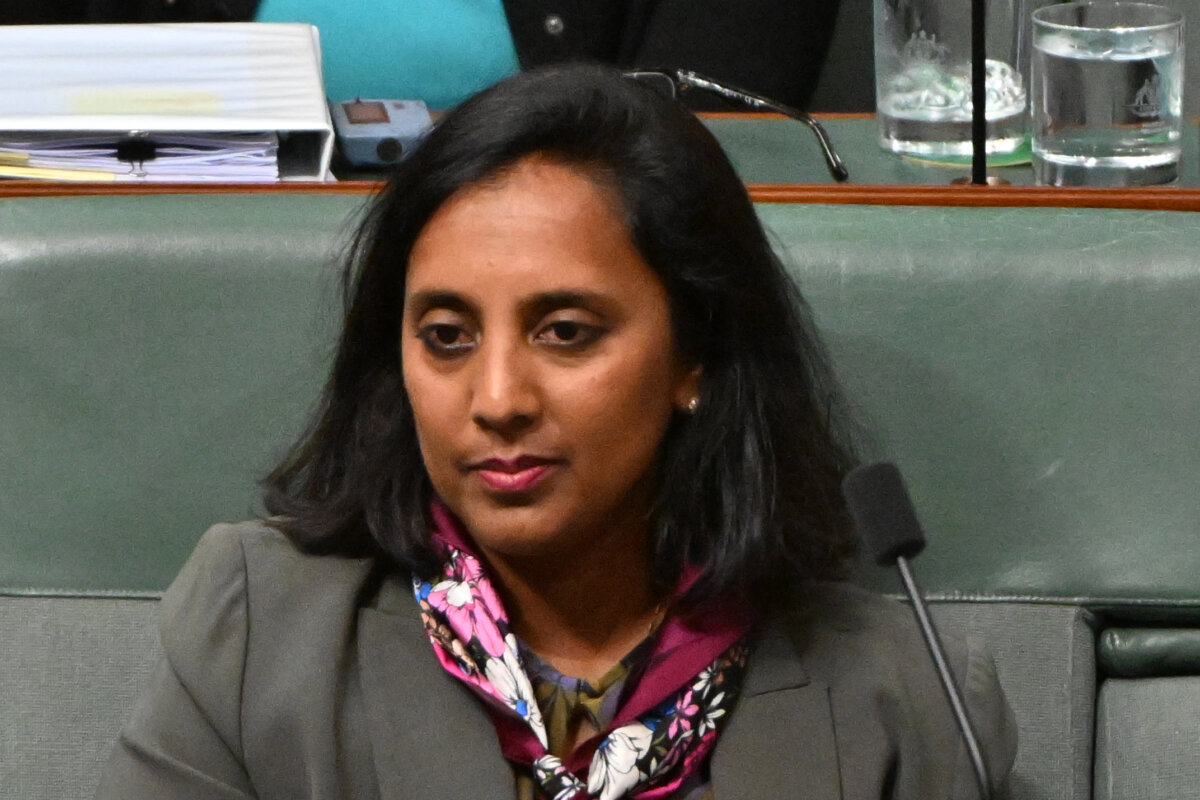
However, Victorian Labor Senators Michelle Ananda-Rajah and Lisa Darmanin published an additional statement to the Committee emphasising that “false and misleading narratives” were a threat and could “sow division and doubt, sometimes leading to outright hostility”.
“Greater transparency aided by the amplification of trusted local voices and researchers is for now, the most effective response to threats to climate information integrity,” they wrote.
“This report highlights a playbook featuring a variety of actors who attack credible voices like researchers and scientists or farmers with lived experience while propagating dubious or fringe claims against renewables. ”
 Friends Read Free
Copy
Facebook
Tweet
Friends Read Free
Copy
Facebook
Tweet