
As U.S. President Donald Trump ratchets up pressure on Venezuelan socialist leader Nicolás Maduro, Latin America’s response has been a mix of wary and welcoming.
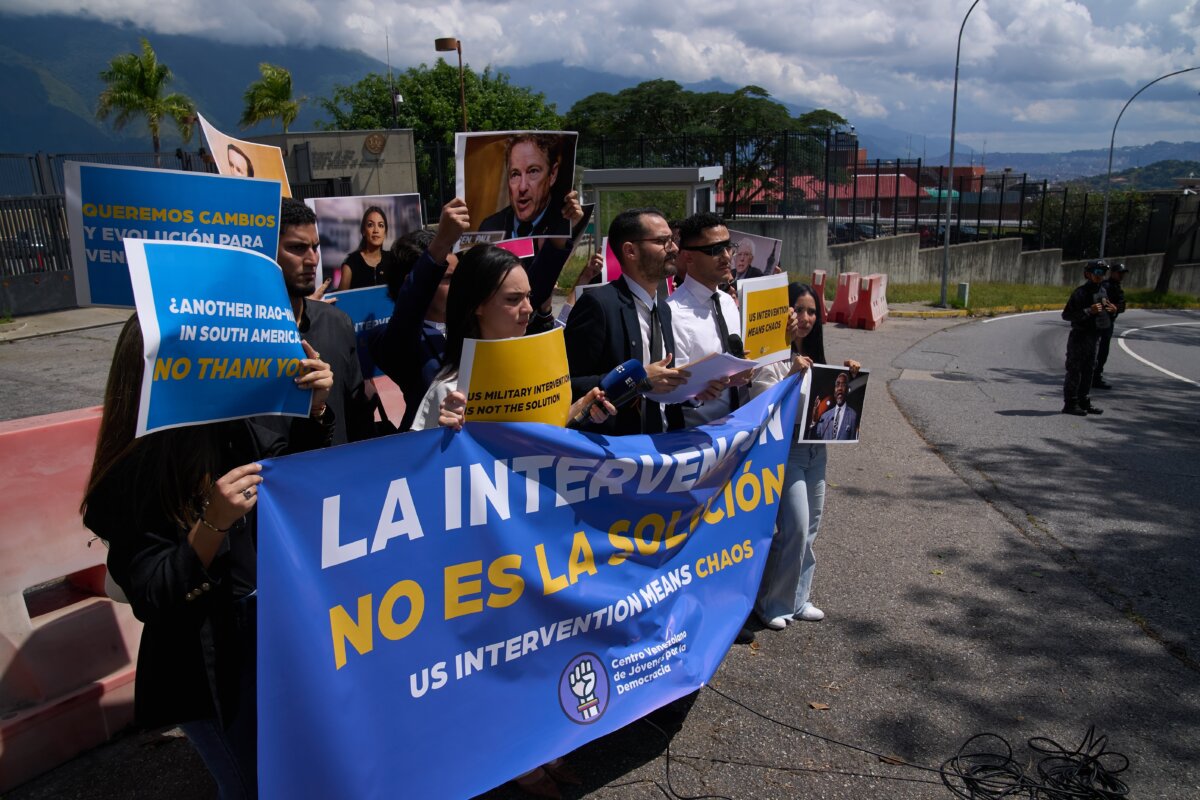
Brazil, Colombia, and Mexico have opposed U.S. intervention, while Argentina and El Salvador have expressed support for it. Meanwhile, analysts say Venezuela may benefit from Trump’s intervention, although the shadow of past U.S. military interference in the region looms large for many.
The long-strained relationship between the two nations escalated in July after the U.S. Treasury Department sanctioned Venezuela’s Cartel de los Soles—the Cartel of the Suns—as a Specially Designated Global Terrorist. The Treasury Department further accused Maduro, other members of his administration, and the Venezuelan military of directly assisting the cartel in trafficking narcotics to the United States.
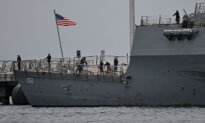
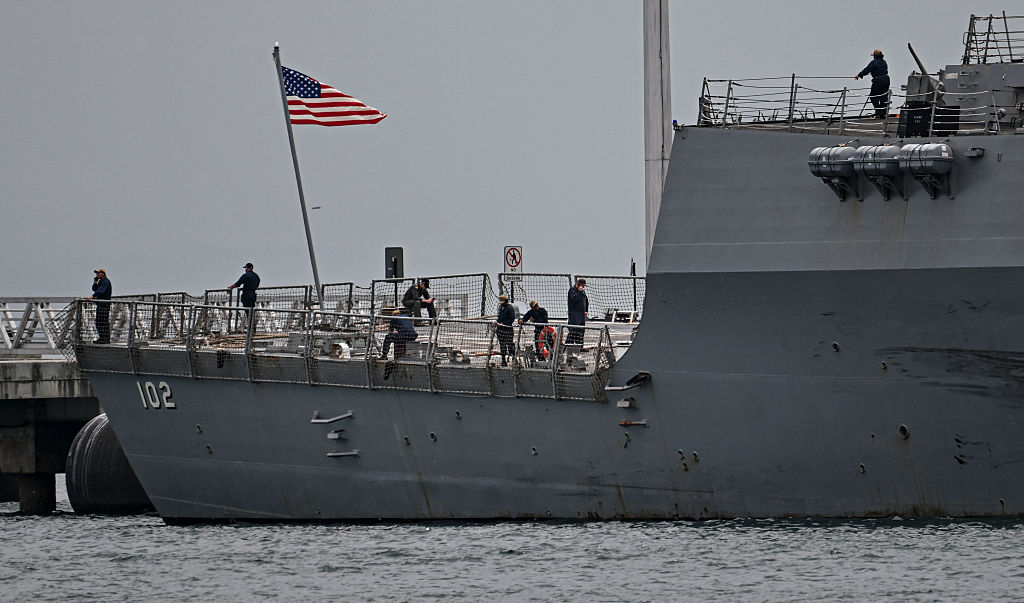
Since then, U.S. military strikes on cartel-operated boats have been carried out close to the South American nation as the United States continues to strengthen its military posture in the Caribbean to combat narco-terrorism. The United States on Nov. 24 formally designated Cartel de Los Soles as a Foreign Terrorist Organization.
Maduro’s regime has denied any involvement with narco-trafficking and has denounced the recent U.S. threats and military maneuvers.
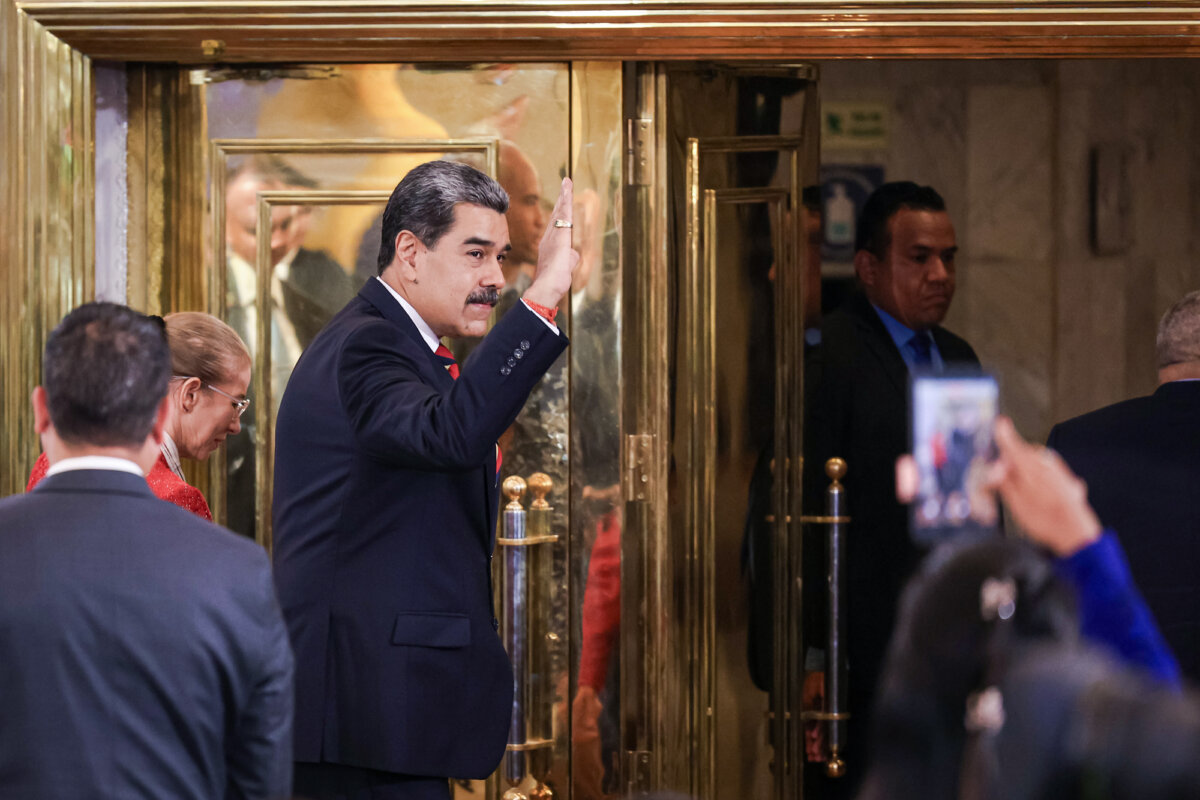
The embattled Venezuelan leader—who has faced multiple accusations of election fraud after he claimed victory in the 2024 election—told supporters at a public rally in Caracas that their nation is at a “decisive juncture for its existence” as a republic and declared that “failure is not an option.”
“There are no excuses for anyone, whether civilian, political, military or police,” Maduro said, when their country “demands the greatest effort and sacrifice.”
From the Military Academy at Fort Tiuna, the Venezuelan head of state declared, “If the homeland calls, the homeland will have our lives, if necessary.”
Support and Opposition
Some regional analysts say there could be long-term benefits from an escalation between the United States and Venezuela, as long as Maduro leaves office as a result.
“If those tensions lead to an attack, invasion, or military intervention, then I think we can only expect positive outcomes for Venezuela and the region,” Antonio Saravia, professor of economics and director of the Center for the Study of Economics and Liberty at Mercer University, told The Epoch Times.
Saravia pointed to the decades of economic devastation Venezuela has suffered under socialist dictator Hugo Chavez and Maduro, a protégé of Chavez, which he said has “submerged its people into abject poverty.”
When a reporter asked Trump on Nov. 17 whether he’d rule out sending troops to Venezuela, the president responded, “No, I don’t rule out that. I don’t rule out anything.”
Bolivian-based political analyst Diego Hernandez said regional opinions are divided on U.S. involvement.
“General sentiment in the region falls into two camps, and it largely depends on a couple of factors: How they view Trump, and how U.S. actions relate to the Monroe Doctrine,” he told The Epoch Times.
Named after U.S. President James Monroe, the doctrine has been a guiding principle for U.S. policy in the Western Hemisphere since its inception in 1823. It was meant to limit foreign interference in the Americas, including any further colonization or “puppet monarchs.”
Expanded in 1904 under President Theodore Roosevelt, the Monroe Doctrine was updated to justify the United States’ acting as an “international police power” to curb “chronic wrongdoing,” leaving the door open for interpretation.
The leaders of Brazil, Colombia, and Mexico have openly denounced the U.S. airstrikes in the Caribbean and any attempts to strong-arm the Maduro regime.
In South America’s largest democracy, Brazilian President Luis Inácio Lula da Silva opposed “foreign intervention” during an event at the Itamaraty Palace in Brasília, claiming that U.S. actions could cause more harm than good.
He also criticized foreign military actions on Nov. 9 during a speech in the Colombian city of Santa Marta.
“The threat of the use of military force has once again become part of everyday life in Latin America and the Caribbean,” he said. “Old rhetorical maneuvers are being recycled to justify illegal interventions.”
In Colombia, Petro was initially one of the loudest critics of the U.S. military strikes on narco-trafficking vessels in the Caribbean.
Petro’s tone has softened more recently. During an exclusive interview with CNN on Nov. 25, he said that although his country doesn’t recognize Maduro as a drug trafficker, a “lack of democracy and dialogue” was part of the problem on Venezuela’s end.
Mexican President Claudia Sheinbaum said her government supports the “self-determination of peoples and no interference and invasion.”
Meanwhile, the governments of El Salvador and Argentina have expressed support for the United States’ actions.
In August, the administration of Argentine President Javier Milei declared Venezuela’s Cartel of the Suns a terrorist organization, and Salvadoran President Nayib Bukele has been working with the Trump administration to incarcerate illegal immigrants who were repatriated from the United States. El Salvador is also cooperating with the U.S. military on a multinational support operation in Haiti.
Hernandez said there’s a growing “pro-Trump” sentiment in Latin American countries, in politics, and within the general public.
“There’s an increasing number of Latinos [in South America] who aren’t opposed to an increased U.S. presence in the region,” he said.
Another analyst said military tactics to curb narco-trafficking in the Caribbean near Venezuela could be short-lived, given the deeply rooted infrastructure of cartels within the country.
“Those who favor the U.S. intervention probably overestimate the long-term impact the U.S. strikes can have in curbing drug trafficking flows, as they ultimately target one of the last links in the chain,” Tiziano Breda, a senior Latin America analyst for the Armed Conflict Location & Event Data group, told The Epoch Times.
From Riches to Rags
In 2001, Venezuela was recognized by the World Economic Forum as the richest country in South America. Before Chavez took power at the end of the 1990s, Venezuela had one of the most established democracies in Latin America.
“Just look at how Venezuela was before Chavismo took hold,” Hernandez said. “It was one of the richest, nicest countries in the region. There’s no question that it, and the rest of Latin America, could benefit from U.S. involvement.”
The Economics Observatory stated that Venezuelan living standards plummeted by 74 percent between 2013 and 2023, making it the fifth-largest drop in living standards in modern economic history.
Under Chavez, while the economy was booming, spending still outpaced revenue, as the government ran large fiscal deficits, according to the Economics Observatory. To continue financing this policy, officials raised external debt six times higher, resulting in $100 billion in repayment obligations. That’s when the country became more reliant on the central bank to print more money, leading to runaway inflation.
Beyond economics, Saravia said U.S. intervention could give Venezuela a chance to recover its democracy.
“More than 1,000 political prisoners and many more exiles are testament of the shameless abuse of Maduro and his friends,” he said.
Maduro’s regime has for years faced accusations of human rights abuses and opposition suppression.
The Canadian government estimates that about 8 million Venezuelans have fled the country under the Maduro regime since 2015. Twenty million live in “multidimensional poverty” and lack access to essential goods and services such as food and medicine, according to watchdog organization Human Rights Watch.
 Friends Read Free
Copy
Facebook
Tweet
Friends Read Free
Copy
Facebook
Tweet