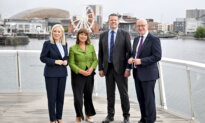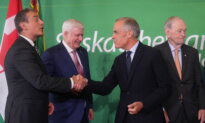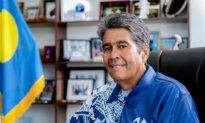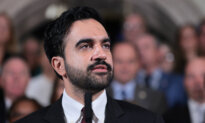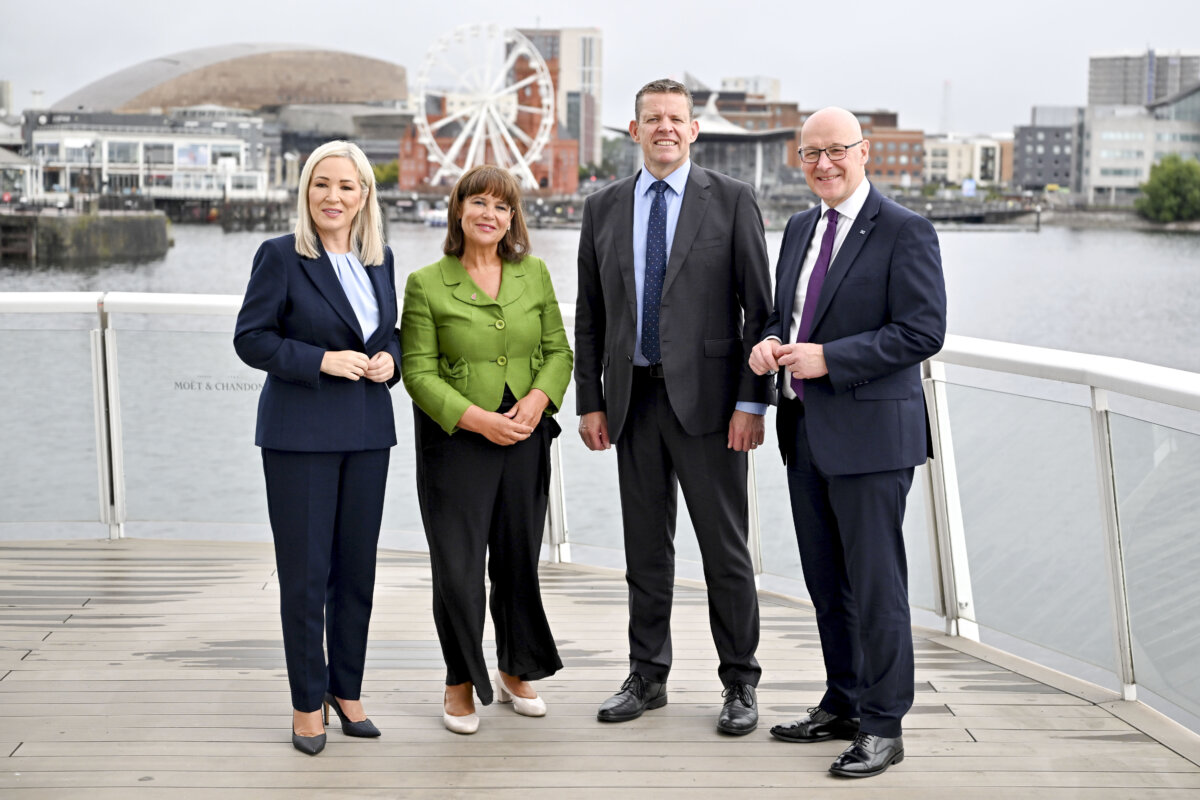

The nationalist first ministers of Wales, Scotland, and Northern Ireland met on Monday to call for referendums on leaving the United Kingdom, saying that “Westminster’s time is coming to an end.”
For the first time since modern devolution began in 1999, the three countries all have first ministers who favor leaving the four-nation union and breaking away from the Westminster government currently led by British Prime Minister Andy Burnham.
The leaders from Wales’ Plaid Cymru, the Scottish Nationalist Party (SNP) and Northern Ireland’s Sinn Féin signed a memorandum of understanding on Monday, which said that no Westminster government had the right to “block democracy.”
The meeting followed U.S. President Donald Trump’s comments over the weekend about the possibility of a unified Ireland.
At a joint press conference, Scottish First Minister John Swinney and Northern Ireland First Minister Michelle O’Neill both called for independence referendums, while Welsh First Minister Rhun ap Iorwerth did not lay out a timetable for one in his country.
‘An Inalienable Right’
SNP leader Swinney said that the day marked a “pivotal moment in the constitutional journey of the United Kingdom,” adding that the principle of self-determination “is an inalienable right.”
Swinney described Burnham as the “last prime minister of the United Kingdom.”
“Because the people of Scotland, if given the choice of independence in a referendum, will take that choice,” Swinney said.
In a 2014 independence referendum, Scots voted against leaving the union by 55 percent to 44 percent.
The three leaders met in the Welsh capital, Cardiff, as representatives of their parties rather than in their capacities as first ministers —likely because of the delicate power-sharing arrangement in Northern Ireland between the nationalists and the unionists. Sinn Féin President Mary Lou McDonald also attended.
“For people watching across these islands—for people watching around the world—there could be no clearer sign that Westminster’s time is coming to an end,” the memorandum of understanding stated.
“No Westminster government has the right to block democracy or undermine the principle that our people will decide their own future.
“We recognize that our parties have different constitutional positions and that each nation will determine its own future in its own way and in its own time.”
Elections in May saw Plaid take control of the Welsh government for the first time, with Labour trailing third behind Reform, while the SNP retained power in Holyrood, comfortably ahead of Labour and Reform.
Northern Ireland Tensions Persist
Northern Ireland was partitioned and remained part of the UK when Ireland won independence from Britain more than a century ago, with tensions leading to the decades-long period of sectarian violence known as the Troubles. While the Good Friday Agreement of 1998 has led to peace, tensions persist.
Sinn Féin resumed its power-sharing role with the unionists at Stormont in 2024 after a two-year hiatus due to post-Brexit disagreements with them.
Trump said over the weekend that he would “love to see” a reunified Ireland during a visit to his golf course, which was hosting the Irish Open.
Plaid has ruled out an independence referendum before the next election for the Welsh Parliament, the Senedd, due in 2030.
Ap Iorwerth said at the press conference that there is a “growing recognition that Westminster is not working” and that “power genuinely needs to be brought closer to people and communities.”
“Wales should have the power, the resources, the fair treatment we need as a nation to build the future our people deserve,” he said.
Sinn Féin’s McDonald labeled the meeting “historic”, saying: “We have the right to a referendum. We have the right to decide our future.”
“We will not accept or tolerate any prime minister telling us that right is off the table,” she said.
Northern Ireland’s first minister, O’Neill, said all three nations were “distinctively different” and had unique priorities, but she said the “common cause here is that Westminster does not and will never serve our people well.”
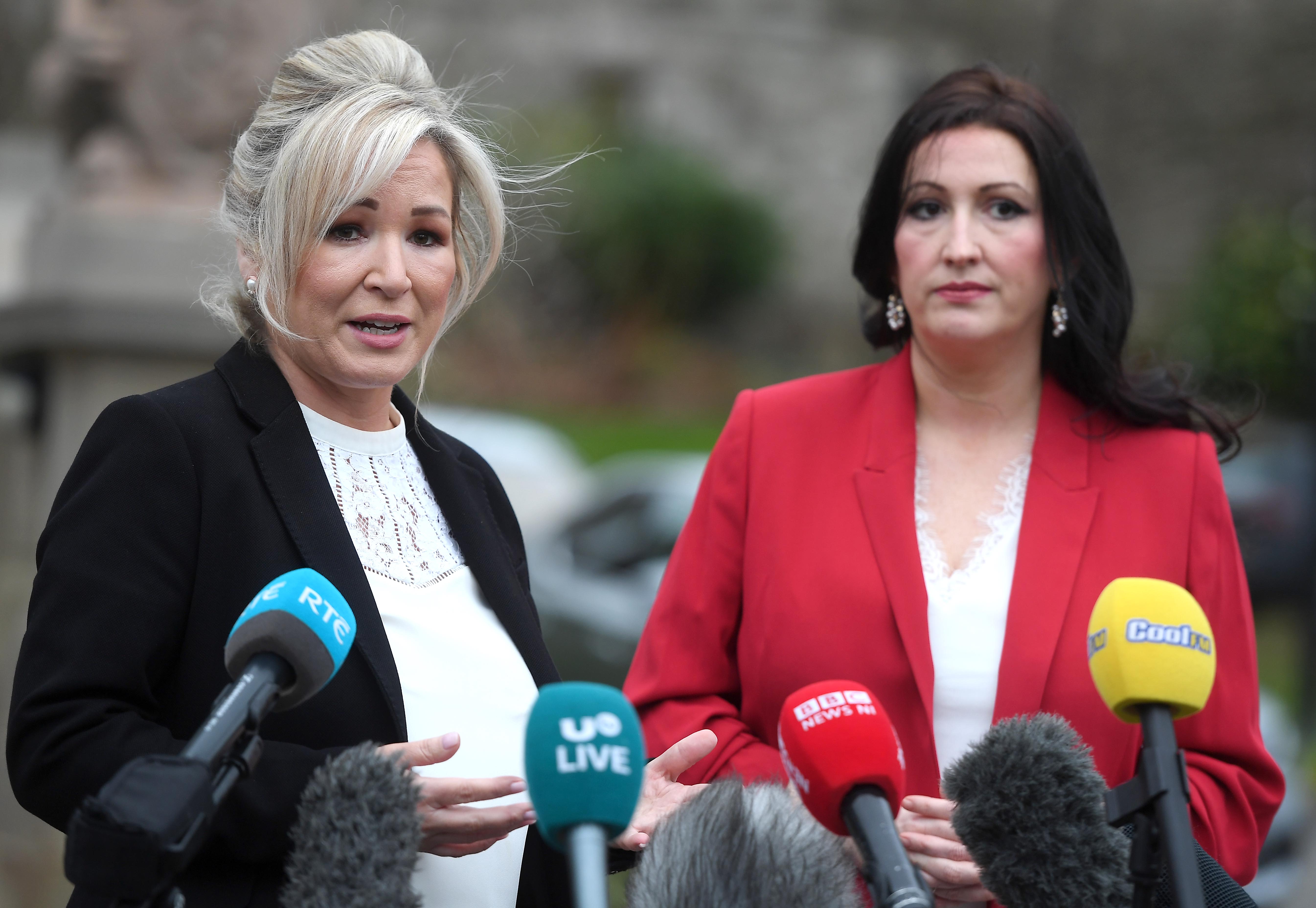 Northern Ireland First Minister Michelle O’Neill (L) and Deputy First Minister Emma Little-Pengelly during a press conference at Stormont Castle, Belfast, following the restoration of the powersharing executive, on Feb. 5, 2024. (Oliver McVeigh/PA Wire)
‘A Summit of Separatists’
Speaking from Stormont, the Democratic Unionist Party’s (DUP’s) deputy first minister, Emma Little-Pengelly, who serves alongside O’Neill in the power-sharing executive, accused the Sinn Féin politician of pursuing “narrow political agendas” by attending what she said was “a summit of separatists.”
Little-Pengelly said on X that her party had “warned time and time again that republicanism would attempt to weaponize the role of First Minister. That a Sinn Féin First Minister would utilize the position to seek the abolition of Northern Ireland and the break up of our United Kingdom.”
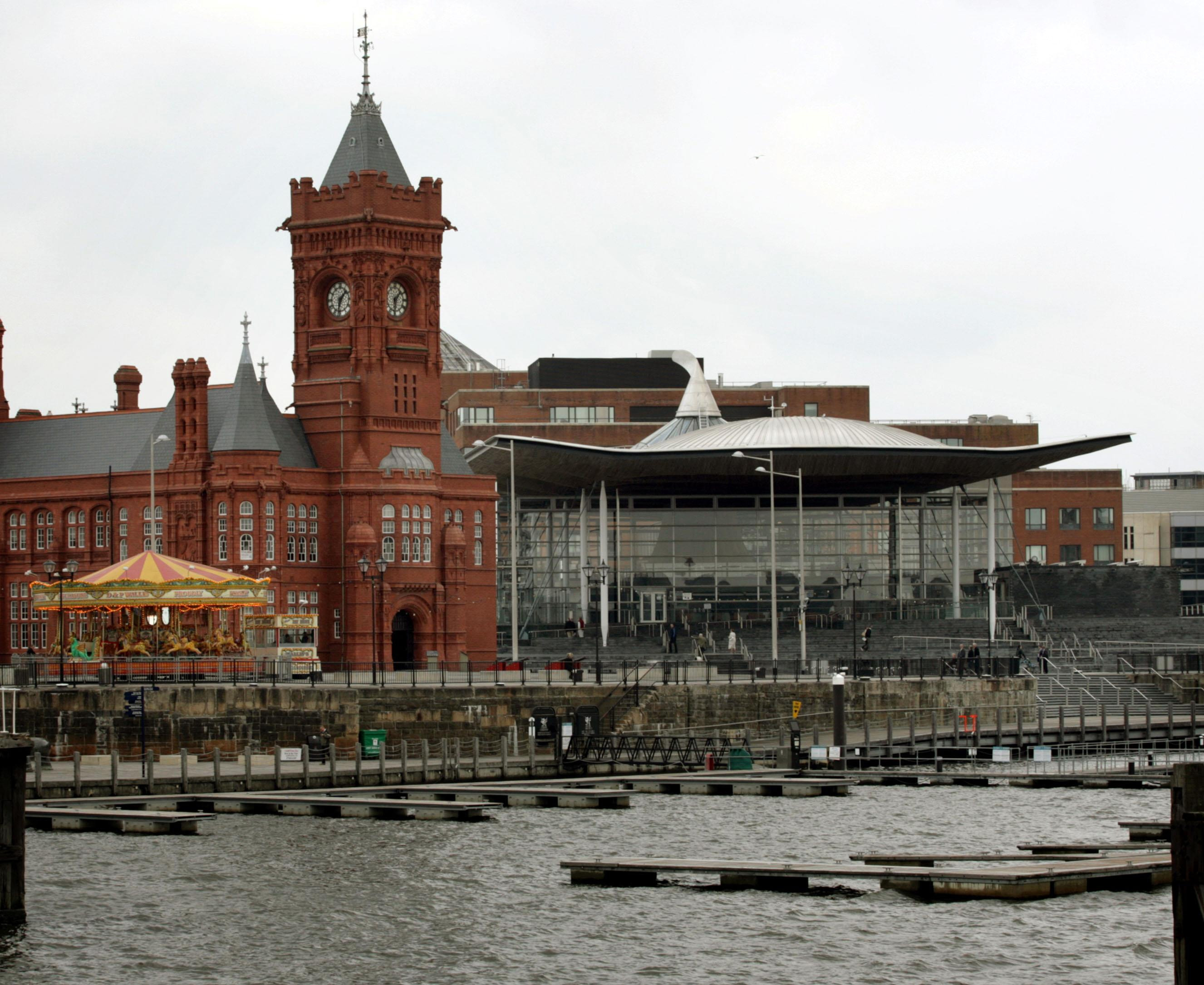 The Senedd, the Welsh Assembly building in Cardiff Bay, on Sept. 20, 2006 (Anthony Devlin/PA Wire)
Asked by journalists when he would like to see a referendum, Ap Iorwerth responded: “The timescale will be set by the people of Wales when they are persuaded. My job is to persuade.”
Ap Iorwerth was appointed the first non-Labour head of the Welsh government after May’s election.
While a referendum appears to be off the table for the time being, Welsh ministers are seeking extra powers to be devolved from Westminster, including over policing and youth justice.
Ap Iorwerth said Burnham, a former mayor of Greater Manchester who supports localism, had “a lot to learn” about “how devolution to a nation is rather different to devolution to a region or a city of England.”
“I want to have a positive relationship with him; I believe he wants to have a positive relationship with me,” he said of the prime minister.
Burnham ‘Committed to Change’
The British government said in a statement shared with UK media outlets that “the prime minister is committed to delivering change across all four nations of the United Kingdom and believes strongly in the union.”
The talks between the leaders in Cardiff were expected to cover the way the devolved nations are funded by the UK government.
Welsh ministers claim that the method used, known as the Barnett Formula, disadvantages Wales, while Scotland benefits from it.
Welsh Conservative Senedd leader Darren Millar, in a statement, accused Plaid of “obsessing about independence,” and said the first minister should instead “be focused on dealing with the crisis engulfing the Welsh NHS and the declining standards in Welsh schools.”
Dan Thomas, Reform UK’s Welsh leader, said on X that Plaid was “showing its true colors” by meeting with Sinn Féin and the SNP, who he labeled “the Scottish separatists.”
“Sinn Féin’s republican movement spent decades pursuing the UK’s destruction,” Thomas wrote, including through what he termed “IRA terrorism.”
“Now Plaid chooses to sit down and plot with them as fellow anti-British separatists.”
The leaders of the three devolved nations are due to meet with the prime minister next month.
 Friends Read Free
Copy
Facebook
Tweet
Friends Read Free
Copy
Facebook
Tweet