
The federal government has tabled a bill prohibiting youth under 16 from having accounts on social media, citing risks to mental and physical health caused by youth social media usage.
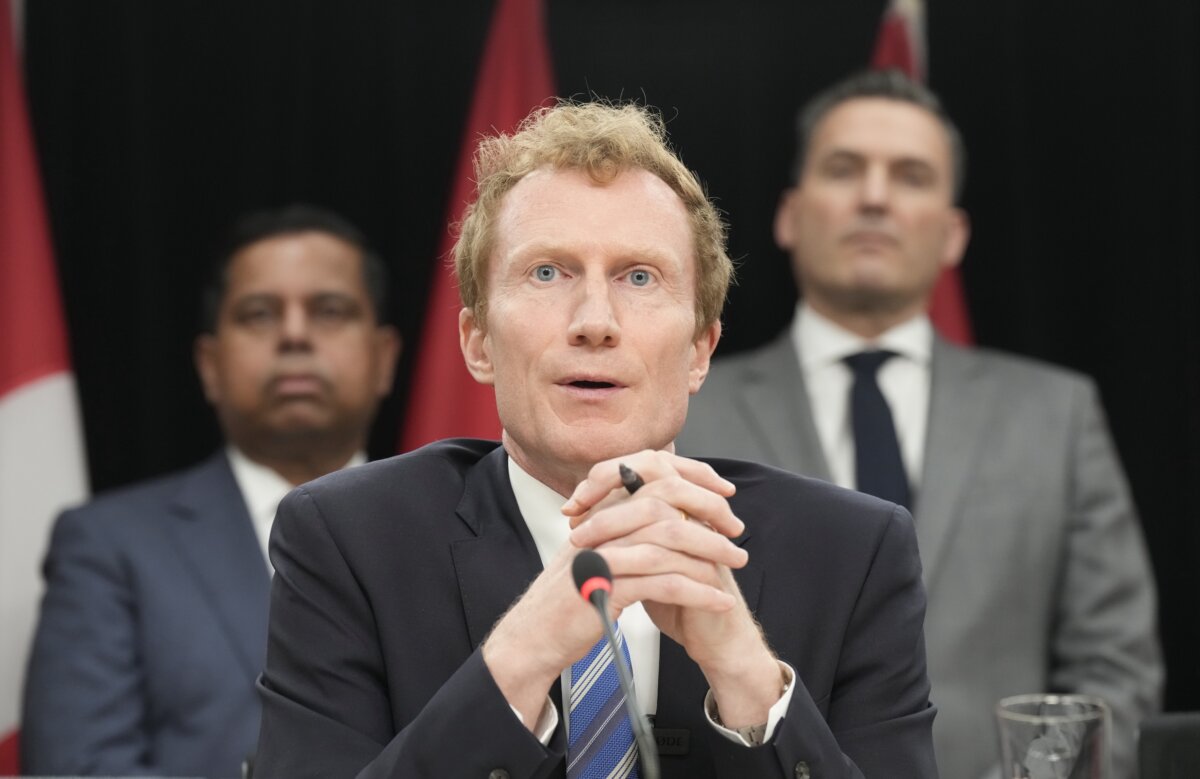
Minister of Canadian Identity and Culture Marc Miller introduced Bill C-34, the Safe Social Media Act, in a June 10 press conference, saying the legislation is necessary to protect minors from cyberbullying, sexual exploitation, and other online harms.
“Over the past few months, I met with parents, doctors, experts, and children. I’ve received the same question: How to better protect our children from online dangers?” said Miller, who was joined at the press conference by a number of other mental health and government officials.
“As a society, we must act. As parents, as doctors, as a government, we are all responsible for protecting our children. We have to be honest: We are behind. Canada is behind.”
The bill follows Australia’s lead, which banned social media for children in December 2025.
Ban
The Safe Social Media Act proposes establishing a minimum age of 16 for having a social media account, but may offer exemptions for platforms that prove they are “safe by design,” according to Miller, whose Liberal government holds a majority in Parliament.
In addition, the bill also proposes to establish a new Digital Safety Commission of Canada, which will be in charge of enforcing the rules, ensuring compliance, looking into complaints, and levying penalties on platforms who break the rules. It proposes that companies which fail to comply could face fines amounting up to 3 percent of their global revenues.
Miller said the commission should be operational within about 18 months. However, he noted platforms will be legally responsible for following the law once it passes Parliament even if a commission is not yet formed.
“They have to take the appropriate measures to limit kids under 16 from opening social media accounts as soon as the law comes into force,” he said.
The government says the bill would also require platforms to remove child sexual exploitation content or intimate images shared without consent within 24 hours, including deep fakes, which are AI-generated images. He said privacy concerns were something the government was “very conscious of when drafting the law.”
When asking about the age verification process, Miller said it’s not possible to achieve “perfection.”
“You’re talking about the age verification process, which uses a probabilistic system,” he said, adding that “perfection is impossible, but we can do better.”
The government noted that the bill would also obligate platforms to “reduce exposure” to a number of categories of material, including content that is deemed to promote hate or extremism.
“Under this legislation, services would also be required to reduce exposure to seven specific categories of harmful content, including … content that foments hatred, content that incites violence, and terrorism or violent extremism content,” the government said in a June 10 release.
The bill passed first reading on June 10.
AI Chatbots
The minister added that the bill will not ban children from using artificial intelligence (AI) chatbot services, despite Miller observing the mass shooting in Tumbler Ridge, B.C., this past February as an example of “the tragic consequences of online harm.”
“We have to admit that chatbots are not as well studied as the harms created by online platforms, and they do not necessarily have the same social role as the social media platforms,” he said when answering questions from media as to why the chatbots weren’t being banned, adding that they can play an important role in education and Canada’s AI strategy.
However, the bill does propose that AI chatbot platforms reduce the risk of harmful interactions and create clearer rules for situations where a user writes of an intention to harm themselves or others.
Investigators found that shooter Jesse Van Rootselaar had used OpenAI’s ChatGPT to discuss gun violence the year before the Tumbler Ridge attack.
Eight were killed in the attack in addition to Van Rootselaar. Although the shooter’s ChatGPT account was banned, Van Rootselaar subsequently created a new one. OpenAI has since apologized for failing to notify Canadian authorities when it suspended Van Rootselaar’s original account in the summer of 2025.
Third Attempt
The Safe Social Media Act is the Liberals’ third attempt to establish a federal online harms regime, including Bill C-36, which was tabled in 2021 but died on the order paper when Parliament was dissolved in advance of that year’s federal election.
This was followed in 2024 by Bill C-63, the Online Harms Act, which proposed obligating digital platforms to release online safety plans and crack down on content deemed to expose minors to online harms, and promote extremism or hate. The bill also died on the order paper after Parliament was prorogued in January of last year.
Bill C-34 does not include some of the controversial provisions in Bill C-63, including measures that would have imposed substantial fines on individuals found to have made hateful comments online.
Child-protection organizations spoke out in support of the Safe Social Media Act on June 10, while digital policy legal scholar Michael Geist has said a social media ban for minors would lead to major privacy concerns in terms of the age-verification system.
Conservative Leader Pierre Poilievre said he would withhold judgment on Bill C-34 until he has had an opportunity to review it. Tory MP Roman Baber expressed concerns the bill could lead to privacy issues and censorship by pointing to a variety of Liberal bills and laws introduced or adopted in recent years.
The Safe Social Media Act comes less than a week after Prime Minister Mark Carney and AI Minister Evan Solomon announced a new strategy for AI they termed “AI for All.” They said the new policy framework includes strengthened privacy and safety measures along with stronger safeguards against AI-generated risks, as well as safeguards to protect minors online.
Conservative and NDP critics said the new AI strategy was vague in terms of details on regulatory safeguards, protection of personal property, and how AI would be made safer.
 Friends Read Free
Copy
Facebook
Tweet
Friends Read Free
Copy
Facebook
Tweet