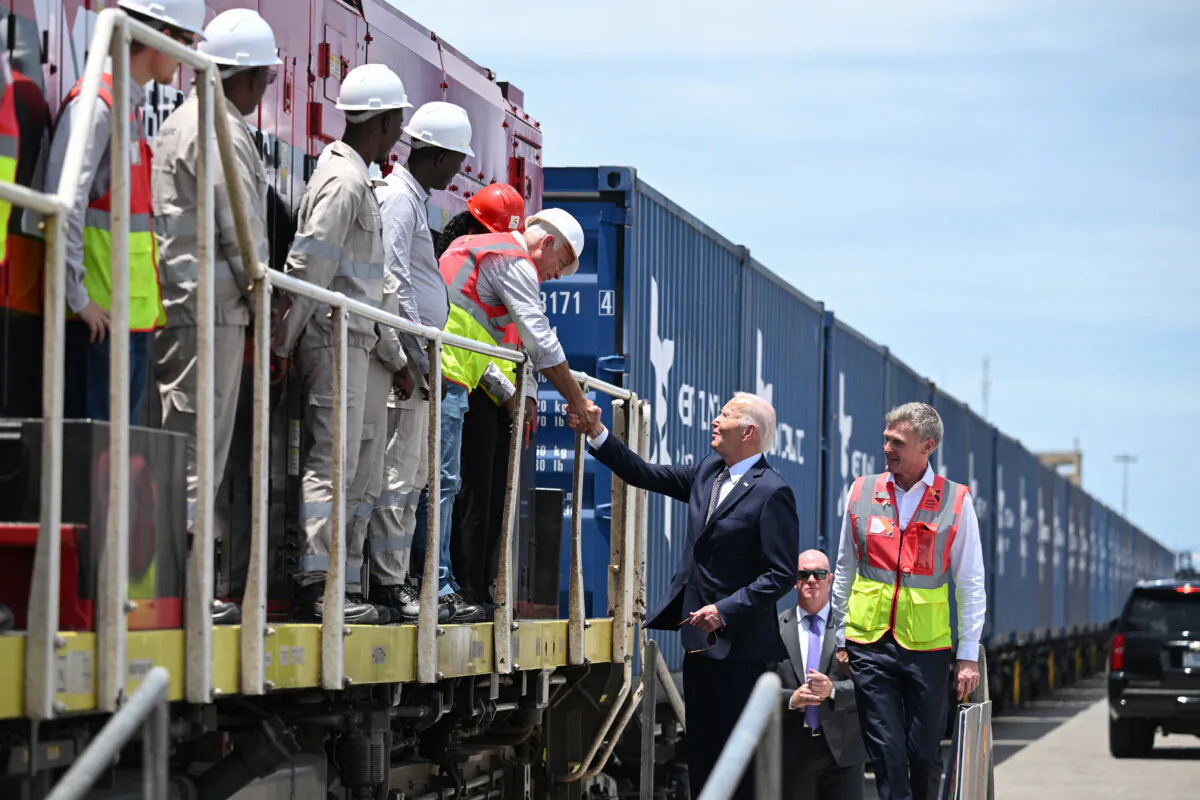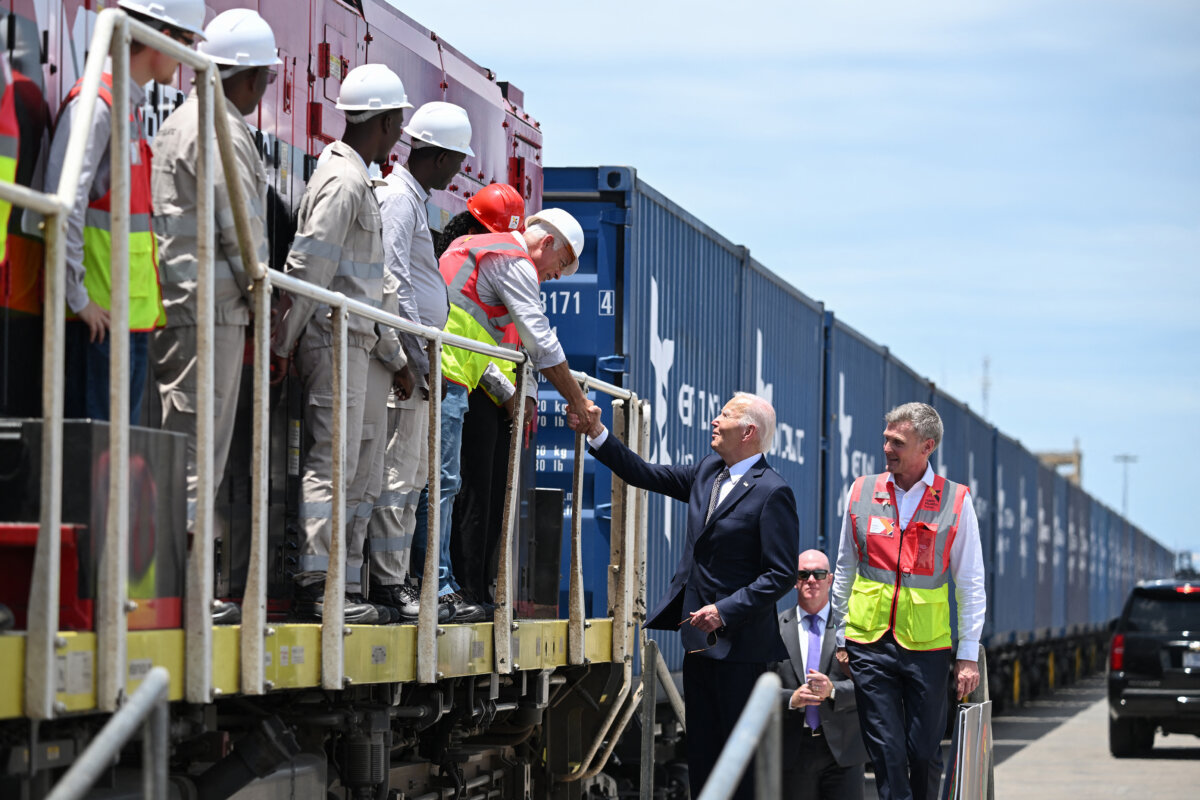
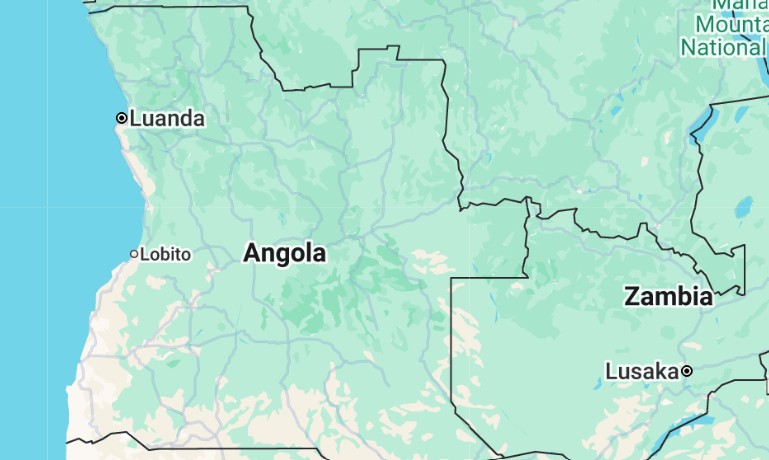
On his last foreign trip as U.S. president, Joe Biden visited the Angolan port of Lobito in December 2024 and unveiled what he described as a “game changer” investment project that would supply rare earths without the need to rely on China.
The Lobito Corridor is a railroad project that connects the Atlantic coast port to the mineral-rich African interior, including Kolwezi in the south of the Democratic Republic of Congo and Ndola in Zambia’s copper belt.
Washington has been seeking to challenge China’s dominance in parts of Africa and secure access to the continent’s critical mineral reserves.
China has spent enormous amounts of money upgrading the road and rail infrastructure of various African countries over the past 20 years, mainly through its Belt and Road Initiative.
The Lobito Corridor could be the United States’ answer.
“It’s a game changer, and the reason is simple,” said Selina Hayes, founder and CEO of Hayes Group International, a technology and intelligence consulting company. “The Lobito Corridor unlocks real economic growth for Angola and the entire region.”
The cost to move goods has been a major roadblock to economic development in central and southern Africa, Hayes told The Epoch Times.
“The Lobito Corridor fixes that. It cuts transit times from weeks to days, lowers logistics costs, and finally gives Angola a modern route connecting its economy to global markets,” she said.
The minerals that would flow through the Lobito Corridor are “the building blocks of everything from electric vehicles to advanced defense systems,” Hayes said.
“Strategically, it reduces the leverage our adversaries have over critical mineral supply chains by shifting control and value back to Angola and its partners.”
She said she believes that the railroad will be fully modernized and functioning by 2027 or 2028.
Processing the Minerals
But Jack Lifton, co-chairman of the Critical Minerals Institute, told The Epoch Times that he felt the Lobito Corridor carried echoes of the colonial period, when Britain, France, Portugal, Germany, Italy, Portugal, and Belgium divided up Africa and exploited its resources with scant regard for the indigenous people.
Lifton said he believes that talk of a critical minerals shortage is “overblown.”
“The issue is not mines. There’s lots of mines all around the world. The issue is processing these materials from the ground until [they become] something useful,” he said.
“Actual processing of the minerals into forms that are ultimately used in products is entirely done in industrialized countries.”
Hayes agrees that the United States could do more than just mine minerals from Africa, but she sees the Lobito Corridor as being transformative for Angola.
“The corridor shifts the country from being primarily a raw-resource exporter to becoming a true regional economic hub,” she said. “It attracts new investment, supports local manufacturing, enables mineral processing inside Angola—rather than offshore—and creates jobs along every node of the route.”
Hayes said that developing manufacturing in Africa could be how the United States competes with China.
“Not by trying to replicate China’s cost structure at home, but by helping African countries build the industrial capability that benefits all of us,” she said.
“It strengthens African economies, builds local workforce capacity, and creates pricing advantages that U.S. companies simply can’t achieve if every component is made in America or Asia. If you produce oxides, metals, magnets, and even chips closer to the source, you cut costs, improve reliability, and help African partners move up the value chain.”
The dispute over China monopolizing rare earths and related products dates back to at least March 2012, when the Obama administration challenged the Chinese Communist Party’s export restraints on rare earths, tungsten, and molybdenum, and “requested consultations” with the Beijing representative at the World Trade Organization.
This has been highlighted politically as a major economic and national security issue for the United States and other NATO countries only in the past 12 months, however.
Copper Now on Critical List
On Nov. 6, the Department of the Interior, advised by the U.S. Geological Survey (USGS), added 10 minerals, including copper, uranium, and silver, to its list of materials vital to U.S. national security.
“This is the most comprehensive, science-based assessment yet of the minerals our nation relies on,” USGS Director Ned Mamula said. “Critical minerals underpin industries worth trillions of dollars, and import dependence puts key sectors at risk.”
Lifton said the critical minerals should be processed in Africa, and he suggested building U.S.-owned manufacturing plants there.
“That would dramatically increase the [gross domestic product] of those countries,” Lifton said, adding that low labor costs would mean that they could actually compete with China and export the finished products to markets all over the world.
“We turned over manufacturing to [China] over the last 30 years, so we have very little capability to manufacture these metals in the U.S.,” synthetic chemist and nanotechnologist James Tour of Rice University told EpochTV’s “American Thought Leaders” in a program that aired on Nov. 22.
Tour and Flash Metals USA, a subsidiary of Metallium, are experimenting with producing rare earths in the United States from e-waste using a process called flash Joule heating. Whether or not that is successful, the United States and its allies would remain reliant on China in the short term, Hayes said.
‘Changing the Trajectory’
“China spent 30 years building a rare-earth ecosystem; no one replaces that overnight. The real point is not flipping a switch, it’s changing the trajectory,” Hayes said.
“The more diversified the African supply chains become, the less vulnerable the U.S. and its partners are to coercion or chokepoints.”
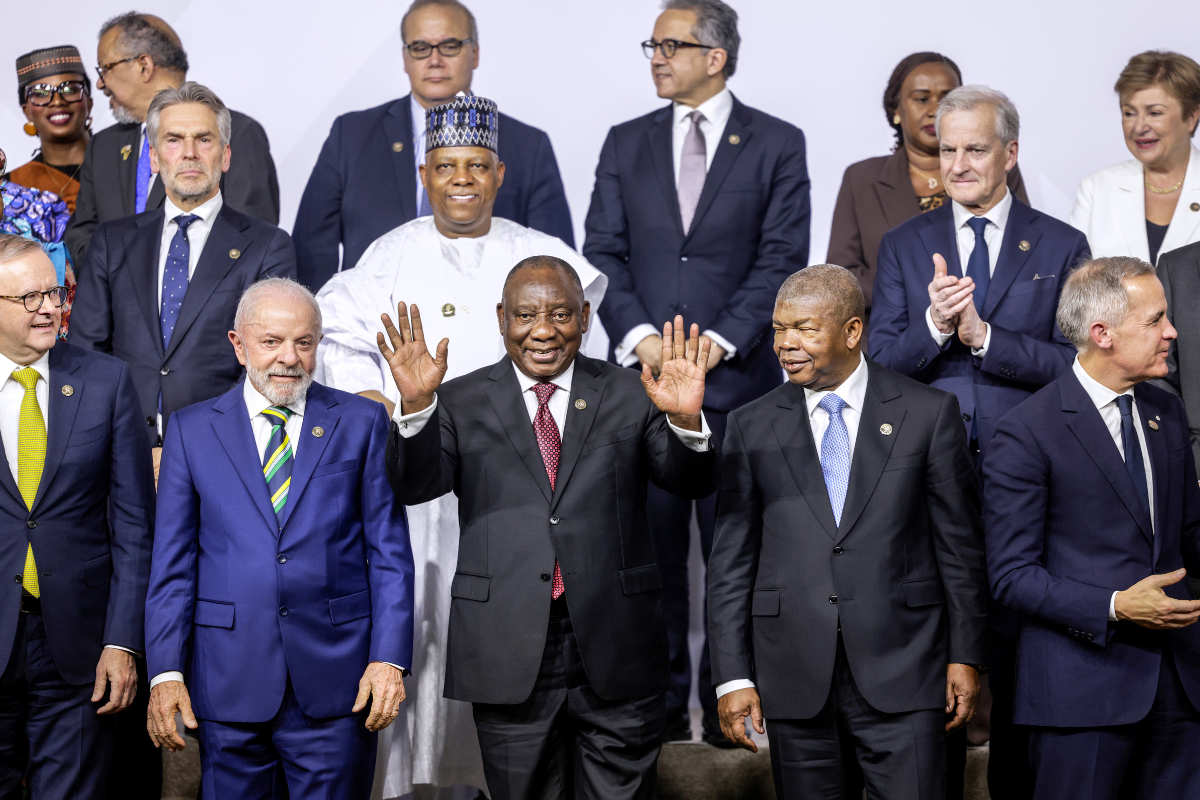
During the Cold War, Angola’s Popular Movement for the Liberation of Angola government was in the Soviet camp, and the United States backed the National Union for the Total Independence of Angola, which fought against it. But all that has changed.
“Angola today is not Angola of the 1970s, and neither is the United States,” Hayes said. “President [Joao] Lourenco has taken the country in a very different direction—opening the economy, fighting corruption, diversifying partnerships, and positioning Angola as a regional leader.”
Washington has noticed, she said.
“What we’re seeing now is not ‘best friends’ in a superficial sense, but a relationship based on mutual strategic interest,” Hayes said.
She said she expects that shipments will start to pass through the corridor within a few years and “more meaningful integration into Western supply chains by the early 2030s.”
“Full maturity—refining, magnet production, advanced materials—will take sustained partnership,” Hayes said.
 Friends Read Free
Copy
Facebook
Tweet
Friends Read Free
Copy
Facebook
Tweet