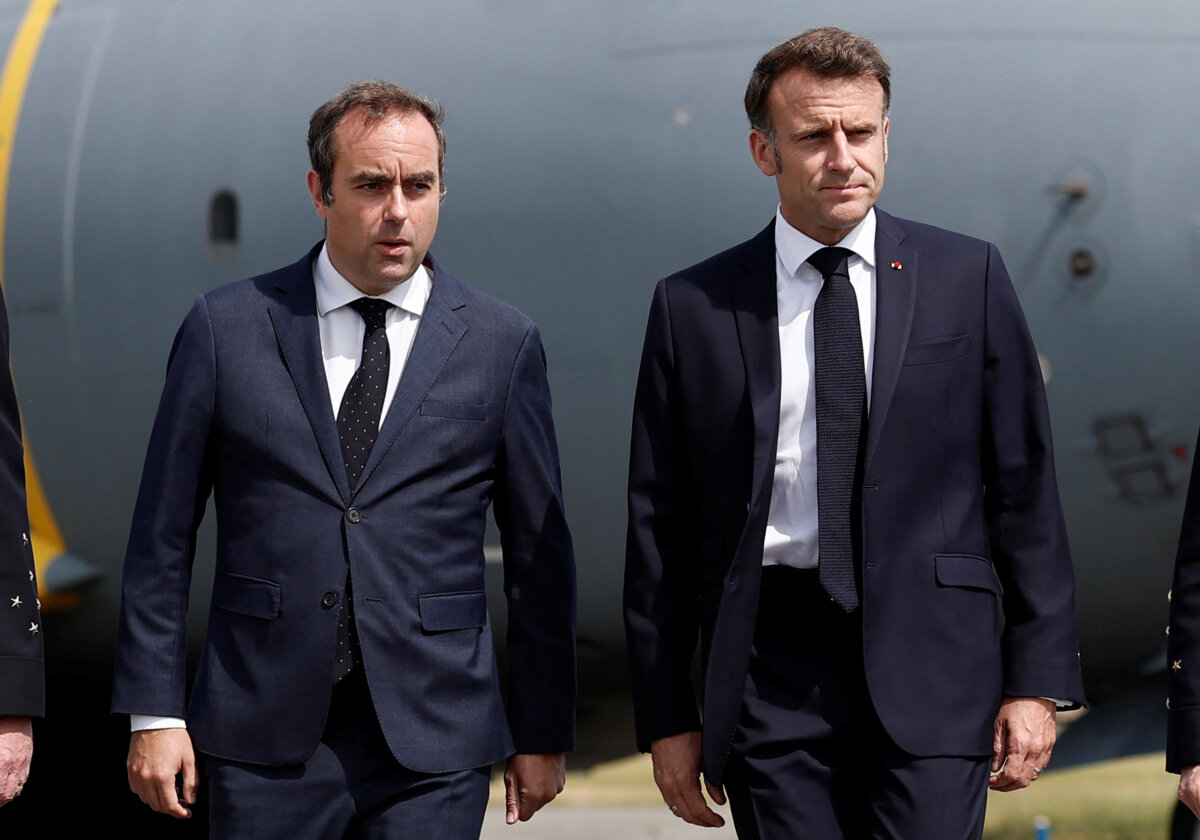

French President Emmanuel Macron on Sept. 9 announced that he was appointing Defense Minister Sébastien Lecornu as prime minister after the previous officeholder was ousted in a no confidence vote.
“The president of the Republic has entrusted me with the task of building a Government with a clear vision: defending our independence and our power, serving the French people, and ensuring political and institutional stability in the interest of national unity,” Lecornu said in a translation of a statement on X. “I want to thank him for the confidence he has shown in me by naming me prime minister.”
Macron appointed Lecornu, 39, to the post after François Bayrou, his predecessor in the office, was ousted in a no confidence vote on Sept. 8 after being appointed to the job by Macron in December 2024.
Bayrou’s ouster was the latest setback for Macron’s embattled government, where leadership turnover rates have been particularly high in recent months. Lecornu is now the fourth prime minister to take the post in the past year.
In his statement, Lecornu praised Bayrou for “the courage which he has shown in defending his convictions until the end.”
Lecornu, a former conservative who signed on with Macron’s centrist politics in 2017, takes the post at a politically difficult moment.
France’s Parliament has been gridlocked on how to move forward with the national budget. Lecornu’s first job as the new leader of the government, and his first task from Macron, will be trying to reach an agreement.
France, one of the largest economies in the world, faces a debt crisis, with the French national debt expected to soar to about 3 trillion euros ($3.5 trillion) this year.
That puts France’s public debt at about 110 percent of its gross domestic project (GDP)—well over the 60 percent debt-to-GDP ratio advised by the EU, of which France is a member state.
The French budget deficit, meanwhile, is estimated to be on track to rise to 5.7 percent of GDP in 2026. The EU recommends no more than a 3 percent deficit.
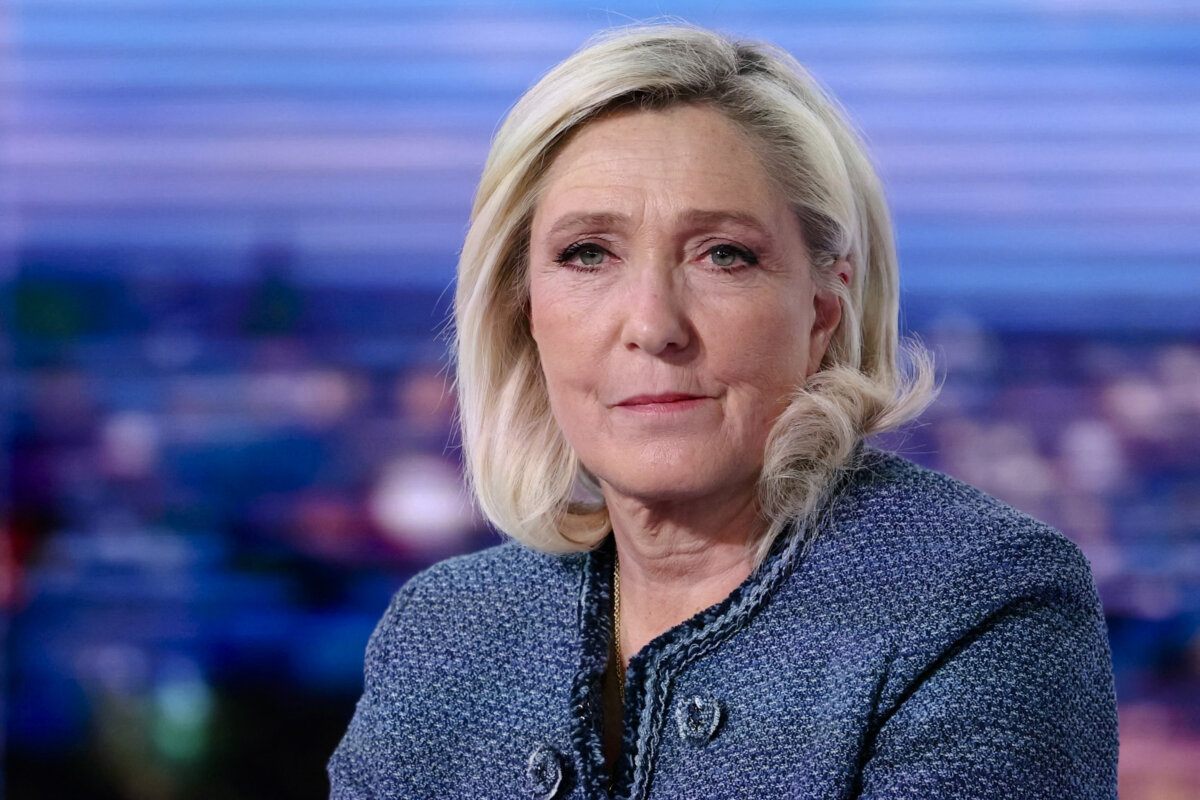
Bayrou’s plan aimed at stabilizing France’s economic position. Marine Le Pen, leader of the right-wing National Rally party, condemned the plan’s attempt to increase taxes by about $20 billion.
Manuel Bompard, the national coordinator for the left-wing France Unbowed (LFI) party, described Bayrou’s plan as “good news for France and its people.”
Bompard and others in the French left wing were critical of Macron’s decision to nominate Lecornu. Le Pen also decried the decision.
Both Le Pen and Jean-Luc Mélenchon, leader of the LFI party, called for Macron to step down.
Mélenchon condemned the appointment of Lecornu in a post on X, accusing Macron of responding to Bayrou’s ouster by doing things “exactly like it was before.”
“Only the departure of Macron himself can put an end to this sad comedy of contempt for Parliament, the voters, and political decency,” Mélenchon wrote.
Le Pen posted to X that future elections were “inevitable” and expressed confidence that her party’s Jordan Bardella would become prime minister.
In another post on X, Lecornu sought to reassure critics and skeptics.
“I want to tell our countrymen sincerely that I am taking their expectations into account and that I am aware of the difficulties we face,” he said. “We are hard at work, humbly, and we are going to do whatever it takes to achieve our goals.”
Owen Evans contributed to this report.
 Friends Read Free
Copy
Facebook
Tweet
Friends Read Free
Copy
Facebook
Tweet