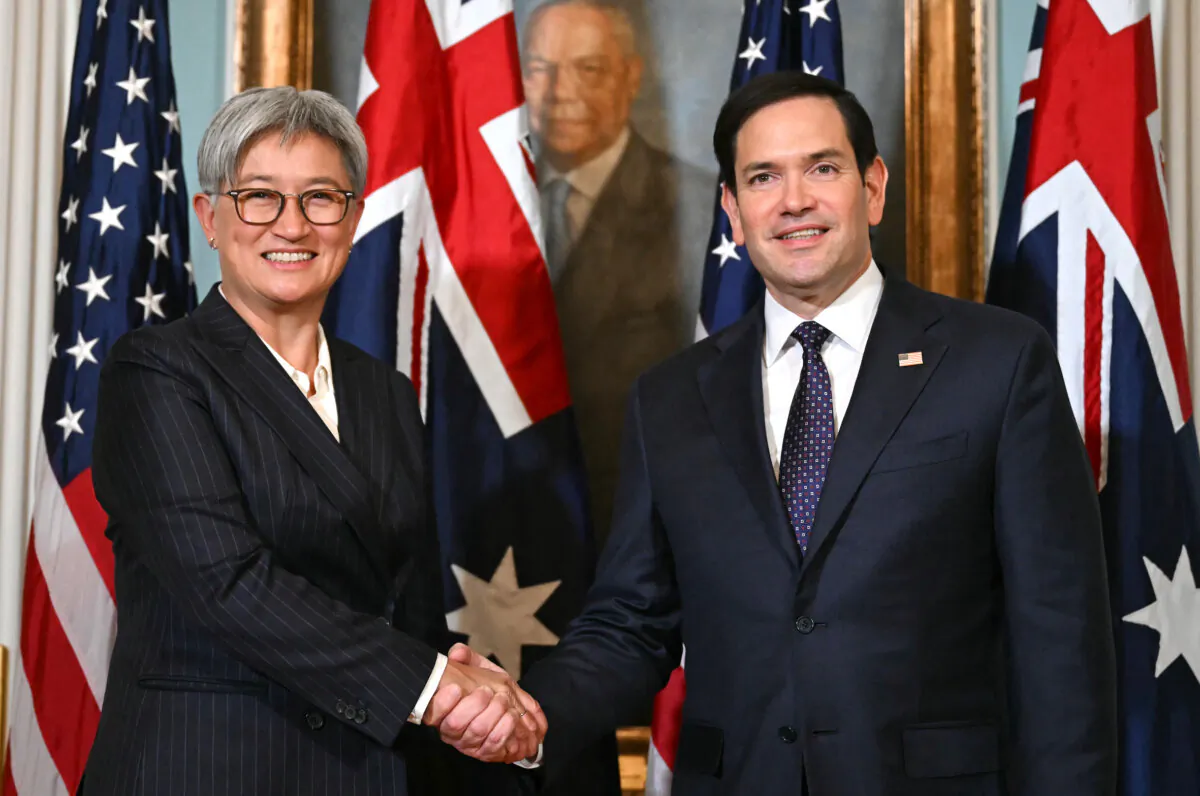

U.S. Secretary of State Marco Rubio has criticised Australia and New Zealand for joining three nations in sanctioning Israeli ministers Itamar Ben-Gvir and Bezalel Smotrich for “inciting violence against Palestinians.”
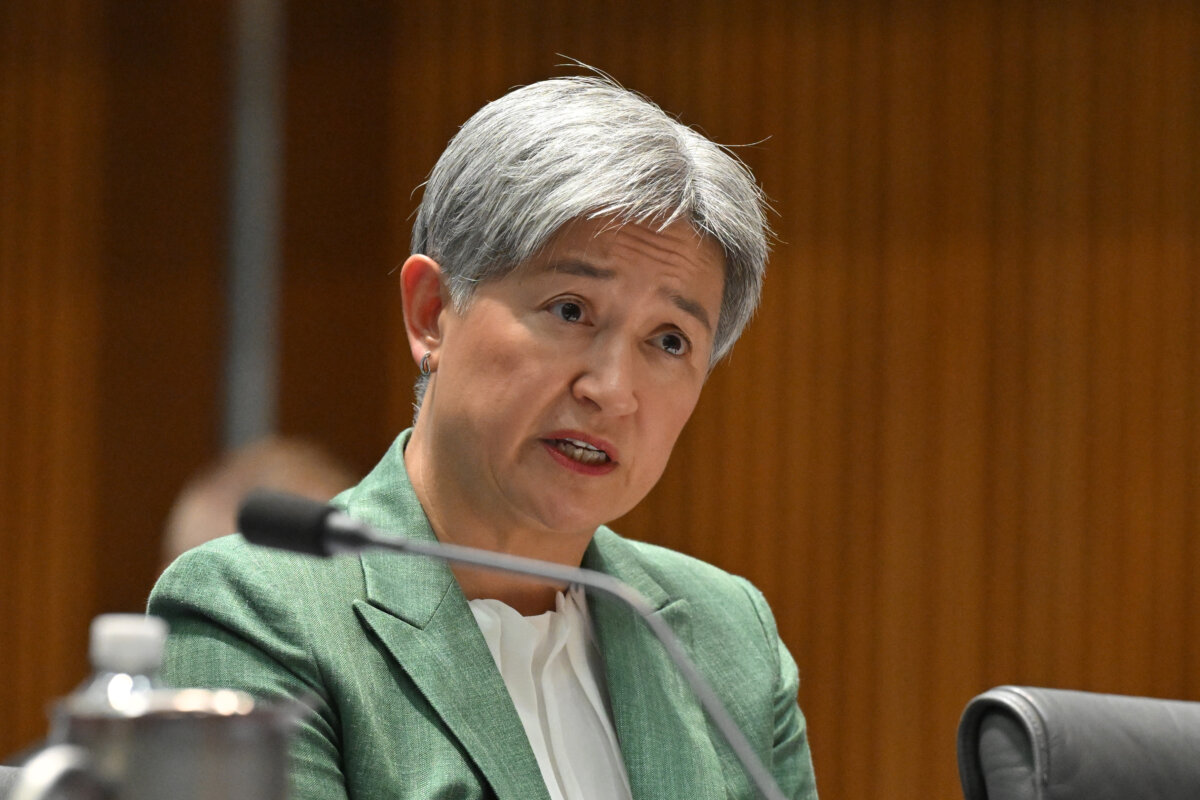
Australian Foreign Minister Penny Wong announced the sanctions in a joint statement with the ministers of Canada, New Zealand, Norway, and the UK.
The sanctions targeted Ben-Gvir and Smotrich for “inciting violence against Palestinians in the West Bank.”
Both ministers believe the West Bank to be Israeli territory.
Wong’s statement says settler violence has been incited by “extremist rhetoric” and has led to the “deaths of Palestinian civilians and the displacement of whole communities.”
“Itamar Ben-Gvir and Bezalel Smotrich have incited extremist violence and serious abuses of Palestinian human rights,” Wong said.
“Extremist rhetoric advocating the forced displacement of Palestinians and the creation of new Israeli settlements is appalling and dangerous.”
But U.S. Secretary of State Rubio has condemned the sanctions, saying they do not help achieve peace in the Middle East.
“The United States condemns the sanctions imposed by the governments of United Kingdom, Canada, Norway, New Zealand, and Australia on two sitting members of the Israeli cabinet. These sanctions do not advance U.S.-led efforts to achieve a ceasefire, bring all hostages home, and end the war,” Rubio said.
“We reject any notion of equivalence—Hamas is a terrorist organisation that committed unspeakable atrocities, continues to hold innocent civilians hostage, and prevents the people of Gaza from living in peace. We remind our partners not to forget who the real enemy is.
“The United States urges the reversal of the sanctions and stands shoulder-to-shoulder with Israel.”
Albanese Calls US Response ‘Predictable’
In response, Prime Minister Anthony Albanese said Rubio’s response “predictable.”
“The Israeli government does need to uphold its obligations under international law, and some of the expansionist rhetoric that we’ve seen is clearly in contradiction of that from these hardline right-wing members of the Netanyahu government,” he told ABC radio.
The sanctions ban the Israeli ministers from entering the participating countries and also freezes assets they more hold there.
New Zealand’s Foreign Minister Winston Peters accused the two ministers of “using their leadership positions to actively undermine peace and security and remove prospects for a two-state solution.”
Peters likened the move to New Zealand sanctioning leaders in nations including Russia, Belarus, and Myanmar.
Israel Responds
Israeli Foreign Minister Gideon Saar criticised the move.
“It is outrageous that elected representatives and members of government are subjected to this kind of measures,” he said.
A special government meeting will be held next week to decide on Israel’s response to the sanctions.
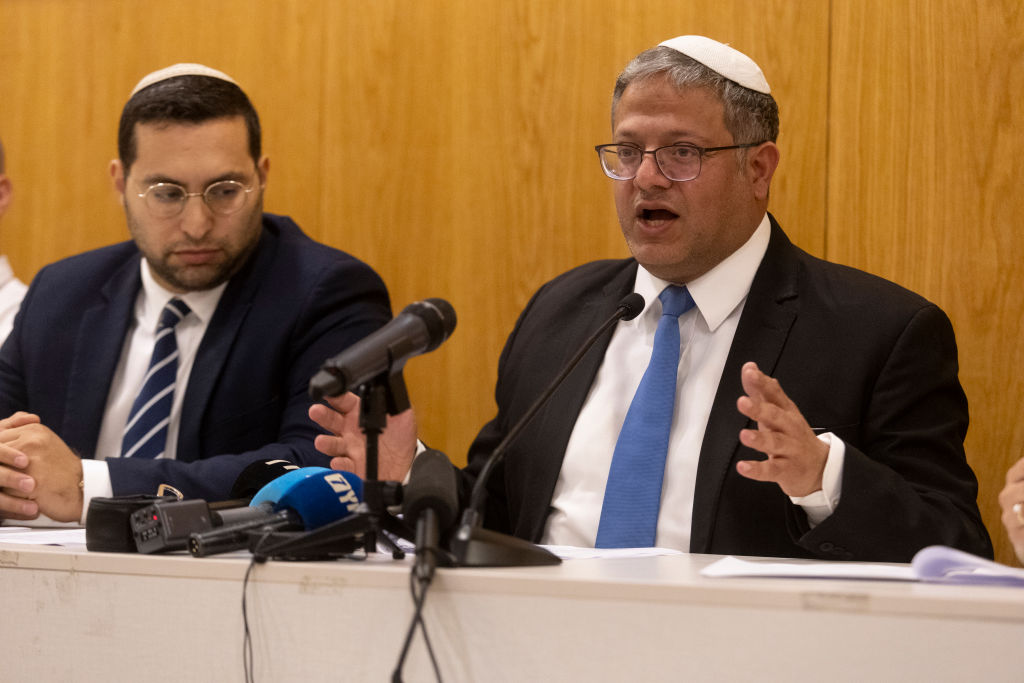
Ben-Gvir is a lawyer and Israel’s minister for national security.
He is the leader of the nationalist Otzma Yehudit Party, and lives in the West Bank—a disputed territory.
Smotrich, also a lawyer, is Israel’s minister of finance.
He is the leader of the National Religious Party–Religious Zionism, and like Ben-Gvir, also lives in the West Bank.
Government Accused of Double Standards
Australian Jewish Association (AJA) CEO Robert Gregory said the Trump administration and Israel would be “entirely justified” if they considered reciprocal measures against Australia. This could include closing the Australian office in Ramallah.
He also criticised an apparent double standard from the Australian government.
“The contrast is stark, a prime minister who is silent on abuses by China, Iran, and others who threaten Australia, but eager to lecture and penalise a small democratic nation defending itself against terror,” he said in a statement.
“The double standards are glaring and indefensible.”
Gregory argued that there was no explanation for the Australian government’s actions other than “blatant anti-Semitism.”
“This government’s willingness to engage with authoritarian regimes, including Holocaust deniers like Palestinian Authority President Mahmoud Abbas, while targeting the world’s only Jewish state, exposes a disturbing double standard,” he said.
Meanwhile, Nationals Senator Matt Canavan said the Labor government should also consider sanctioning regimes involved in systemic human rights abuses.
“If the Australian government can sanction Israeli ministers, why can’t we sanction the Chinese officials culpable in the brutal suppression of the Tibetan and Uyghur peoples?” he wrote on X.
Israelis Denied Entry
The sanctions come just after news broke that Australia had reportedly denied entry to pro-Israeli tech blogger Hillel Fuld, who was due to arrive in Australia on a fundraising tour for Israeli emergency service Magen David Adom.
Fuld’s brother Ari was murdered by a Palestinian, and he had previously expressed views linked with the Israeli right, including a belief that Israel is the rightful owner of the disputed territories.
U.S. Ambassador to Israel Mike Huckabee criticised the decision, urging Australia to reverse it.
Last year, former Israeli minister Ayelet Shaked was also barred from entering Australia.
“Under the Albanese government, Australia’s longstanding bipartisan relationship with Israel has been severely damaged,” Gregory said.
 Friends Read Free
Copy
Facebook
Tweet
Friends Read Free
Copy
Facebook
Tweet