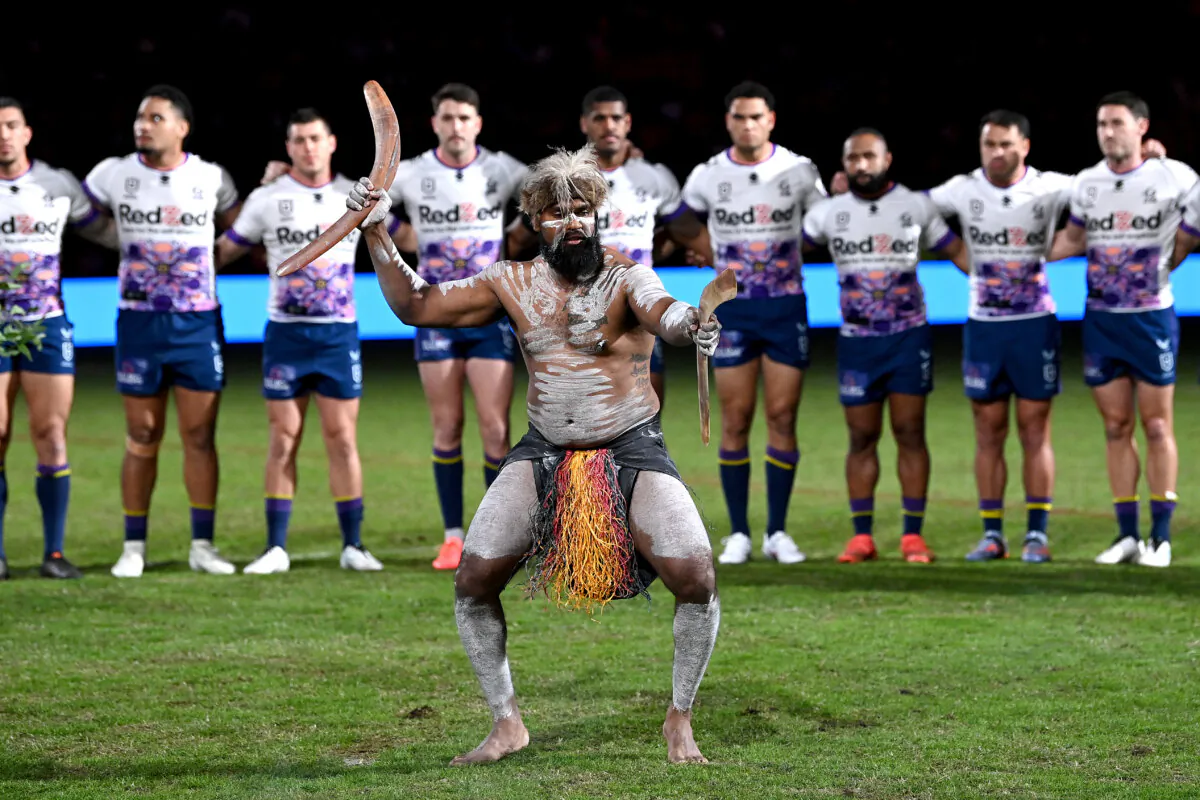

Just a week after Queensland Aboriginal elders voted against performing the Welcome to Country ceremony, Victoria’s Melbourne Storm rugby league team has quietly announced its own intention to scale back the practice.
The Epoch Times understands the Storm’s final decision came after it tested the waters during the season by removing the ceremony from some games.
Given the lack of public concern about the removals, the club then decided to limit Welcome to Country’s to Indigenous-themed games only, reports say.
The Welcome to Country was formalised and popularised in the 1970s, and involves a short ceremony and dance by an Aboriginal group prior to official events.
The performance has become ubiquitous in recent years, and along with the “Smoking Ceremony” and “Acknowledgement to Country,” often takes place before major Australian sporting, business, and political events.
A Storm in a Teacup: Storm
The Melbourne Storm released a statement saying their recent decision did not equate to abandoning the Welcome to Country.
“Melbourne Storm is not ‘ditching’ its Welcome to Country or Acknowledgments as suggested by recent media,” the club said in a statement.
“We will continue these acknowledgments at culturally significant celebrations.”
The Storm said the success of the club had been built on many cultures and communities, and that engagement with them had helped in reflecting on different views.
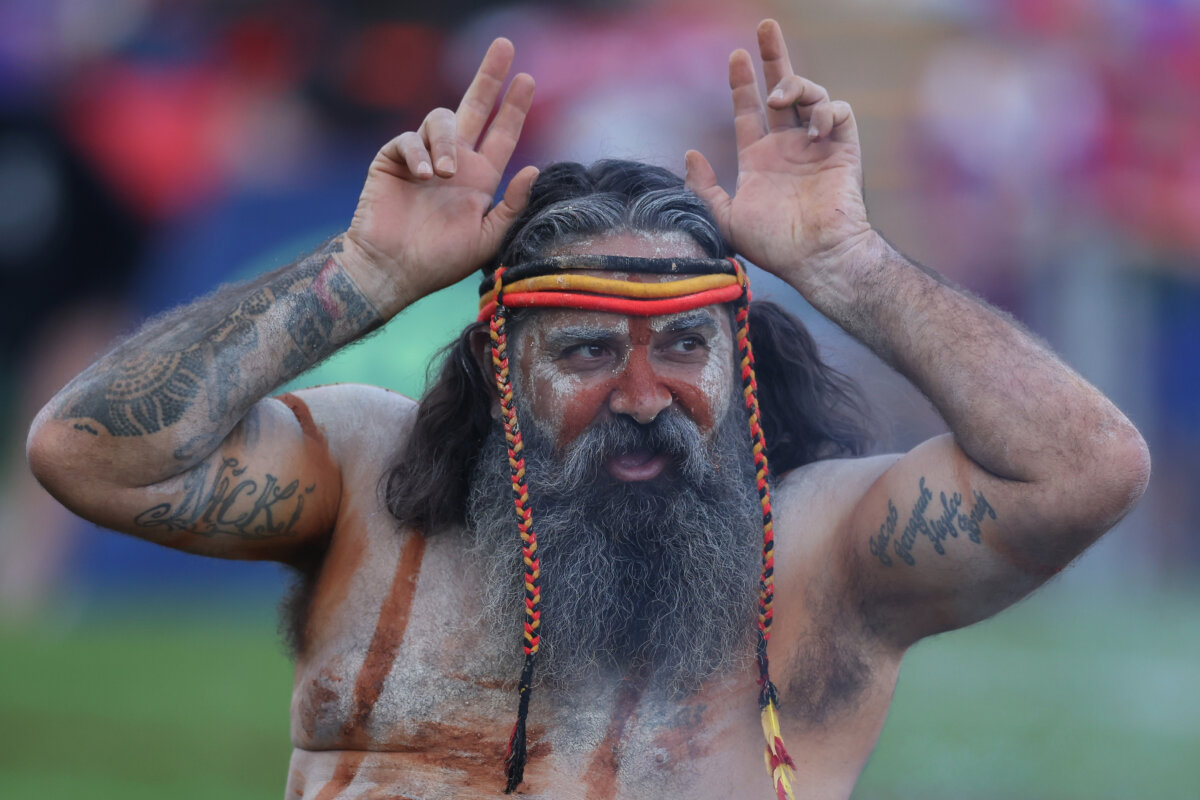
“We will continue to talk to these communities and seek their input to find the most appropriate and respectful way to acknowledge and celebrate culture, including how we best acknowledge First Nations people,” the club’s statement said.
“The club will continue to support First Nations community groups and organisations, as it has done for many years, delivering programs and initiatives that promote positive health, welfare and education outcomes.”
The Melbourne Storm was contacted for additional comment.
‘They Want to Enjoy Football’: Researcher
Indigenous researcher from Close the Gap Research Gary Johns told The Epoch Times he believed football fans did not want their games to be politicised.
“There comes a time when the silent majority have a say,” he said.
“Following the failed Voice referendum, elite CEOs of football codes have realised that their supporters and patrons do not want the ‘Aboriginalisation’ of Australia, which Welcomes represent.
“They want to enjoy football in peace with their fellow fans, whatever their origins.”
Football matches, particularly finals and the interstate State of Origin series, have seen Acknowledgement to Country performances get progressively longer and more detailed.
The recent move from the Storm comes as governments and organisations signal a move away from “virtue signalling” towards more practical strategies.
Moves Toward ‘Practical Reconciliation’
Last week, Dutton confirmed he would continue to stand before only one flag during official press conferences if he becomes prime minister, overturning the current practice by Prime Minister Anthony Albanese to stand before three flags.
These include the Aboriginal, Torres Strait Islander, and national flags.
Dutton said he wanted to officially represent everyone in Australia, and that he wanted “practical reconciliation” rather than ideological gestures.
In speaking on the topic, Dutton said it was more important to ensure substantive grassroots change.
“I want kids in Alice Springs to live in a safe environment, to have a good health system and go to school,” he told Channel 7’s Sunrise program.
In Queensland, newly elected Premier David Crisafulli also spoke along similar lines as he repealed the Path to Treaty Act in November.
The ongoing Truth-telling and Healing Inquiry was halted, and work on the First Nations Treaty Institute was ceased, with the LNP government pledging to redirect funding to Indigenous health, housing, employment, and education initiatives.
The Queensland government said $1.45 million (US$923,000) had already been spent on the Path to Treaty Act in the space of four months, while the Closing the Gap annual report from 2023 revealed nine of 17 targets for Indigenous wellbeing, from education to housing, were off-track.
 Friends Read Free
Copy
Facebook
Tweet
Friends Read Free
Copy
Facebook
Tweet