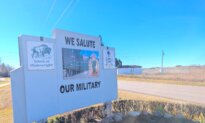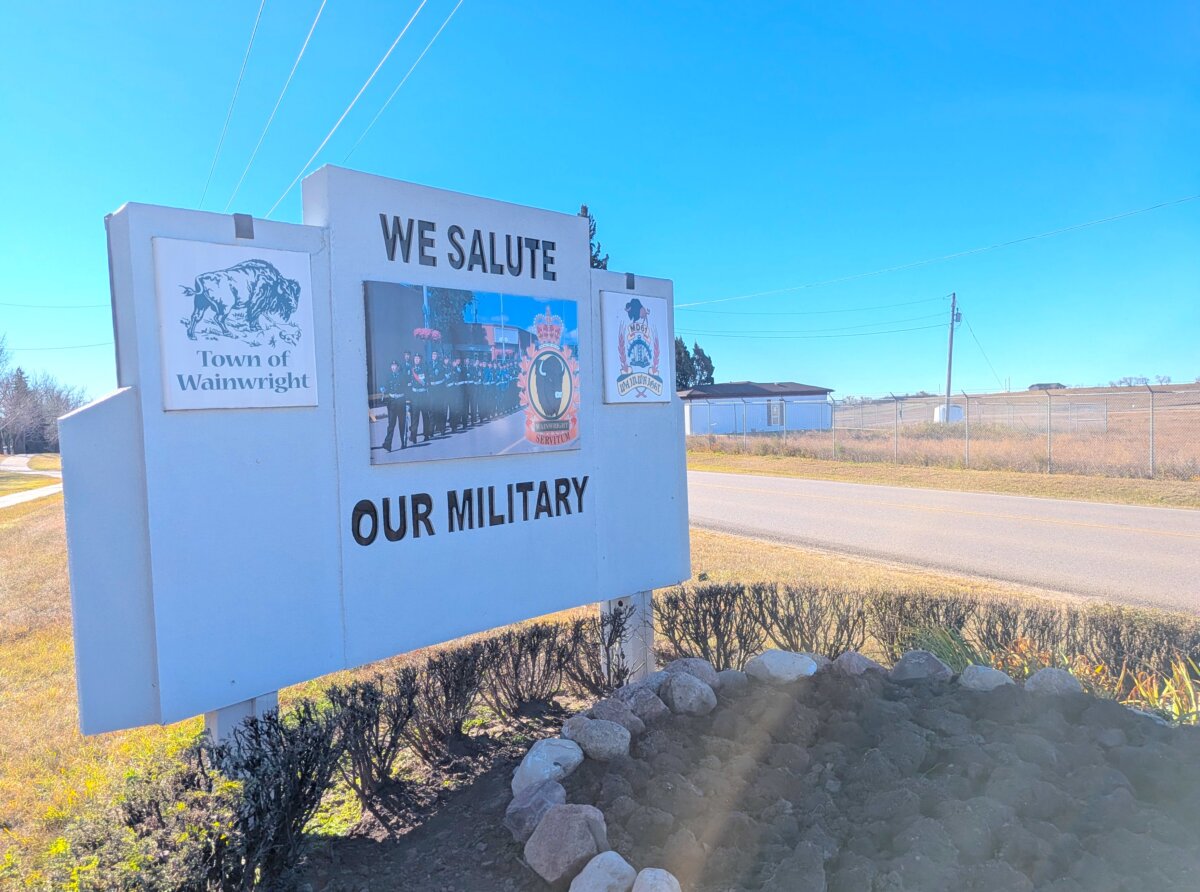

Several weather conditions occurred simultaneously to fuel the fire that claimed four lives and injured 39 at CFB Wainwright on Oct. 17, a meteorologist says.
“Based on preliminary information, it appears rapid onset, intense winds may have played a significant role in the incident,” AccuWeather’s chief meteorologist Jon Porter told The Epoch Times.
That afternoon was breezy across eastern Alberta, but rapidly increasing winds connecting with a strong cold front “may have produced wind gusts” of 113 kilometres per hour, based on available data, Porter said, noting that low relative humidity also played a role in the increased wildfires risk.
Analysis of available weather radar data and surface observations uncovered evidence suggesting “a gust front” may have contributed to the rapid increase in winds, Porter said.
“Gust fronts are the leading edge of cooler, dense air outflowing from nearby thunderstorms or areas of rain,” he said. “Such a setup can focus the most intense winds right along the leading edge of this feature, causing the rapid increase in intense winds, sometimes only over a few minutes.”
Porter said the wind direction “abruptly shifted from the southwest to the northwest.” This, he noted, may have caused any existing fire “to behave erratically,” especially when coupled with sudden bursts of intense wind that helped accelerate the spread of a smaller, ongoing fire.
The weather-monitoring company said Environment Canada had issued yellow wind warnings to the public in that area as well.
Maj.-Gen. Wade Rutland told an Oct. 18 press conference in Edmonton the blaze began as a grass fire that personnel considered far enough away not to pose immediate danger, but strong winds suddenly swept it toward military members training at the base.
“Uncommonly strong winds caused the fire to spread rapidly and shift direction towards the range administrative area,” he said. “The fire did originate within the training area, and did cross established fire guards before being contained, in conjunction with municipal authorities.”
Rutland said the CAF doesn’t believe the incident resulted from any oil and gas infrastructure explosions, “nor any outside interference.”
He said the military checks weather reports before deciding to proceed with an operation and added that the wind was initially “well below” 50 kilometres per hour on Oct. 17. What happened later that day, however, was “uncommon,” Rutland said, noting that the fire moved a kilometre in 30 to 60 seconds.
When reporters asked whether the tragedy could have been prevented, Rutland said he had to wait for the investigation to run its course, which he said could take about a month.
Porter said it was too early to make conclusions about the incident’s circumstances or whether the deaths and injuries could have been prevented. However, he said investigators should carefully examine what weather warnings were available to training leaders and how those warnings informed decisions during the event.
The meteorologist said the review should include whether conditions warranted the army modifying or suspending outdoor activities, particularly those involving a risk of fire, and what measures the army considered or took to protect personnel.
“Intense bursts of winds associated with gust fronts, especially when thunderstorms are involved, are a major risk to outdoor operations and have been involved in some major disasters,” Porter said, referencing a stage collapse at the Indiana State Fair in 2011 and a stage collapse in Mexico in 2014.
“Often the intense wind gusts arrive before rain or even lightning and they can catch people unprepared and off-guard,” he added.
The soldiers who died were identified as Sgt. Morgan Wong from Edmonton; Pte. Shaun Farrell from Prince Albert, Sask.; Pte. Aida Goulding, from North Vancouver, B.C.; and Pte. Hayden Lykkemark from Langley, B.C.
 Friends Read Free
Copy
Facebook
Tweet