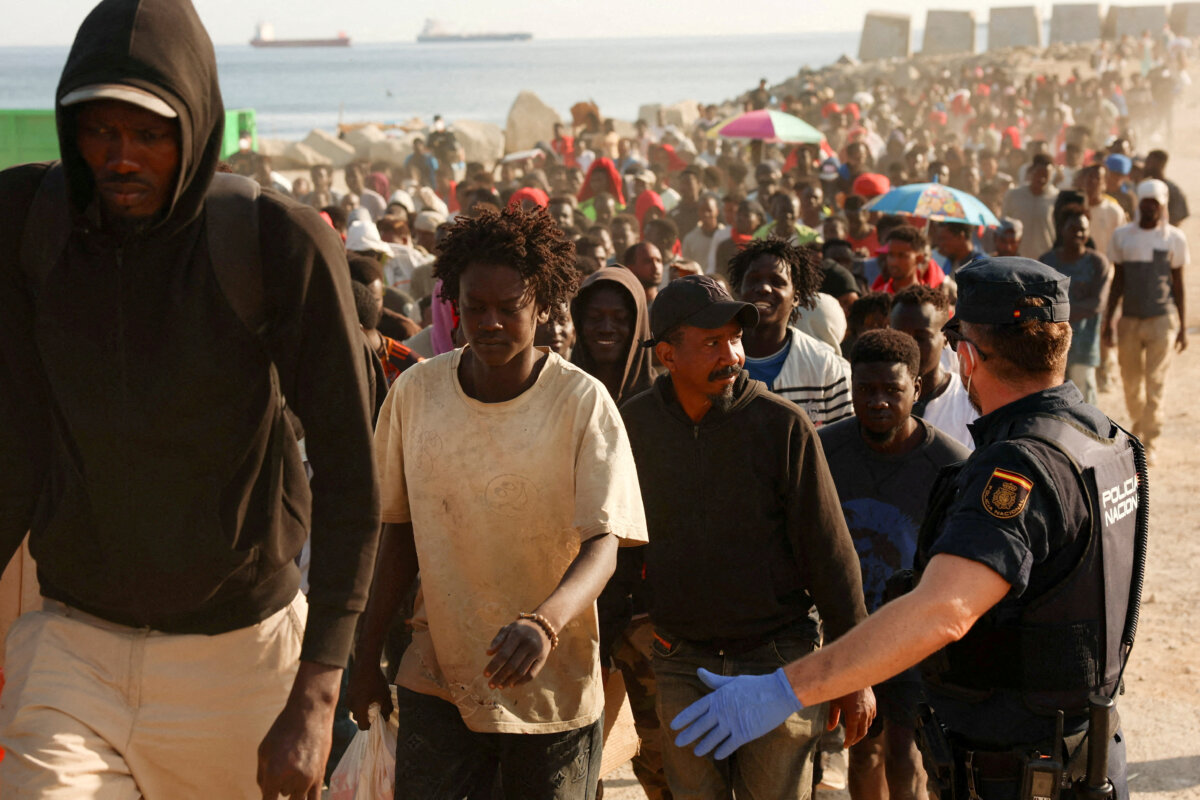

RABAT, Morocco—Morocco, a close U.S. ally, elects a new Parliament on Wednesday in a nationwide vote that comes less than two months after some 72,000 of its citizens, overwhelmingly young men crossed into the Spanish enclave of Ceuta on July 30.
The party that comes out on top will lead the government as the country readies to cohost the 2030 World Cup.
But a year after youth-led protests shook the country, this election may test the legitimacy of the system.
“The key is clearly turnout,” French historian Pierre Vermeren, a Morocco specialist and author of “Morocco in 100 Questions,” told The Epoch Times.
The electoral roll comprises 15.8 million names, down from nearly 18 million in 2021, in a country of about 37 million.
“With 15 million registered voters, 8 million ballots would be fine. If there are only 4 million, it will mean that democratic life, as it is orchestrated, has practically no support in the country,” Vermeren said.
Moroccans ages 18 to 24 make up about 12 percent of the population but only 3 percent of registered voters, while those over 60 account for nearly a third.
The Ceuta Shadow
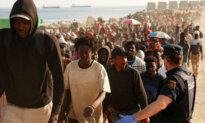
On July 30 and 31, tens of thousands of Moroccans swam or walked into Ceuta after rumors spread online that the border was open and that Spanish courts would allow them to stay.
Vermeren sees the episode through economist Albert Hirschman’s concept of “exit, voice, and loyalty.”
“When people are unhappy with a regime, they can fight to reform it, overthrow it, or leave,” he said. “This mass flight, even at the risk of dying, is the counterpart of a political process that means nothing, or very little, to this youth.”
A year earlier, the GenZ 212 protests over the state of hospitals and schools ended with three demonstrators shot dead near Agadir and more than 2,000 arrests.
Young Moroccans interviewed by The Epoch Times on Saturday at a makeshift camp on Ceuta’s Benítez beach said they had little interest in the election and did not expect it to improve their lives.
Back in Morocco, the Islamist Justice and Development Party (PJD) and the Party of Progress and Socialism, the successor to the Moroccan Communist Party, blamed the policies of the National Rally of Independents (RNI)-led government for the crisis and called for a royal commission of inquiry into the events.
Youth unemployment reached 37 percent last year, while 2.9 million Moroccans ages 15 to 29 were neither working nor studying. Government figures also put the share of the population living in relative poverty at 12.7 percent.
For Vermeren, however, the problem is a longstanding structural challenge that extends beyond Morocco to much of North Africa.
“The only hope for change, in my view, would be the emergence of an industrial sector,” he said. “But Europe sent its industrial jobs to Asia, not to North Africa.”
“Today, we are all paying the price for those decisions. Europe has become dependent on China, while every year North Africa sees masses of young people entering a job market that offers them no real prospects and who want to come to Europe where unemployment is also high.”
The Candidates
Twenty-seven parties are fielding 7,288 candidates for 395 seats. Opinion polls are banned, and the king appoints the head of government from the party that finishes first.
The RNI and the Authenticity and Modernity Party (PAM), two parties close to the Palace that have run the government since 2021, are campaigning on a guaranteed monthly minimum wage of 5,000 dirhams ($525), the creation of 1 million jobs, and an income tax exemption for workers earning less than 15,000 dirhams ($1,575) a month.
Their opponents are pledging to reduce economic disparities between regions and to strengthen anti-corruption measures.
The PJD, which led the government from 2011 to 2021 before collapsing from 125 seats to just 13, is the largest party running in opposition to the governing coalition.
Observers at the time attributed its defeat in part to its failure to deliver on promises to lift more Moroccans out of poverty and improve public education and healthcare, according to the BBC.
Its support while in government for subsidy cuts and the normalization of relations with Israel has also been cited as contributing to its decline.
“That party would never on its own have cut subsidies or signed an agreement with Israel. The palace obliged it to, because sovereignty ministries like foreign relations are in the hands of the monarchy. Being in government did it no good,” Vermeren said.
Foreign Policy Stays at the Palace
On Sept. 16 in New York, during a meeting hosted by U.S. Ambassador to the U.N. Mike Waltz, Israeli Foreign Minister Gideon Sa’ar and his Moroccan counterpart, Nasser Bourita, agreed to upgrade their countries’ liaison offices to embassies and exchange ambassadors, according to the Israeli Foreign Ministry.
The PJD responded with a statement rejecting any further normalization with what it called “the criminal Zionist entity.”
For Vermeren, even if a PJD victory would be unlikely to translate directly into a change in foreign policy, the election will offer a measure of whether political Islam has regained some of the ground it lost five years ago.
The question, he said, is “whether the Islamists have recovered, or whether the Islamist utopia has collapsed and vanished like the socialist utopia before it.”
 Friends Read Free
Copy
Facebook
Tweet
Friends Read Free
Copy
Facebook
Tweet