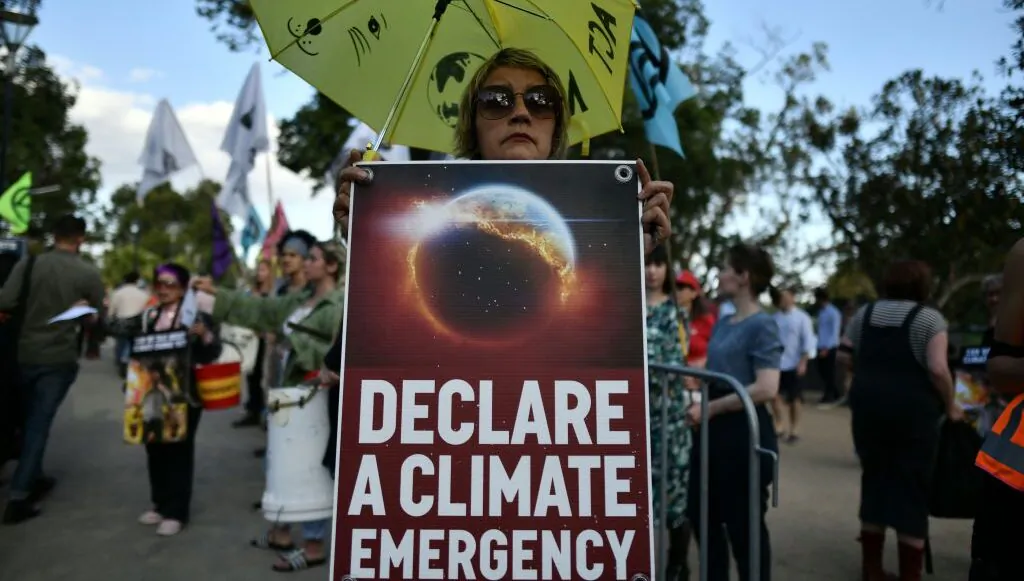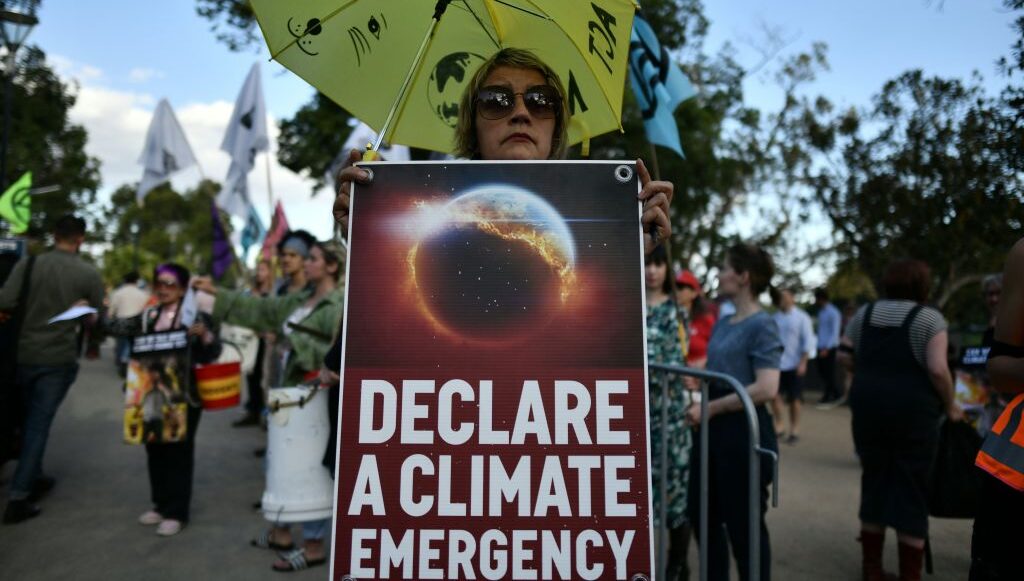

Many of the high-profile challenges by environmental activist groups against major projects are being backed by litigation funders—large, mostly foreign-owned companies that fund legal fees and other expenses in return for a significant share of any damages and costs awarded to the plaintiffs.
A report by the Menzies Research Centre, Open Lawfare, revealed the cost of delays caused by actions filed against various developments was $1.2 billion (US$809 million) in 2016.
However, between August 2022 and June 2024, this had rocketed to $17.48 billion and placed almost 30,000 jobs at risk.
Projects affected by environmental activism, August 2022 to June 2024
| Project | State | Industrial output value ($m) | Employment |
| Angus Place Coal Mine | NSW | 354.9 | 613 |
| Baralaba South Coal Mine | QLD | 600.0 | 613 |
| China Stone Coal Mine | QLD | 11,323.0 | 19,564 |
| Glendell Coal Mine | NSW | 354.9 | 613 |
| Hunter Valley Operations North | NSW | 845.0 | 1,460 |
| Hunter Valley Operations South | NSW | 845.0 | 1,460 |
| Mount Pleasant Coal Mine | NSW | 1,605.5 | 2,744 |
| Narrabri Underground Mine | NSW | 709.8 | 1,226 |
| Winchester South Coal Mine | QLD | 845.0 | 1,460 |
| Total | 17,483.1 | 29,784 | |
Source: Menzies Research Centre, “Open Lawfare.”
At the same time, the revenue of Australia’s 25 largest environmental groups increased from $112.8 million in 2015 to $274.5 million in 2023, and their full-time staff had gone from 374 to 880.
Australia is the second-largest jurisdiction in the world for what the Menzies Centre calls “environmental lawfare,” behind only the United States. On a per capita basis, it has the largest number of climate-related lawsuits—127 such actions were launched in Australia from the 1990s to 2022.
The report contained detailed case studies of the effects of lawsuits on five recent proposals, including Waratah Coal’s development of a thermal coal mine in the Galilee Basin, dropped by the company in February 2023 after more than three years of litigation.
Additionally, there was the Santos’s Barossa Gas Project, a $5.8 billion plan that was finally given approval in January 2024, after nearly three years of litigation.
Also at risk is the $16.5 billion Woodside Energy Scarborough Gas Project in Western Australia, which the Australian Conservation Foundation claims would endanger the Great Barrier Reef on Australia’s eastern coastline.
“Australian courts increasingly serve as forums for activist groups to pursue ideological agendas,” the Menzies Centre said, adding that “courts are increasingly asked to decide essentially ideological claims pursued by activists.”
It cited a case in which eight 16-year-olds from Victoria asked the Federal Court to prevent the approval of the Vickery coal mine extension in northern New South Wales because the minister owed them a duty of care to avoid personal harm to children by climate change.
Australians Concerned By Judicial Decision-Making
A survey commissioned by the Centre found that 82 percent of Australians were “somewhat” or “very” concerned that judges may be making decisions based on motives other than a strict interpretation of the law, with 26 percent in the latter category.
The class actions, the Menzies Centre claims, are largely underwritten by multi-million dollar, mostly foreign-owned litigation funders.
These companies pay the ongoing legal costs of a class action in the expectation of receiving a large portion of any damages awarded by the court. There are an estimated 22 such companies in Australia, 14 of which are owned offshore.
They derive margins of well over 200 percent on their investments, and their fees—together with those of a relatively small number of “no-win-no-fee” law firms—sometimes leave the plaintiffs with less than half the amount to which they would otherwise be entitled.
Matt Corrigan, General Counsel of the Australian Law Reform Commission, testified in 2020 to a Joint Parliamentary Committee on Corporations and Financial Services that there was “a legitimate policy question as to the use of judicial resources to secure small sums for individual group members while creating enormous returns to lawyers and funders.”
The government committed $10 million in funding for environmental “lawfare” groups between 2022 and 2026, which was confirmed in the 2024 Budget.
Santos Pursues Environment Group After Failed Case
One example of a failed case concerns the Environmental Defenders Office (EDO), which represented some Tiwi Islanders, the plaintiffs, who opposed Santos’ Barossa Gas Project.
The EDO, which funded the case, was sharply criticised by a judge in the ruling for “coaching” witnesses, lying to plaintiffs, and giving evidence “so lacking in integrity that no weight can be placed [on it].”
Environment Minister Tanya Plibersek sought independent legal advice on the conduct of the EDO following the judge’s adverse opinion, but found it had not breached the conditions of its $8.2 million in federal funding.
However, Santos is preparing to sue the group for damages.
The energy company recently had a major win when the same judge ruled that the EDO must hand over communications with one of its witnesses and with other environmental organisations.
The gas company claimed the EDO was “itself an activist organisation and not merely the lawyer for the applicants in the proceeding” and that “the outcome sought by the applicants in the proceeding aligned with its own political or ideological objectives.”
Liberal Senator Jonathon Duniam and Salmon Tasmania are also calling for the EDO to be defunded after it called on the federal government to “reconsider” whether the salmon farming industry has all the environmental approvals it requires to operate.
“Green lawfare is not limited to class-action cases; all over Australia, activist groups take advantage of laws that purport to protect the environment to block projects—including renewable energy projects—on ideological grounds,” the report said.
 Friends Read Free
Copy
Facebook
Tweet
Friends Read Free
Copy
Facebook
Tweet