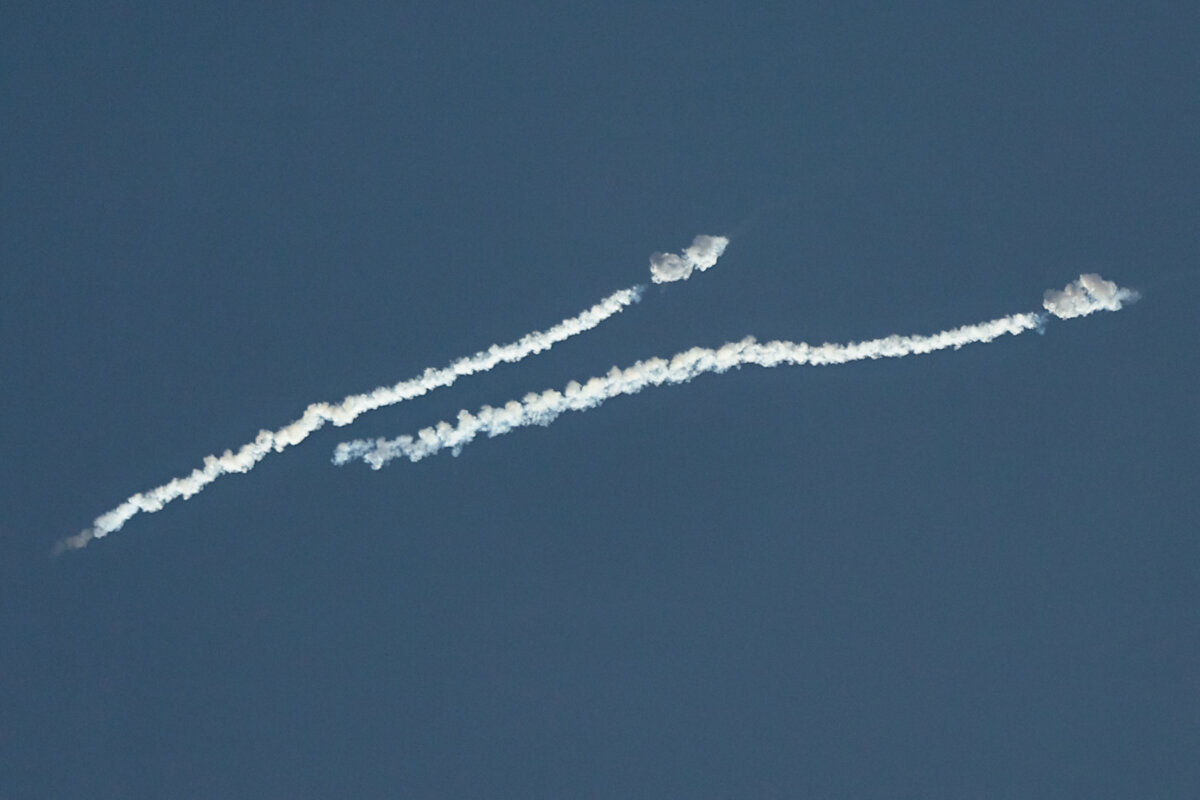

Turkish officials said on March 4 that NATO’s defense system destroyed an Iranian missile that was headed into Turkey’s airspace.
The missile was detected over Iraqi and Syrian airspace before NATO’s air defense systems destroyed it, Turkey’s head of communications, Burhanettin Duran, wrote in a statement on X.
“Turkey’s resolve and capacity to ensure the security of our country and our esteemed nation remain at the highest level. All necessary steps to defend Turkish territory and airspace will be taken without hesitation,” Duran said in the post.
Turkey, he said, would respond to “any potential hostile acts” in accordance with international law. From the statement, it was not clear whether the country would invoke any NATO provisions.
While the spokesman did not provide more details, he said Turkish authorities “particularly request that media outlets and social media users act with greater sensitivity and refrain from giving credence to unverified reports or posts that may cause panic among the public or contain disinformation” and that it’s “crucial to exercise caution with any information or content other than official statements.”
Secretary of War Pete Hegseth told reporters at the Pentagon on Wednesday morning that the incident likely wouldn’t qualify for the collective NATO Article 5 defense provision, which stipulates that an attack on one NATO member is an attack on all of the Atlantic alliance’s members.
“We are aware of that particular engagement, although there is no sense that it would trigger anything like Article 5,” he said.
Article 5 has been invoked only once in NATO’s history, after the Sept. 11, 2001, terrorist attacks that targeted the United States. Turkey is the first NATO member to have an Iranian missile get near its airspace since the start of the airstrikes on Feb. 28.
In response to the U.S.–Israeli air strikes, Iran has fired missiles and drones at neighboring Middle Eastern countries, striking areas in Israel, Saudi Arabia, Bahrain, the United Arab Emirates, Iraq, and elsewhere.
The State Department has warned Americans not to travel to roughly a dozen Middle Eastern nations, and hundreds of flights across the region have been canceled. Joint Chiefs of Staff Chairman Dan Caine said on Wednesday that the military will be helping to get U.S. citizens out using military planes.
Hegseth said that more U.S. forces will be arriving in the Middle East, adding that the United States “will take all the time we need to make sure that we succeed.”
He also said that a torpedo from a U.S. submarine sank an Iranian warship on Tuesday night, the first such attack on an enemy since World War II.
“The Iranian navy rests at the bottom of the Persian Gulf,” Hegeth said.
The first round of strikes on Feb. 28 killed the Iranian leader, Ayatollah Ali Khamenei, and dozens of top regime officials. So far, no one has been tapped to replace Khamenei, who had ruled the country since 1989.
The Associated Press contributed to this report.
 Friends Read Free
Copy
Facebook
Tweet
Friends Read Free
Copy
Facebook
Tweet