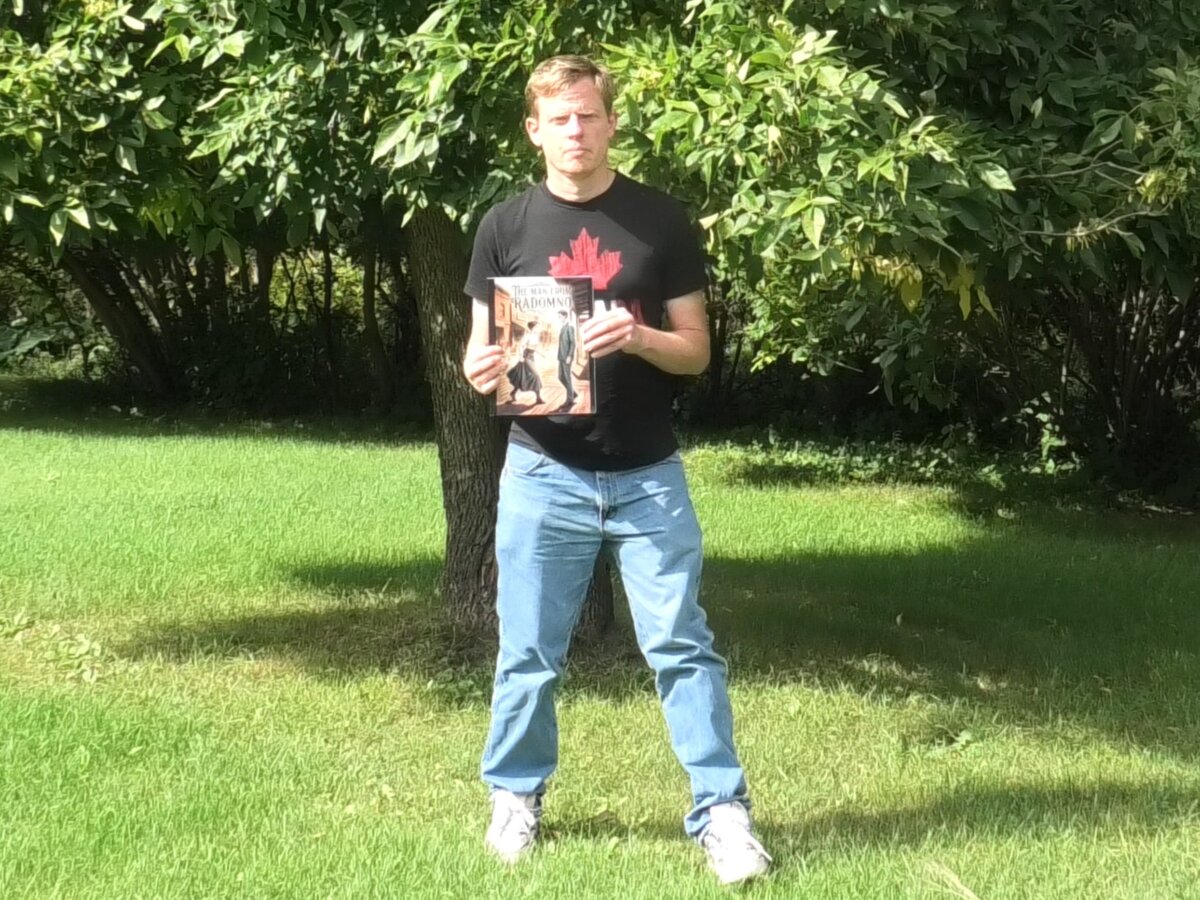

For decades, Canadians knew him as writer Frederick Philip Grove. But before he became a prominent literary figure, he was Felix Paul Greve, a German immigrant carrying a secret that would remain hidden for decades.
That mystery caught the attention of Kelvin Bueckert, an author and volunteer with the Gladstone District Museum in west-central Manitoba. While searching for a local story for the museum’s theatre troupe to perform on Canada Day last year, he came across the story of the German immigrant.
“I always keep an eye out for interesting local stories to write about,” Bueckert told The Epoch Times in an interview about the graphic novel he wrote exploring Greve’s life in Gladstone.
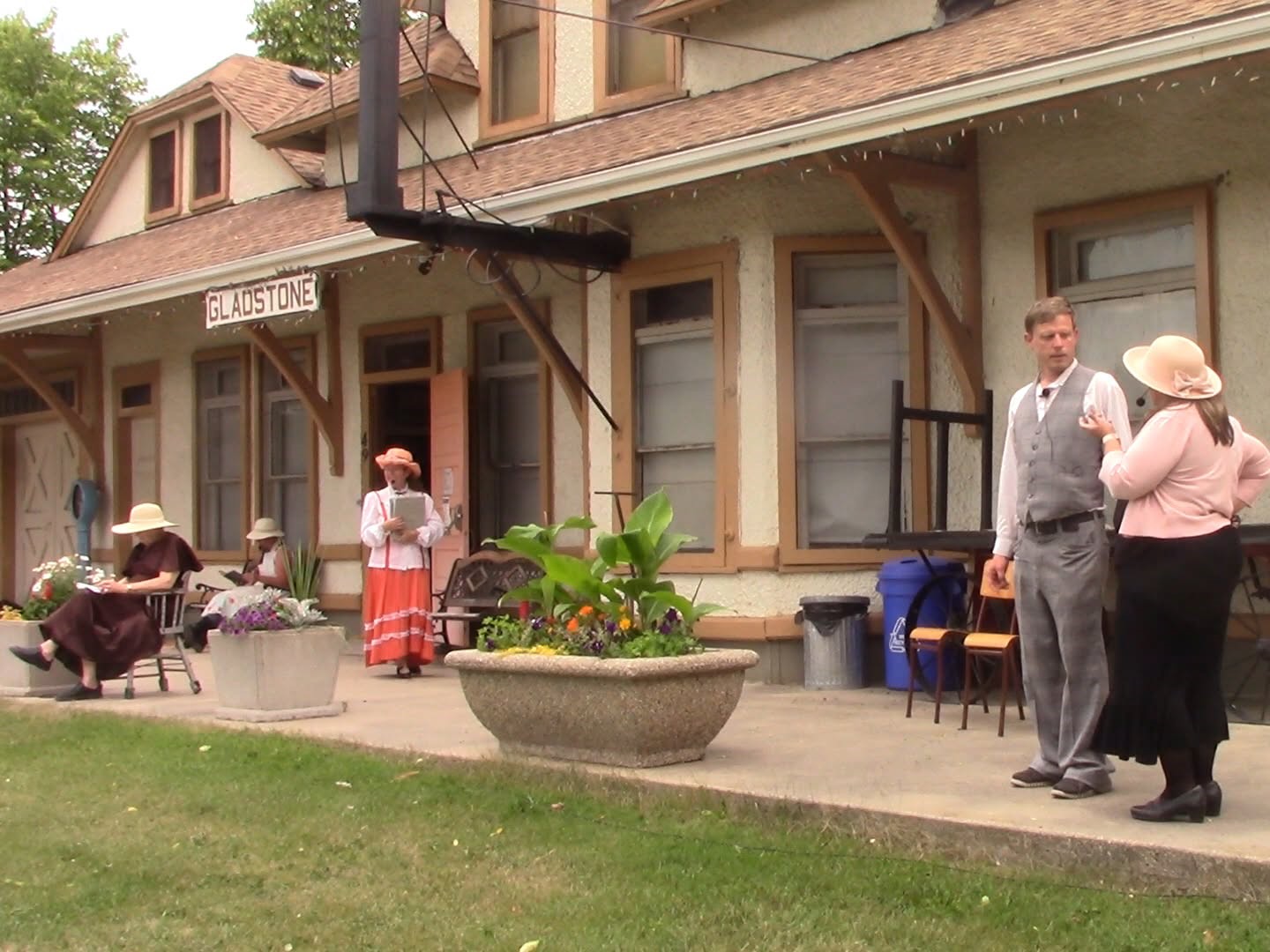 Members of the Gladstone Museum theatre troupe perform a play about Frederick Philip Grove’s life during Canada Day 2025 celebrations. (Photo courtesy Kelvin Bueckert)
After leaving Gladstone, Greve took the name Frederick Philip Grove and began writing realistic fiction about the Canadian Prairies.
He continued teaching at other Manitoba schools while developing his writing career. His first published book, “Over Prairie Trails,” a collection of nature essays based partly on his experiences in Manitoba, appeared in 1922 and was well received. His first Canadian novel, “Settlers of the Marsh,” followed in 1925.
Bueckert said he was intrigued by how Greve, living under the name Frederick Philip Grove, went on to build a literary career.
“I was looking at that, and that’s such a crazy story, although it is pretty good for acting out,” Bueckert said.
Bueckert said it was only decades later the public learned most of Greve’s life story was a fabrication.
According to the Canadian Encyclopedia, Felix Paul Berthold Friedrich Greve was born in Radomno on Feb. 2, 1879. He translated English and French books into German before leaving Europe in 1909.
Greve died in Simcoe, Ont., on Aug. 19, 1948.
Graphic Novel
Bueckert said he wrote the theatre script about Greve’s life in the vein of a detective uncovering a mystery, and the story “went over quite well” with theatre audiences. However, he didn’t want the script to sit on a shelf.
“And then I was thinking, ‘Well, this kind of story would make a good comic book,’” he said. “So, I started tinkering around with ways to do it, and then eventually it came together, and now it just came out.”
A news release promoting the book, “The Man from Radomno,” says the graphic novel blends historical fiction with lighthearted storytelling, inviting readers to “explore one of Gladstone’s most famous and enigmatic figures.”
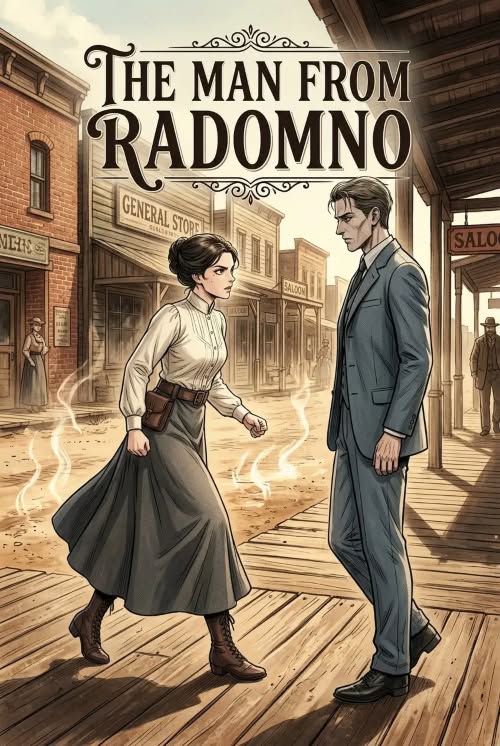 The cover of the graphic novel, “The Man from Radomno.” (Photo courtesy Kelvin Bueckert)
Bueckert said Greve also wrote an autobiography in the 1940s, but that much of his account of his earlier life was later shown to be fictionalized.
Bueckert said a Canadian scholar was researching Grove in 1971 when he found evidence at the British Museum that did not fit the author’s account of his past, helping unravel his identity as Felix Paul Greve.
Bueckert also found papers in the Gladstone Museum showing that a now-deceased volunteer knew Greve. Researchers contacted the volunteer in the 1970s and ’80s while looking for information.
“I enjoy finding out about stuff like this myself. It gives me a bit of satisfaction,” the Gladstone author said, adding that anyone who enjoys history or “unusual stories” should read the graphic novel.
 Friends Read Free
Copy
Facebook
Tweet
Friends Read Free
Copy
Facebook
Tweet