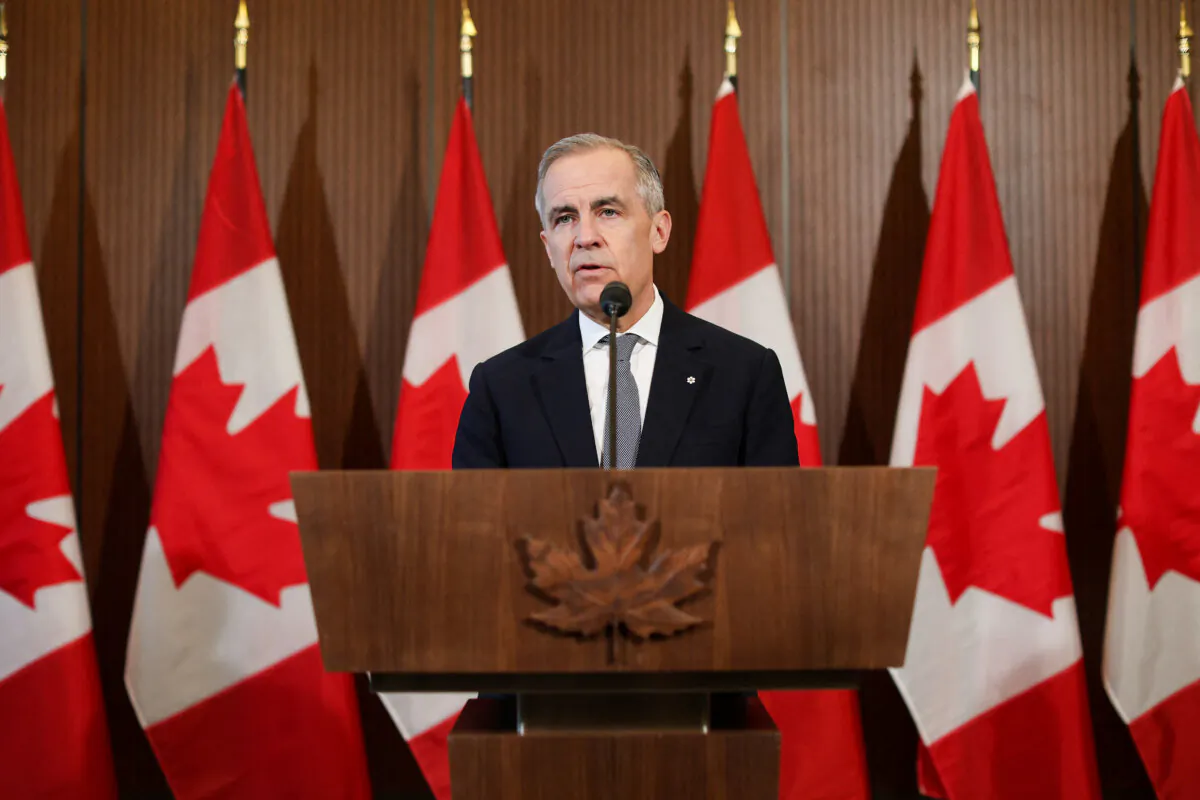

Prime Minister Mark Carney says NATO’s new defence spending target of 5 percent of the GDP would add up to around $150 billion per year for Canada.
Speaking in an interview with CNN ahead of the NATO leaders’ summit at The Hague, Netherlands, on June 24, Carney said that Canada could meet this price tag in part with expanded development of the country’s critical minerals, which he described as “one of the biggest and most varied.”
NATO Secretary-General Mark Rutte has proposed that member states hike defence spending to 5 percent of GDP in the next 10 years, specifically 3.5 percent of annual GDP on core defense needs and 1.5 percent on defence-adjacent industries and technologies. Rutte says increased military spending is necessary to meet potential threats to NATO in the future, particularly from China and Russia.
Ottawa spent $41 billion on defence last year, according to NATO, which represents around 1.37 percent of Canada’s GDP. Carney has committed to increase defence spending in order to meet NATO’s 2 percent target by the end of this fiscal year. This year, all member states are expected to satisfy the requirement, which was first set in 2014.
The longer-term 5 percent goal will be a challenge for many NATO members.
According to NATO’s expenditure data released last year, Poland had the highest estimated defence spending as a share of GDP of 4.1 percent, followed by Estonia (3.43 percent) and the United States (3.38 percent). The majority of members were estimated to have spent less than 2.5 percent of GDP on defence in 2024.
France, the Netherlands, Germany, and the U.K. have all committed to boost spending to reach the 5 percent target by 2035, along with several other NATO countries bordering Ukraine, Russia, and Belarus.
NATO has already carved out an exception for Spain, which will not have to reach the 5 percent target. Slovakian Prime Minister Robert Fico said the new target would amount to almost 20 percent of Slovakia’s budget, which he called “absolutely absurd.”
Carney said working up to the 5 percent goal will also include Canada working with partner nations in Europe and around the world to develop mineral deposits in the country.
“Some of the spending for that counts towards that 5 percent. In fact, a lot of it will count towards that 5 percent because of infrastructure spending—it’s ports and railroads and other ways to get these minerals out,” Carney told CNN.
Carney signed a major defence and security agreement with the EU on June 23. European Commission President Ursula von der Leyen said a deal will be developed “swiftly” for Canada to enter and contribute to the EU’s 150 billion euro ($240 billion) Security Action for Europe program contained within the ReArm Europe policy.
NATO has specified 12 critical minerals that are crucial for defence productions including missiles, tanks, aircraft, jet engines, satellites, computer and telecommunications systems, and submarines. Canada has some of the largest deposits of critical minerals in the world, including the sixth-largest lithium reserves on the planet.
The Canadian Press contributed to this report.
 Friends Read Free
Copy
Facebook
Tweet
Friends Read Free
Copy
Facebook
Tweet