
Britain is set to introduce new laws targeting threats from foreign entities and their proxies.
The plans were announced in the King’s Speech on Wednesday, as Westminster seeks to strengthen national security amid rising concerns about hostile activities on UK soil.
King Charles told Parliament, “My Government will introduce legislation to tackle the growing threat from foreign state entities and their proxies.”
The new measure is known as the Tackling State Threats Bill.
The speech also pledged urgent action to tackle anti-Semitism and ensure all communities feel safe.
In his introduction to the speech, Prime Minister Keir Starmer said the government would tackle extremism “including where it is sponsored by foreign powers that are hostile to the UK, such as Iran.”
The Tackling State Threats Bill will give ministers powers to designate state-backed organizations that threaten national security through espionage, sabotage, interference, or similar activities.
It will create new criminal offenses for belonging to or supporting such designated groups. The government says the measures will create a “tougher operating environment for foreign intelligence services and their proxies.”
The legislation addresses gaps in existing laws that make it difficult to proscribe or ban entities directly linked to foreign states.
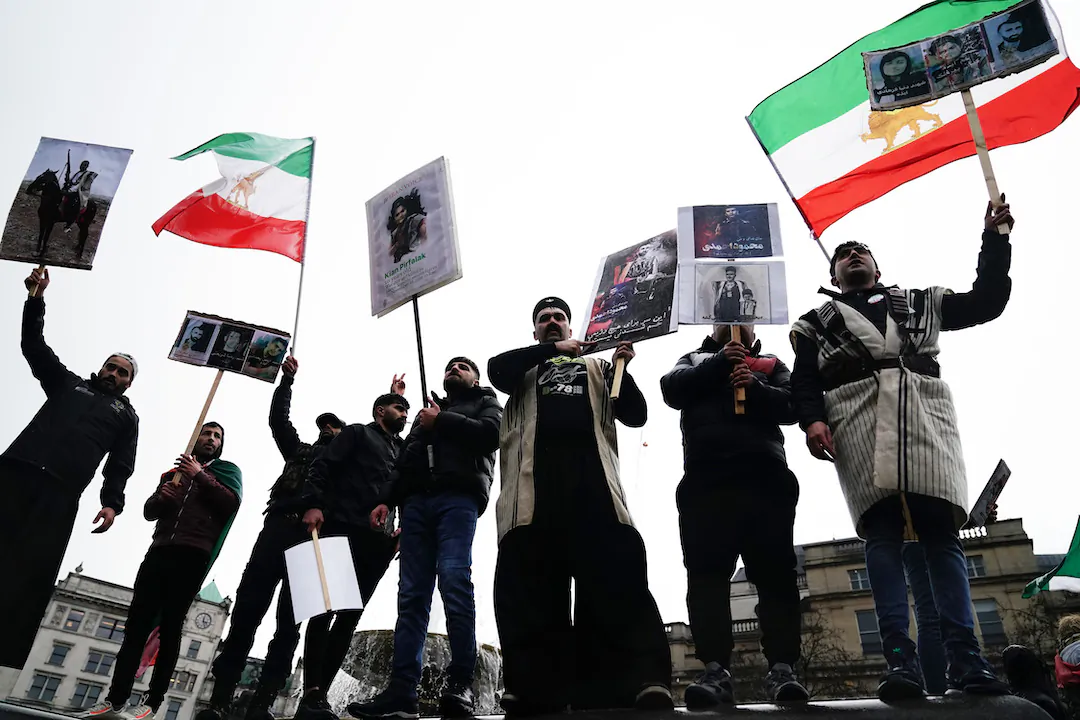
It comes after a series of arson attacks on Jewish community sites in London and incidents targeting Iranian dissidents. Police have been examining possible links to Iran.
Several lawmakers have called for the proscription of Iran’s Islamic Revolutionary Guard Corps (IRGC). The IRGC is an elite military force that protects Iran’s clerical rule and controls large parts of the country’s economy.
The government has not explicitly confirmed that the IRGC will be the first group targeted under the new powers.
China is also a major focus. Security chiefs have repeatedly warned about threats from Beijing, including sophisticated cyber operations and transnational repression targeting Hong Kong dissidents in the UK.
In a recent high-profile case, two men—including a former UK Border Force officer—were convicted of spying for China by conducting surveillance on Hong Kong pro-democracy activists living in Britain.
One operation involved an attempt to kidnap a Hong Kong woman in Yorkshire, where suspects poured water under her door to fake a flood and trick their way inside.
A separate National Security Bill will address individuals fixated on violence and planning mass killings who are not clearly driven by a specific ideology. This responds to the 2024 Southport attack, where three young girls were killed at a Taylor Swift-themed dance class.
It will also criminalize the creation and sharing of the most harmful online material and allow polygraph testing for state threat offenders.
The King’s Speech described the world as “increasingly dangerous and volatile,” citing the conflict in the Middle East as a recent example.
Security chiefs have warned for years about threats from states including Iran, Russia, and China. Several people have been convicted in the UK for spying or related offenses on their behalf.
The new bills form part of a wider legislative program covering economic security, public services, and energy independence. Full details will be set out when the legislation is introduced to Parliament.
 Friends Read Free
Copy
Facebook
Tweet
Friends Read Free
Copy
Facebook
Tweet