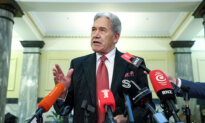

While Prime Minister Christopher Luxon is in Beijing encouraging CCP officials to increase trade and tourism with New Zealand, his Foreign Minister Winston Peters appears to have taken Cabinet by surprise by announcing a freezing of aid to the Cook Islands over concerns about the small Pacific nation’s growing ties to Beijing.
The two countries share a rare form of formal relationship: the Cook Islands operates in free association with New Zealand, governing its own affairs while New Zealand provides assistance with foreign affairs, disaster relief, and defence. Cook Islanders are New Zealand citizens, and there is a significant diaspora in New Zealand.
In 2001, both nations signed the Joint Centenary Declaration, requiring mutual consultation on defence and security.
Peters said this obligation was not upheld when Cook Islands Prime Minister Mark Brown visited Beijing in February and signed a “comprehensive strategic partnership” with China.
New Zealand was not consulted before or after the visit, and Brown later acknowledged that he had not ensured shared interests were protected.
Peters said he had raised the matter with his Chinese counterpart, Wang Yi, during a visit to China in February, and that Wang understood New Zealand’s relationship with the Cook Islands.
New Zealand’s Ministry of Foreign Affairs (MFAT) informed the Cook Islands government of the decision earlier this month, but it only became public on June 19 after it was leaked to local media.
At stake is nearly $18.2 million of development assistance for the 2025/26 financial year, which provides core sector support and represents about four percent of the Cook Islands’ domestic revenue.
Over the past three years, New Zealand has provided nearly $200 million through its development programme, which Peters said is based on a “high-trust relationship.”
Peters said earlier this year that the Declaration imposed an expectation that the Cook Islands government would avoid policies “significantly at variance with New Zealand’s interests” and to “fully and meaningfully” consult New Zealand on major international actions.
Brown had proposed introducing separate Cook Islands passports, but later backed down following domestic opposition and strong objections from Wellington, which warned it would threaten constitutional ties between the two countries.
In May, Wang Yi met with Cook Islands Minister for Foreign Affairs and Immigration, Tingika Elikana, as part of the Third China-Pacific Island Countries Foreign Ministers’ Meeting.
Afterwards, Beijing issued a statement describing the relationship as “mutual assistance among the Global South” and said that “China appreciates the Cook Islands’ commitment to the one-China principle.”
The Cook Islands embassy in Wellington later shared a Facebook post highlighting the meeting from Chinese Foreign Ministry Spokesperson Guo Jiakun.
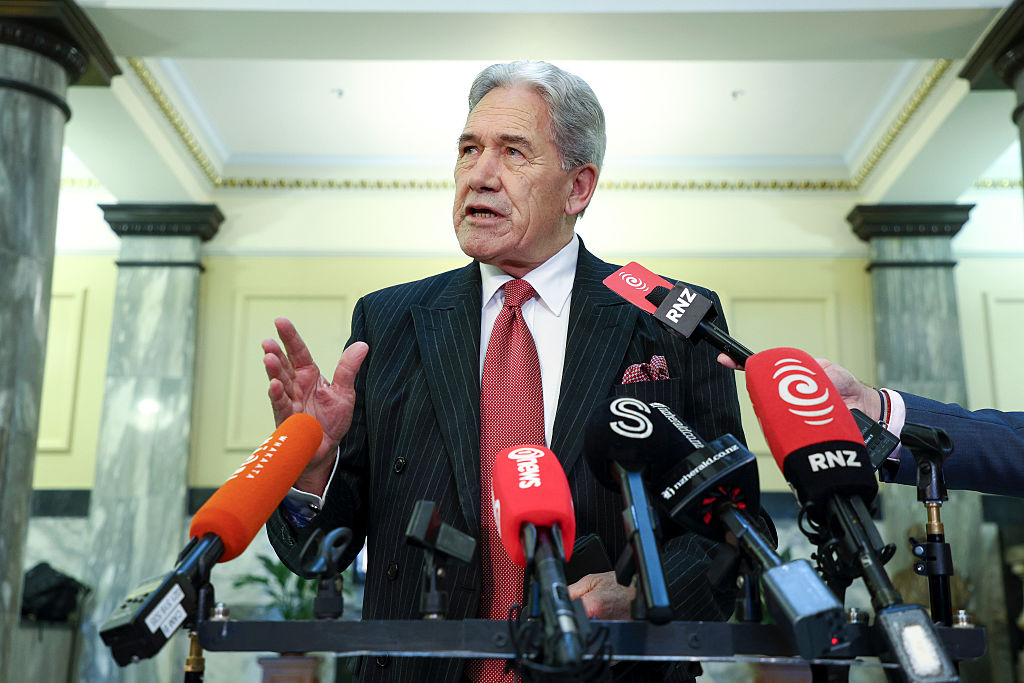
Speaking to reporters on June 19, Peters said the Cook Islands had not given satisfactory answers to New Zealand’s questions about its deals with Beijing and how they were negotiated.
“We have made it very clear in our response … what New Zealand’s position is, on behalf of the Cook Islands people who we have responsibilities to, and above all to the New Zealand taxpayers to whom we are answerable,” he said.
“When we made this decision, we said to them our senior officials need to work on clearing up this misunderstanding and confusion about our arrangements and relationship.”
Officials will now work through the steps the Cook Islands must take for New Zealand to consider resuming the funding.
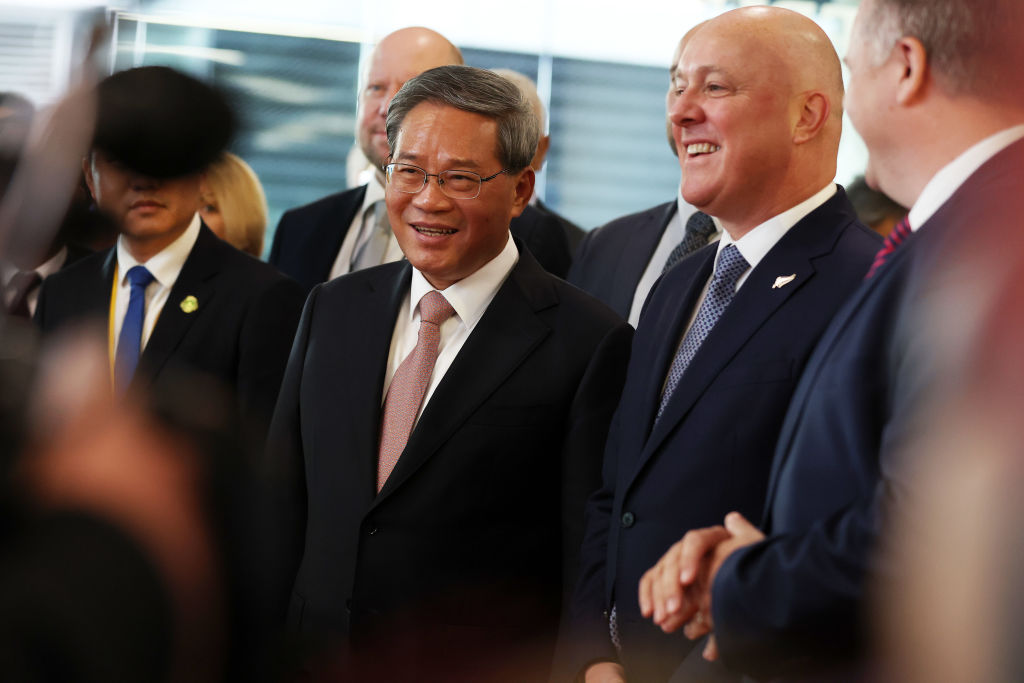
Luxon is currently in China on his first official visit and is due to meet with President Xi Jinping.
Asked about the timing and what he thought the response from Beijing might be, Peters said the decision to pause the funding was not connected to China.
“It’s connected with our special relationship with the Cook Islands, like we have with Niue, like we have in a different setting with the Tokelau Islands. These things go back decades and decades and decades,” he said.
Cook Islands opposition leader Tina Browne said she was “deeply concerned” about the funding pause and is seeking answers from Prime Minister Brown.
She has requested full copies of the agreements with China to assess potential issues and their impact on funding.
“The Prime Minister’s been leading the country to think everything with New Zealand is being repaired … [that] trust is still there,” she said.
“Wham bam, we get this in the Cook Islands News this morning, what does that tell you?
“The indication from the spokesperson of the foreign affairs minister in New Zealand is that, depending on how we move forward, it may affect future funding as well.
“Am I concerned? Deeply concerned. What is next?”
In a statement, the Cook Islands Ministry of Foreign Affairs and Immigration (MFAI) said there had been “a breakdown and difference in the interpretation of the consultation requirements” in the 2001 joint agreement, but that the country remains committed to restoring its high-trust relationship with New Zealand and appreciates the funding support from Wellington.
A ministerial statement on the funding pause is expected in Parliament on June 20.
In New Zealand, Labour Deputy Leader and Pacific Peoples spokesperson Carmel Sepuloni gave guarded support to Peters in a post on X.
“My initial thoughts on the government’s decision to pause funding to the Cook Islands are—yes, signing the agreement with China was out of step with our free association agreement, but urgent face-to-face dialogue is needed, and the timing is odd with the PM being in China,” she wrote.
Amidst increasing concern in both Wellington and Canberra over Beijing’s influence over small Pacific countries whose allegiance has traditionally been to the West, New Zealand also halted new development funding to the Republic of Kiribati, an island in Micronesia in January.
 Friends Read Free
Copy
Facebook
Tweet
Friends Read Free
Copy
Facebook
Tweet