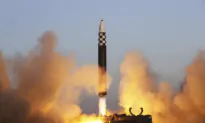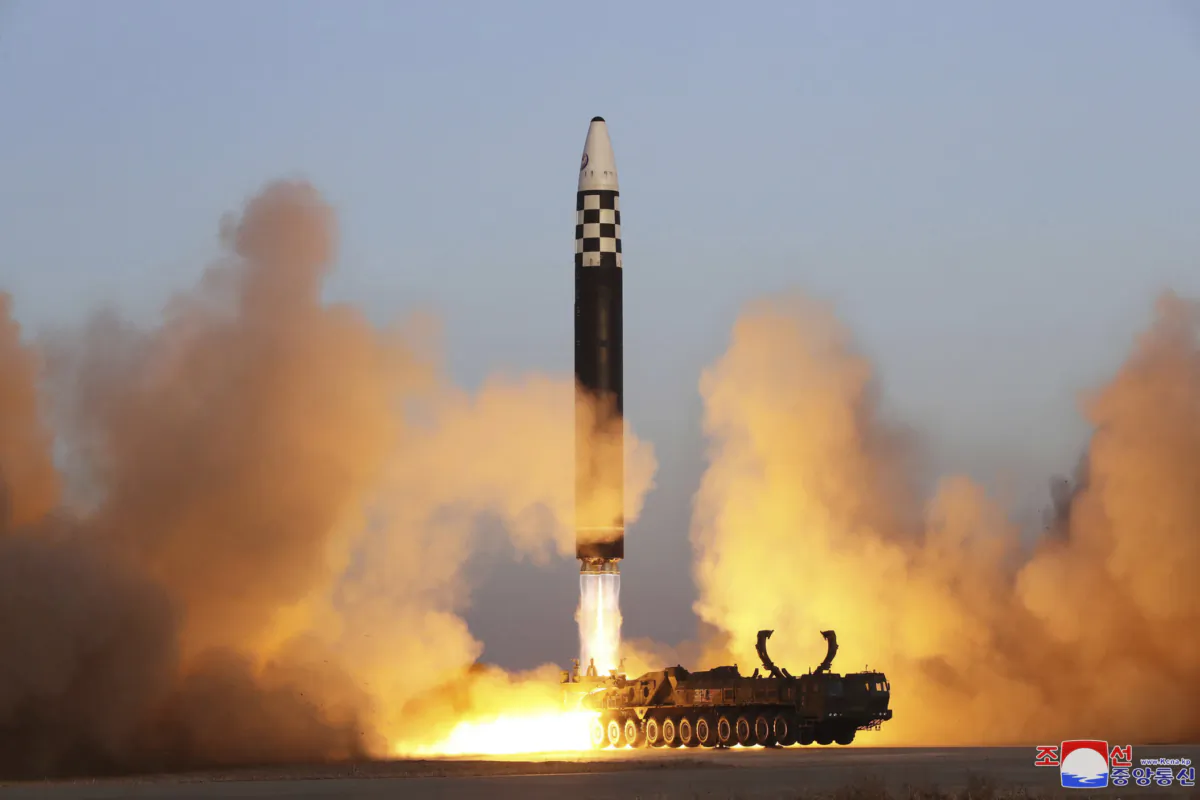

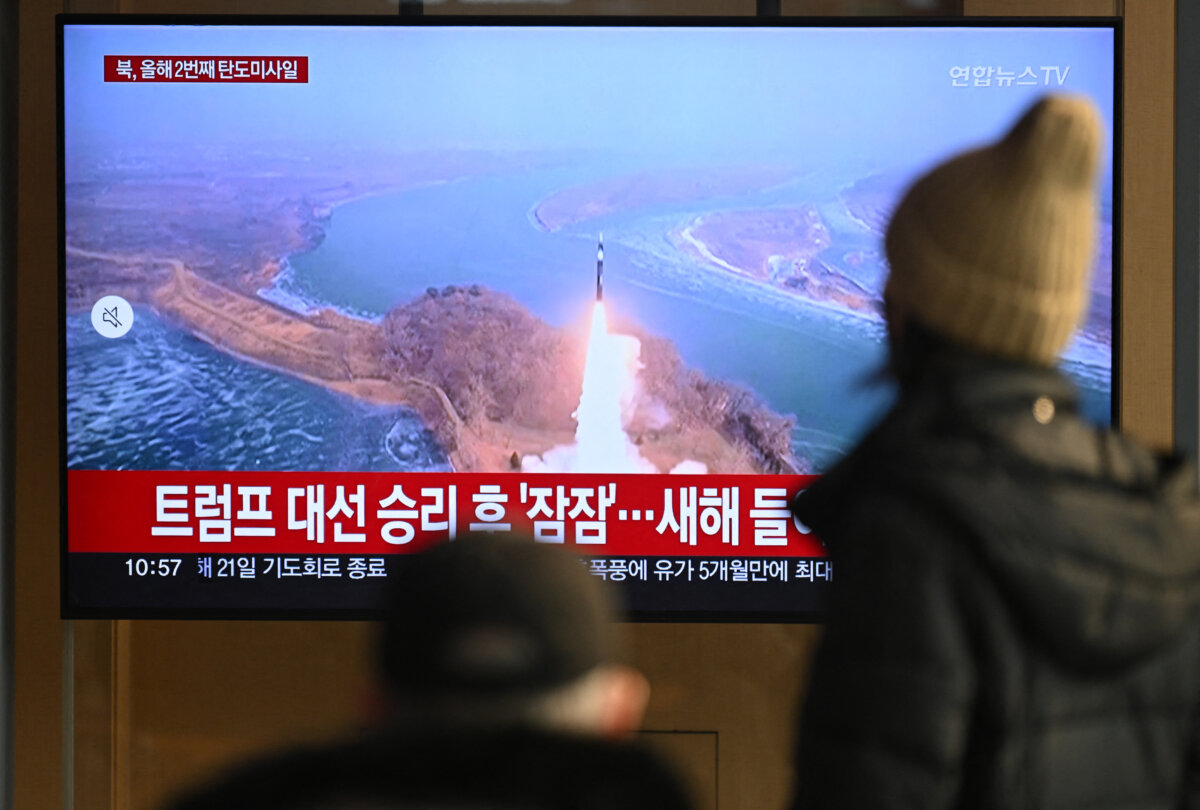
North Korea fired multiple ballistic missiles toward the sea on April 8, South Korea’s military said, extending a series of tests that have dampened Seoul’s hopes for easing tensions between the two nations.
South Korea’s Joint Chiefs of Staff (JCS) said its neighbor unleashed an unidentified missile at about 2:20 p.m. on April 8 from the Wonsan area toward waters off its eastern coast, South Korean news agency Yonhap reported. It flew about 435 miles.
Earlier the same day, Pyongyang fired several unidentified short-range ballistic missiles from around the same area, the JCS stated.
Those missiles flew about 150 miles, the JCS said, and it stated that South Korean and U.S. authorities were conducting a detailed analysis of the situation.
South Korea’s military also said it had detected the launch of a suspected ballistic missile from near Pyongyang on April 7.
“Our military is closely monitoring North Korea’s various movements under a robust South Korea–U.S. combined defense posture and maintains the capabilities and posture to respond to any provocation in an overwhelming manner,” the JCS said, according to Yonhap.
U.S. Forces Korea said it is aware of the launches and is consulting with allies and partners.
“Based on current assessments, these events do not pose an immediate threat to U.S. personnel or territory, or to our allies,” it stated. “The United States remains committed to the defense of the U.S. homeland and our allies in the region.”
The presidential Blue House in Seoul convened an emergency National Security Council meeting on April 8, calling the earlier launches a provocation that violated U.N. Security Council resolutions, and urging Pyongyang to end such tests.
Pyongyang rejects the U.N. ban, saying it infringes its sovereign right to self-defense.
The Japanese coast guard said the latest missile fell into the sea about 10 minutes after launch. Tokyo’s Ministry of Defense said that no missiles entered its territorial waters or exclusive economic zone.
Pyongyang’s actions “threaten the peace and security of Japan, the region, and the international community,” the ministry stated.
The incidents are North Korea’s fourth, fifth, and sixth ballistic missile launches this year, following two launches in January and another in March.
The back-to-back launches came after Pyongyang officials said there is no intention of improving ties with South Korea, whose liberal government has expressed its hopes to restore long-dormant dialogue.
On April 7, Jang Kum Chol, first vice minister at Pyongyang’s Foreign Ministry, said South Korea would always remain North Korea’s “most hostile enemy state,” according to the state-backed Korea Central News Agency.
He criticized the South as “world-startling fools” engaged in wishful thinking over a recent statement by North Korean leader Kim Jong Un’s sister, Kim Yo Jong.
South Korean President Lee Jae-myung expressed regret on April 6 for civilian drone flights entering North Korea, saying they caused “unnecessary military tension,” according to Yonhap.
Kim Yo Jong praised Lee for what she called honesty and courage, but she reiterated a threat to retaliate if such flights happened again.
South Korean officials responded by describing Kim Yo Jong’s statement as meaningful progress in relations, according to Yonhap.
Jang said Kim Yo Jong’s statement was intended as a warning, citing her calling South Korea “the dogs affected by mange that blindly bark to the tune of neighboring dogs” as she criticized it for recently cosponsoring a U.N. resolution on the North’s alleged human rights violations.
Reuters and The Associated Press contributed to this report.
 Friends Read Free
Copy
Facebook
Tweet
Friends Read Free
Copy
Facebook
Tweet