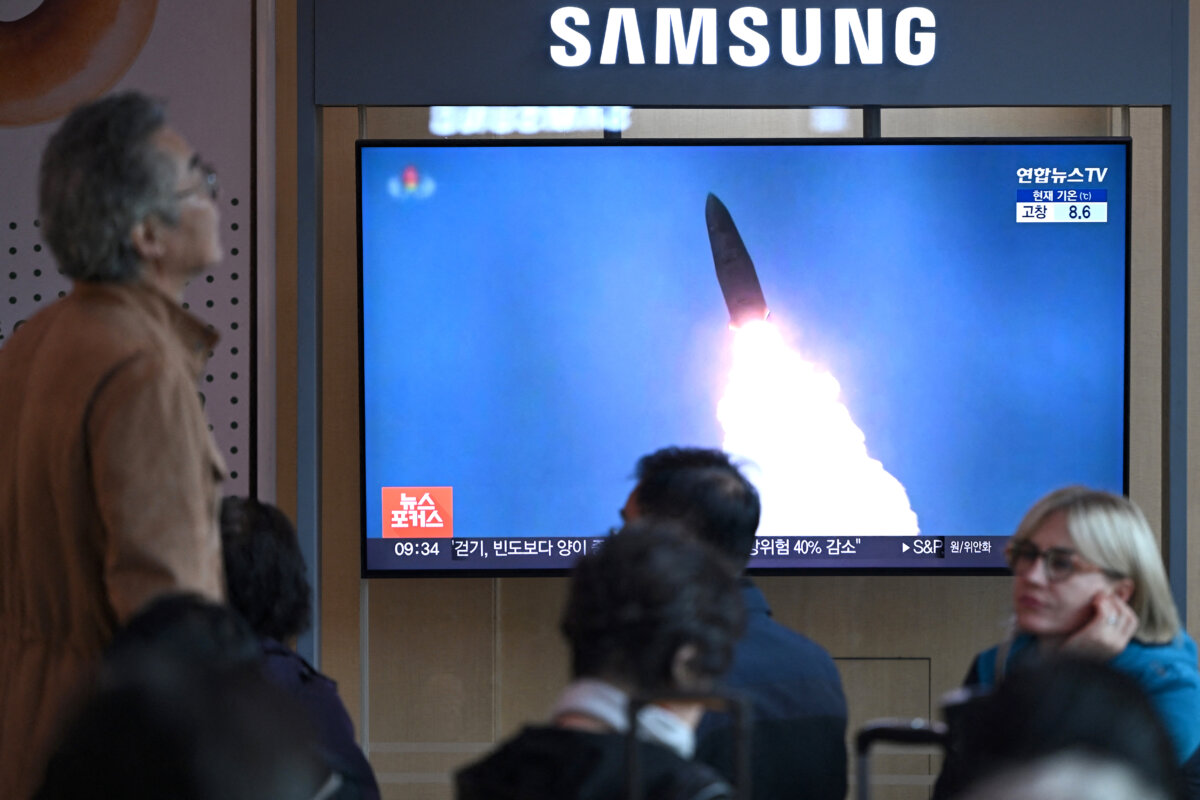

North Korea fired a ballistic missile toward its eastern waters on Nov. 7, according to South Korea and Japan, marking Pyongyang’s second launch in less than three weeks after conducting a test ahead of U.S. President Donald Trump’s visit to South Korea last month.
The suspected short-range ballistic missile was launched from North Korea’s northwest region near the border with China, according to South Korea’s military. It stated that the missile traveled a distance of about 435 miles.
South Korean and U.S. surveillance systems detected signs of the launch in advance and tracked the missile during its flight, the military stated, noting that the information was shared with Japan.
Japanese Prime Minister Sanae Takaichi said the missile is believed to have fallen outside Japan’s exclusive economic zone, a maritime area extending up to 200 nautical miles from its coastline.
“No damage has been confirmed at this time,” she said in a Nov. 7 statement. “In response to this situation, at around 12:38 p.m., I issued instructions to provide information to the public and to ensure public safety, among other matters. We will continue to gather and analyze information.”
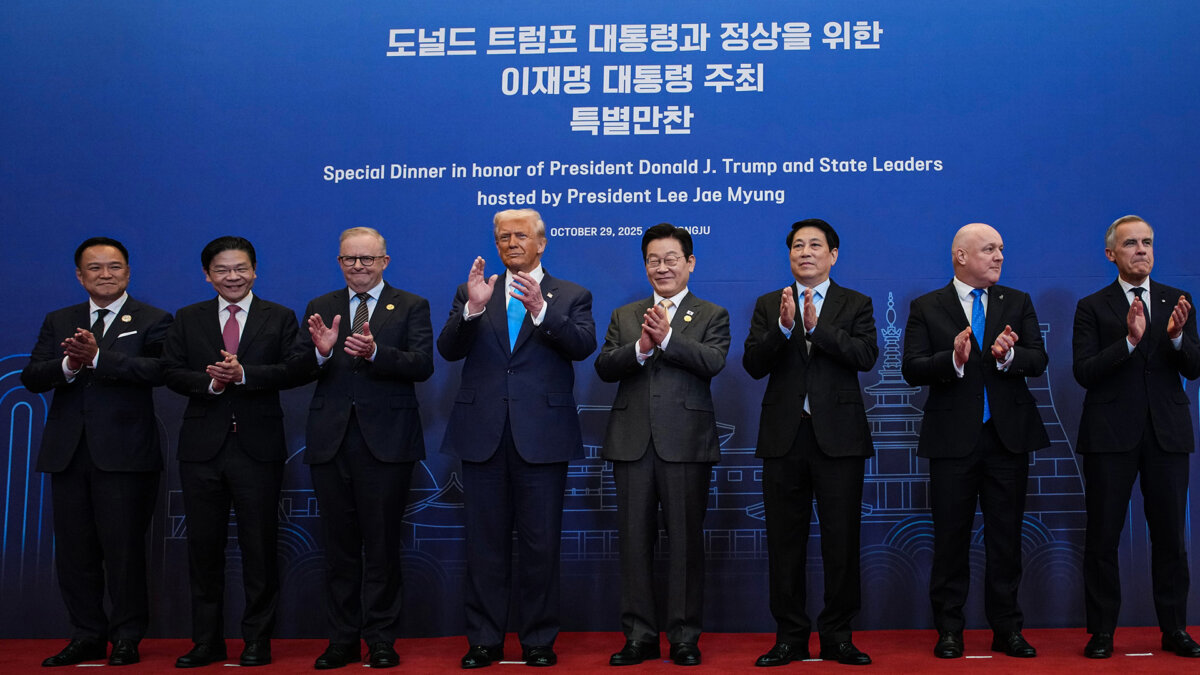
Last month, North Korea stated that it had tested a new cruise missile in the sea to its west. The test took place hours before Trump arrived in South Korea on Oct. 29 for the Asia-Pacific Economic Cooperation summit.
The missile test violated U.N. Security Council resolutions that ban Pyongyang from using ballistic missile technology and marked the first launch since South Korean President Lee Jae Myung took office in June, vowing to pursue dialogue with North Korea.
Ahead of his visit to South Korea, Trump said he was open to meeting with North Korean leader Kim Jong Un, saying the two leaders have a good relationship.
During his first term, Trump met with the communist leader three times, becoming the first sitting U.S. president to set foot in North Korea.
In September, Kim said he had fond memories of Trump and that he saw no reason to avoid talks with Washington if the United States dropped its demand that Pyongyang abandon its nuclear arsenal.
He reiterated that North Korea would never give up its weapons in exchange for sanctions relief.
North Korea has about 50 nuclear warheads, according to the Federation of American Scientists.
U.S.–South Korea Alliance
Earlier this week, U.S. Secretary of War Pete Hegseth visited South Korea for a two-day visit, where he held talks with his South Korean counterpart, Ahn Gyu-back.
The United States remains focused on deterring North Korea and ensuring that it doesn’t represent a threat to South Korea, according to Hegseth. He said that Washington’s alliance with Seoul is “stronger than ever” amid a dangerous security environment.
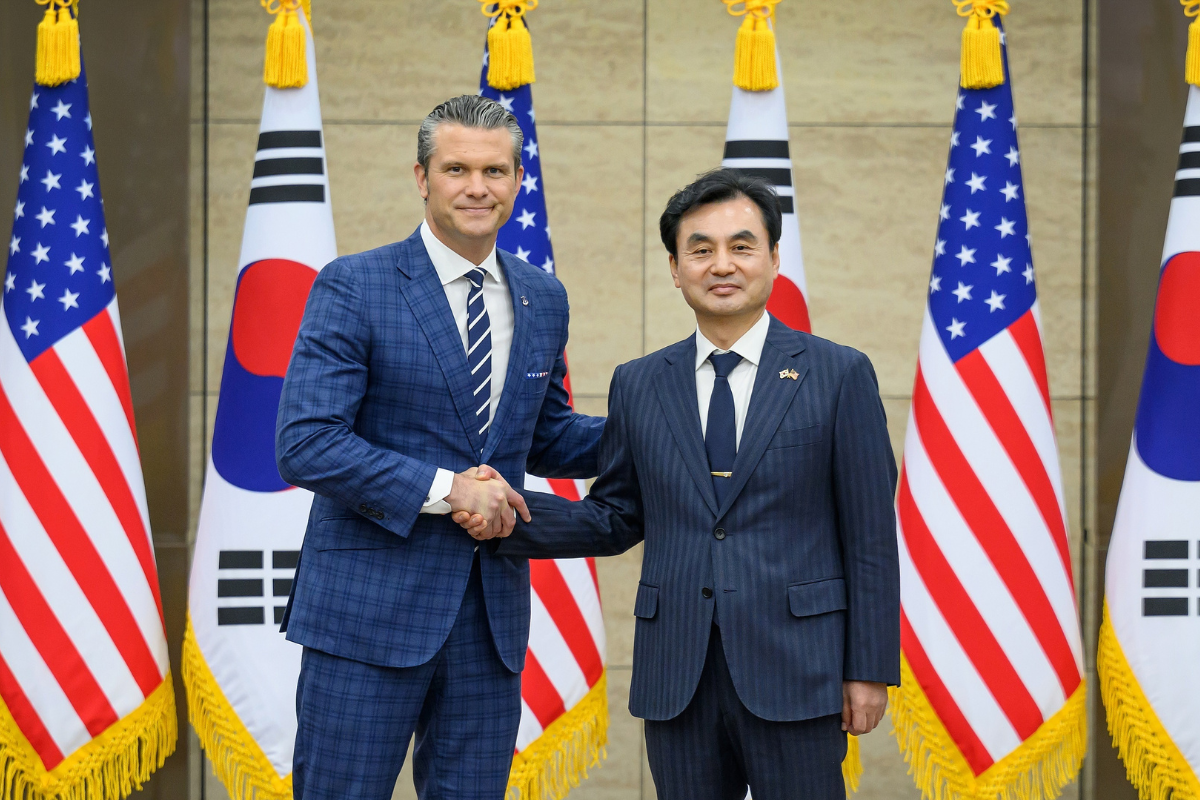
“There are also a lot of threats in the world which we’re prepared for, and we’ve had a lot of good faith conversations but centered around ensuring that the [Republic of Korea] is able to, as we move forward, work with them, lead the conventional defense here on the peninsula against North Korea,” Hegseth told reporters at the Ministry of National Defense in Seoul, South Korea, on Nov. 4.
The Republic of Korea is the official name for South Korea.
On the same day, Lee urged South Korean lawmakers to approve an 8.2 percent increase in defense spending, saying the additional funds would help modernize the country’s weapons systems and reduce its dependence on the United States.
The move was welcomed by Hegseth, who said the increase in defense spending would boost South Korea’s ability to deter North Korea.
North Korea passed a law in 2022 authorizing automatic nuclear strikes against any “hostile forces” posing an imminent threat, according to the state-run Korean Central News Agency (KCNA).
Pyongyang first claimed to have nuclear weapons in 2005, according to the nonprofit security organization the Nuclear Threat Initiative.
Last month, North Korea unveiled its newest intercontinental ballistic missile (ICBM) during a military parade marking the 80th anniversary of the ruling Workers’ Party, attended by senior officials from China and Russia.
North Korean state media said at the time that the parade featured a new, yet-to-be-tested ICBM called the Hwasong-20, which it described as the country’s “most powerful nuclear strategic weapon system.”
 Friends Read Free
Copy
Facebook
Tweet
Friends Read Free
Copy
Facebook
Tweet