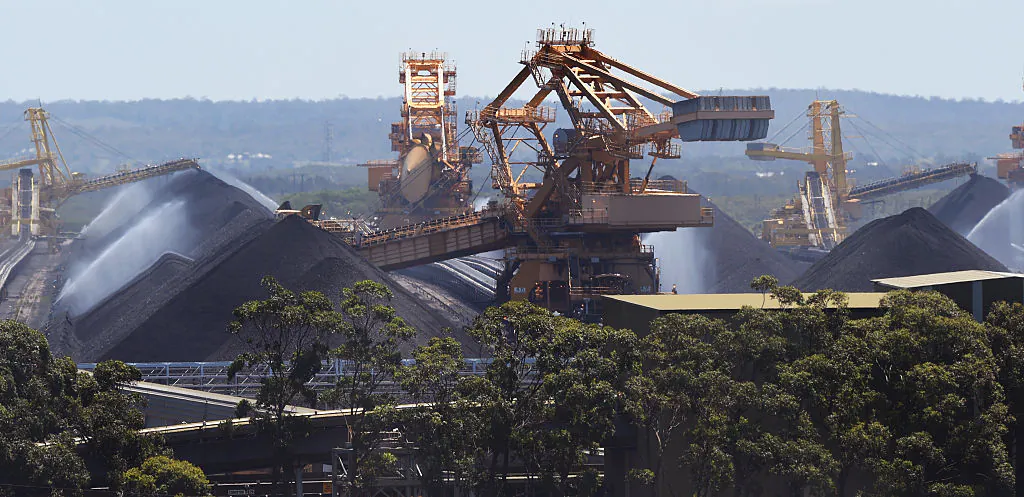

An underground coal mine on the southern shores of Lake Macquarie, New South Wales (NSW) has been given a two-year extension on its operations by the state government on the basis that it won’t affect its net zero ambitions.
Australia’s most populous state is committed to reducing greenhouse gas emissions by 50 percent from its 2005 figures by June 30, 2030. The next benchmark is 70 percent by 2035, and net zero by 2050.
The NSW Independent Planning Commission approved the proposal for the consolidated Chain Valley and Mannering mines to extract 2.8 million extra tonnes a year until the end of 2029, with plans to complete the decommissioning the day before the 2030 target takes effect.
The Commission required studies of air quality (pdf), noise (pdf), and other factors before reaching the decision.
Environmental and social consultancy Umwelt advised, in an independent report commissioned by mine operator Delta Power and Energy, that “emissions associated with the transport and combustion of coal mined up until 31 December 2029 are expected to be negligible and limited only to small volumes of coal mined in the final months of the project.”
From that date, the biggest risk is from what are called “fugitive emissions”—pockets of trapped gas escaping before the mines are capped and sealed, and pollution from demolition activity, though both are also considered minor.
“The proposed project’s … greenhouse gas (GHG) emissions, including emissions associated with closure of the operations, would have no impact on the state’s ability to meet the 2050 net zero target and is unlikely to have any material impact on the 2035, 70 percent reduction target, as emissions associated with coal extraction from the project will have finished at least 5 years prior to this target and decommissioning activities are expected to be well advanced by this target date,” Umwelt’s report (pdf) concludes.
The approval includes the provision that coal mined from the site must only supply the nearby 1,320-megawatt (MW) Vale Point power plant, one of two operating coal-fired power stations also on the shores of Lake Macquarie.
The Commission said the extension of time was necessary to keep supplying the power station “during NSW’s transition to renewable energy.”
But it’s still possible the decision may face a legal challenge from environmental campaigners, with State Greens MP and spokesperson on climate change Sue Higginson saying the approval risks breaching climate laws.
“The state’s top legal minds are clear that any new coal is inconsistent with the current law,” she said. “It is therefore highly likely that if tested, this coal approval would be declared unlawful.
NSW’s independent Net Zero Commission’s Coal Mining Emissions Spotlight Report found last December that “continued extensions or expansions to coal mining in NSW are not consistent with the emissions reduction targets in the Climate Change Act or the Paris Agreement temperature goals it gives effect to.”
The NSW Parliament is also in the closing stage of an inquiry into emissions from the fossil fuel sector, with submissions completed and the committee due to report back.
 Friends Read Free
Copy
Facebook
Tweet
Friends Read Free
Copy
Facebook
Tweet