
The agency responsible for Australian school curriculums has faced tough questions on whether the U.N. Greening Education Partnership (GEP) has been properly scrutinised amid claims it could be implemented.
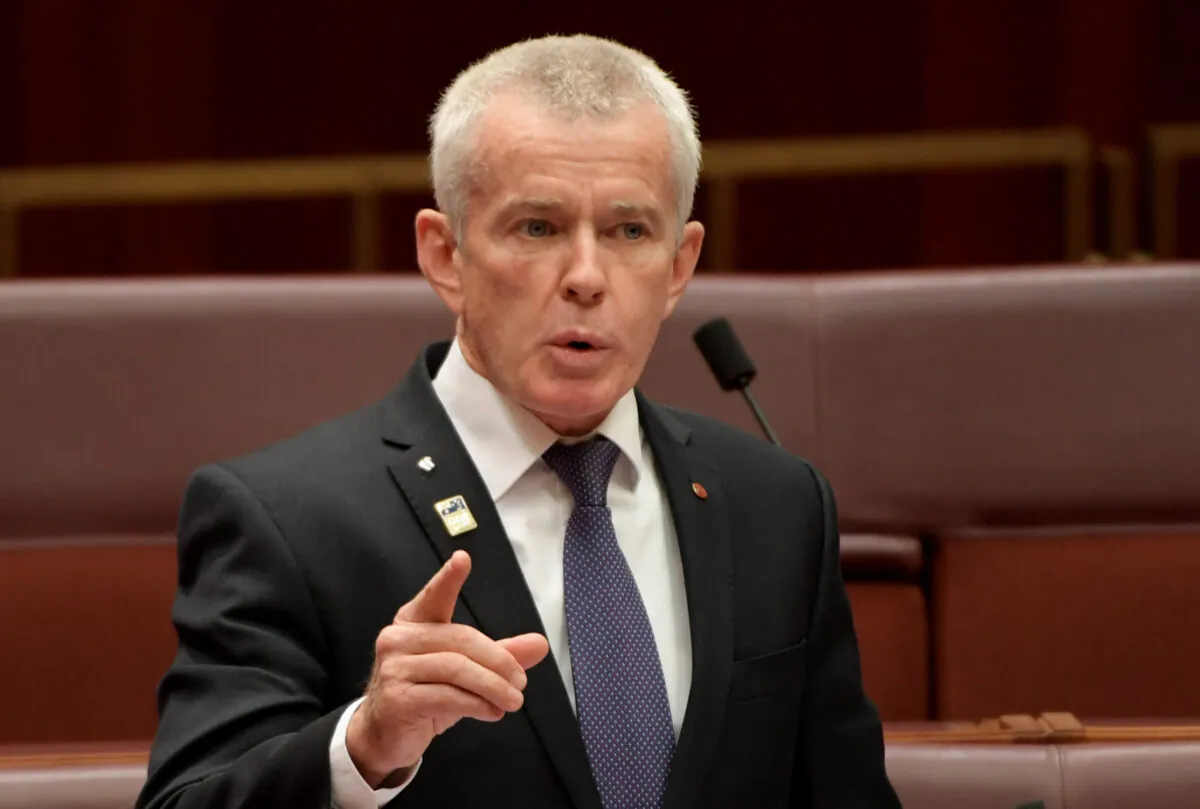
One Nation Senator Malcolm Roberts probed the Australian Curriculum, Assessment and Reporting Authority (ACARA) during a Senate estimates hearing on June 4.
According to the United Nations Educational, Scientific and Cultural Organisation (UNESCO), the GEP is a “global initiative that takes a whole-of-system approach” to climate initiatives by harnessing the role of education.
UNESCO’s website claims 98 nations and 2,000 organisations are already part of the initiative, which aims to have 90 percent of countries teaching a “green” national curriculum by 2030.
“Green schools aim to promote knowledge and skills for the social, economic, cultural, and environmental aspects of sustainable development,” the website says.
ACARA CEO Stephen Gniel faced questions over the government’s consideration of the program during the Senate Education and Employment Legislation Committee hearing.
“This suggests you’re not dialling back, but you’re doubling down on the propaganda, why are you pushing indoctrination over education?” Roberts asked.
But Gniel said he rejected Roberts’ suggestions, instead asking the senator for a copy of a mentioned Freedom of Information file allegedly showing the government’s consideration of the GEP.
“I do not agree with the assumptions about us indoctrinating children,” Gniel said.
“The Australian curriculum is a promise we make to our children, is approved by all Australian ministers, the Commonwealth, state and territories, so I completely reject those statements.”
Roberts asked Gniel: “Did you check the scientific basis for the greening education program and in particular, climate change education, or did you just take what the U.N. is feeding us?”
Gniel once again asked Roberts to provide the information he had based his statements on, with Roberts noting the research had come from his staff.
“It’s really simple, did you just take what the United Nations claims as science and put that into the curriculum or did you do your due diligence?” Roberts asked again.
Gniel once again asked for details.
“Once you’ve provided me with the details about specifics about what you’re talking about I’m very happy to provide you an answer.
“The Australian curriculum is based on the evidence we gather as part of the process for both the development of the curriculum and also its review, and that’s taken through the ACARA board and onto ministers for their approval, and so as you would expect, they are very keen to make sure it is based on the evidence and that’s what we have in the Australian curriculum,” he said.
Roberts then asked: “By evidence you mean scientific proof?”
“Senator, I believe scientific evidence is a fairly broad term … I’d like to see the specific one you’re asking about,” Gniel said.
Roberts stated he had tried previously to ascertain whether there was a scientific basis to the potential adoption of the GEP.
“Earlier this year in the senate inquiry I asked a senior U.N. executive in charge of information to provide the scientific proof … she failed to provide it,” he said. “What due diligence did you do on the United Nations material?”
Gniel said he would take the question on notice once Roberts had provided the specifics.
One of Australia’s three cross-curriculum priorities, meaning they must be implemented across all subjects, is sustainability—the others being Aboriginal histories and culture, as well as engagement with Asia.
“Young people require the knowledge and skills to engage with contemporary issues such as climate change, biodiversity loss, equitable access to resources, and preservation of cultural and language diversity,” says a document outlining the sustainability education requirements.
 Friends Read Free
Copy
Facebook
Tweet
Friends Read Free
Copy
Facebook
Tweet