
The conservative-leaning One Nation wants Australia to dramatically expand oil and gas production—and have the government directly invest in it so Australians share more of the profits.
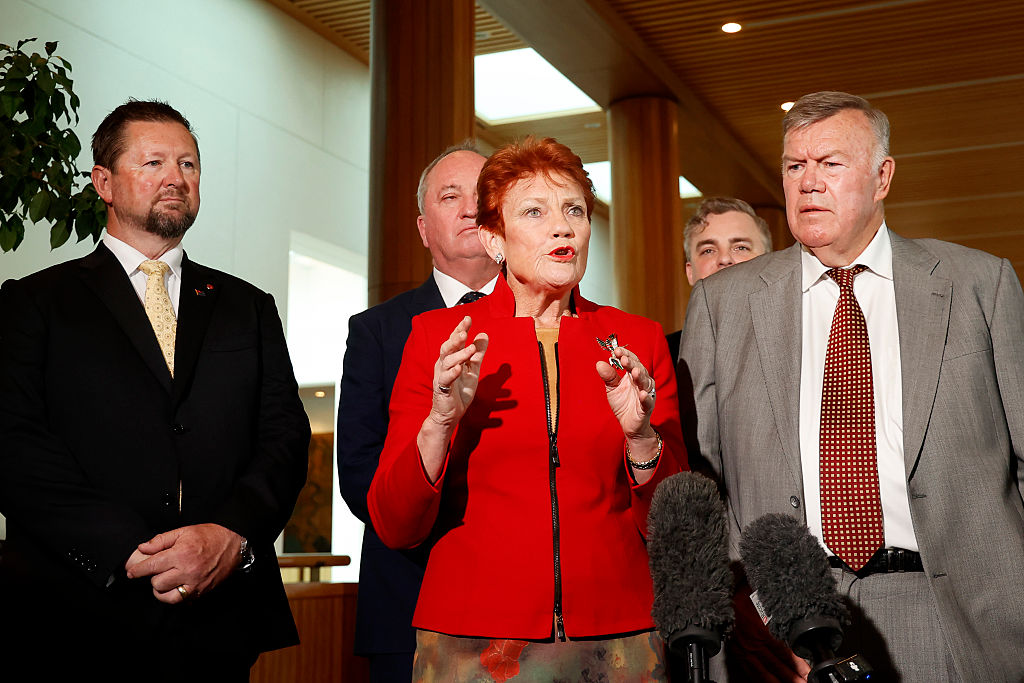
That was the party’s message as it announced its gas policy during the Australian Energy Producers Conference and Exhibition in Adelaide on May 21.
“We want more gas extracted and more money given back to Australian’s future wealth,” Hanson told attendees.
“One Nation would partner with the oil and gas industry rather than treating it as an enemy, with the aim of increasing exploration, development and production of oil and gas.
“Under the policy, the party would introduce a 30 percent rebate [or tax break] for genuine oil and gas exploration in Commonwealth waters, while giving the Commonwealth government the option to take up to a 30 percent equity stake in any production licence.”
Hanson said the move would ensure Australia’s natural resources were owned by the Australian people.
“Rather than acquiring ownership by force, the government would pay its share of costs as a joint venture partner and receive a corresponding share of production,” she said.
“To manage these interests, One Nation would establish a special investment vehicle called the Australian National Wealth Investment Corporation (ANWIC), which would hold the government’s resource stakes and be tasked with making decisions for the greatest benefit of Australians.”
How Does the 30 Percent Stake Work?
Under the proposed plan, the government could receive its share of profits from its 30 percent stake, or the same portion of extracted oil and gas.
This approach, Hanson says, is more flexible than Labor’s east coast gas reserve announced on May 7 where producers are obligated to reserve 20 percent of their production for domestic customers.
Hanson said the oil or gas could be directed to the domestic market during times of need and used to support industries like fertiliser, energy and smelting, or sold on to export markets to help reduce government debt.
Hanson says the ANWIC would be overseen by a board made up of people with industry experience, and the Commonwealth would remain a “non-operating” partner, leaving the private-sector to run the projects.
Hanson said she would cut “red, green and black tape” in reference to regulation, net zero rules, and Aboriginal heritage or Native Title claims.
“Senator David Pocock, and the Greens Party, along with lobby groups, like the Australian Institute [think tank] continue to call for an industry-destroying 25 percent tax on gas exports,” she said.
“The tax would apply to the total value of all gas exports and would destroy the economics of the entire industry—that is their goal.
“They have drawn false equivalence with countries like Norway who share the full risks and rewards with their industry. A model that has succeeded because government and industry partner together supported by generous tax incentives.”
In taxation, the party says it would replace the Petroleum Resource Rent Tax (PRRT) for offshore gas with a simpler Commonwealth royalty based on wellhead values—reported to be 10 percent.
This new royalty system would apply only to future projects, with existing PRRT arrangements grandfathered.
The Push for a Gas Tax
ACT Senator Pocock is one of a number of crossbenchers who have called for a 25 percent tax on gas.
Pocock says a 25 percent gas export tax is a matter of exporters “paying their fair share.”
“A 25 percent tax on gas export revenues would raise an estimated $17 billion annually,” he said.
“Lifting income support to 75 percent of the aged pension, which the committee has recommended, would cost just $1.6 billion, and would ensure that children in those households have a shot themselves at being prime minister one day.”
The Greens have also been campaigning for a 25 percent tax, including an open letter to Prime Minister Anthony Albanese.
“The longer this government delays, the longer Australians miss out,” Greens Senator Senator Steph Hodgins-May said.
Labor has refused to implement the tax, saying it would undermine existing contracts.
“There’s a lot of focus on exports. Without that investment you wouldn’t have a domestic gas reservation here in WA because you wouldn’t have the gas,” Prime Minister Anthony Albanese told media in April.
 Friends Read Free
Copy
Facebook
Tweet
Friends Read Free
Copy
Facebook
Tweet