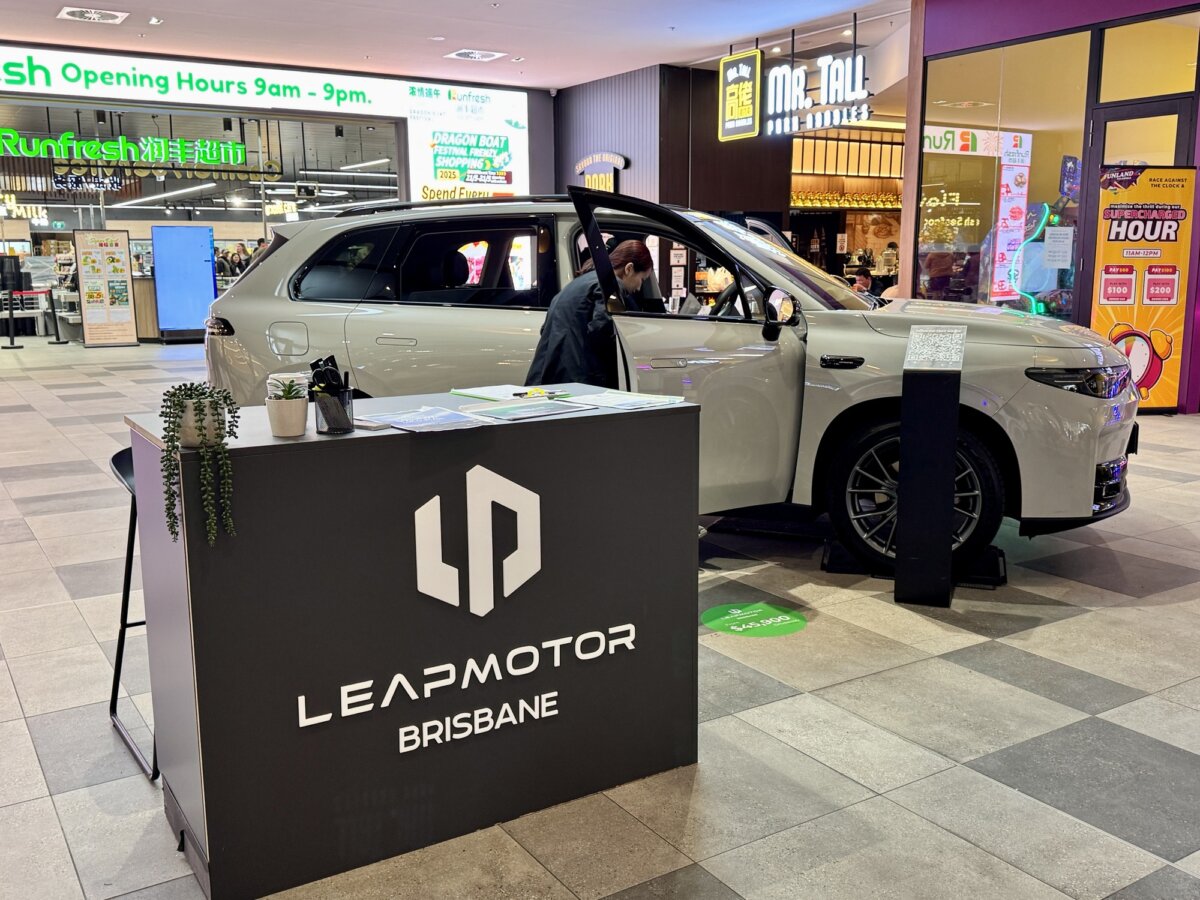


It’s not unusual to drive through Australia’s major cities only to see rows of once-unfamiliar Chinese brands—BYD, Deepal and GWM—line parking lots where Japanese and European brands once dominated.
This trend is the manifestation of China’s continuing push down under, particularly taking advantage of the net zero transition and the country’s easy tariff settings.
According to new data by the Australian Automotive Dealer Association (AADA), the total number of car brands or makes sold in the country will hit a record of 67 in 2026, up from 39 five years ago.
By 2031, the total number of brands will reach 75, a 92 percent increase compared to 2021—all fighting for a slice of Australia’s 1 million-car-a-year new car market.
Just last year alone, eight new entrants expressed their intention to enter the market.
For comparison, just over 40 brands are sold in the U.S. market, the world’s second-largest.
Australia an Easy Market for Global Carmakers
The figures show Chinese-owned brands will continue to make up a significant share, accounting for 22 of the 67 brands in 2026—increasing to 26 of the 75 brands by 2031.
These include major manufacturers or now-Chinese-owned brands such as BYD, Geely—which owns several brands, including Volvo and Polestar—Chery, Deepal, GWM (Great Wall Motors), JAC, Jaecoo, Leapmotor, Omoda, Zeekr, Forthing, Xpeng, GAC, Denza, Tembo, Farizon, Foton, LDV, Skyworth, Lepas, Yangwang, iCaur, and Riddara.
“We are currently seeing an overflooding of the Australian market with new brands coming thick and fast,” AADA CEO James Voortman said in a statement.
“These new brands see Australia as having very attractive policy settings that are geared for the supply of electric vehicles where they can test their product in a Western market with low upfront investment when compared to other Western countries.”
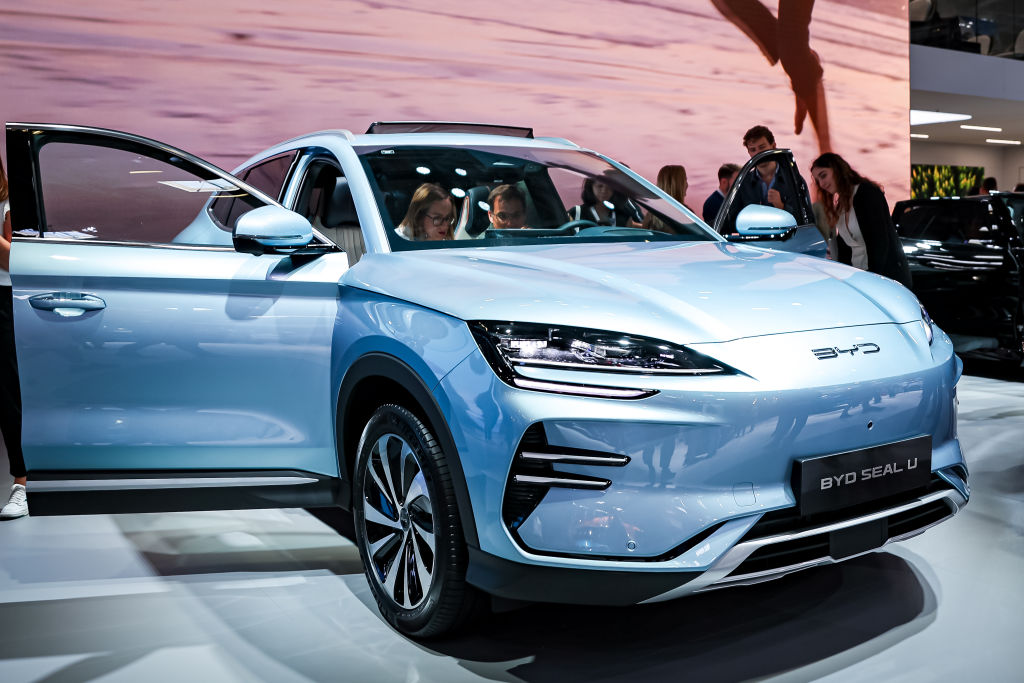
However, the CEO noted that not all of the new and even established brands can stay in the Australian market over the long term.
“Australian drivers will always be attracted to value-based products that offer a quality experience but more so, a quality after-sales experience with reliable and timely servicing and repair work. Brands that cannot compete on that level will struggle,” he said.
The AADA’s data follows a 2025 report that estimated China would become a “dominant” automobile supplier to Australia over the next decade.
The study, conducted by the Centre for International Economics, forecast that 43 percent of all imported vehicles in Australia would be manufactured in China by 2035.
According to the report’s analysis, China’s growing dominance results from several factors: the low retail price of its cars, low vehicle import tariffs, and Labor’s New Vehicle Efficiency Standard (NVES) that preferences lower-emission cars while penalising those with higher emissions.
China’s Overcapacity and Dumping Tactics
In recent years, China has faced industrial overcapacity, driven by a combination of factors, including heavy government subsidies, slowing economic growth and weak consumer demand.
As a result, sectors such as steel and aluminium, lithium batteries, solar panels and electric vehicles have experienced an oversupply that cannot be absorbed by the domestic market.
To address this problem, the CCP has resorted to the practice of “dumping”—exporting excess goods at prices below their domestic sale prices or production costs, said Antonio Graceffo, a China economy analyst.
“This practice undermines industries in other countries striving to compete in global markets by selling products at fair prices that ensure reasonable profits,” he wrote in an opinion piece for The Epoch Times.
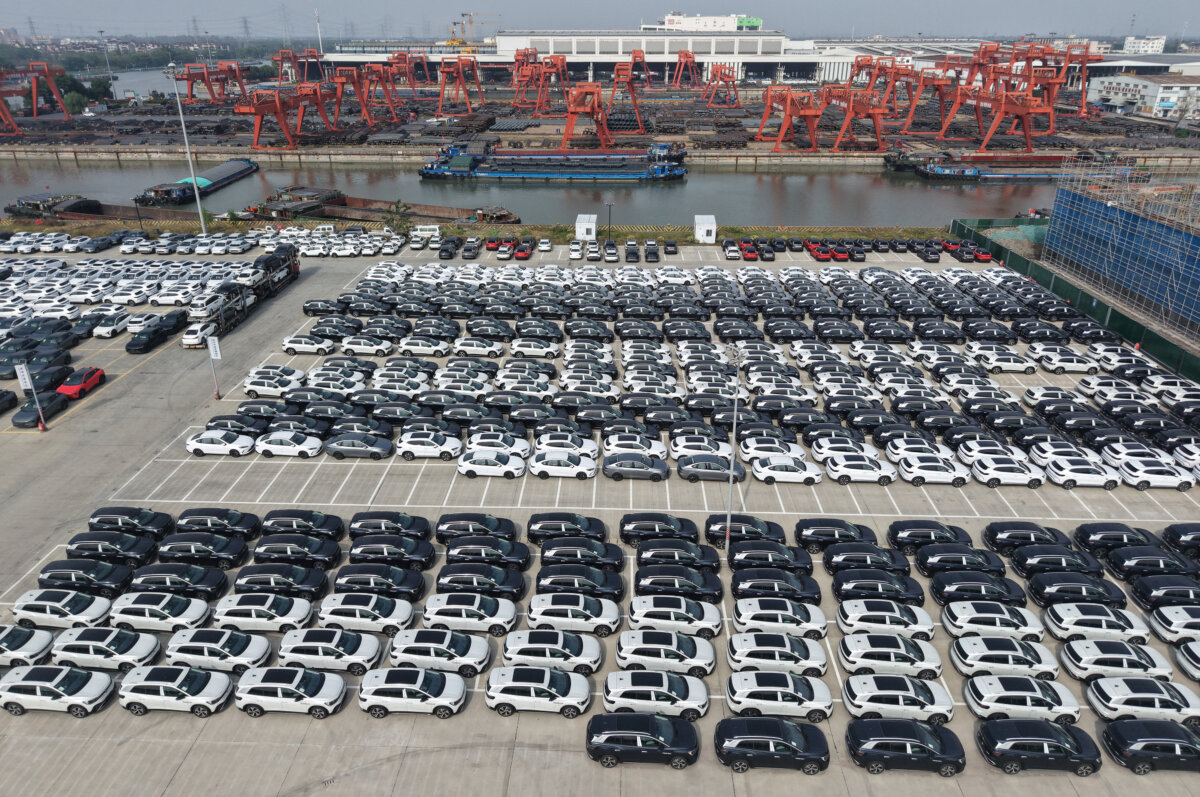
Both the United States and the EU have long raised concerns about China’s industrial overcapacity and goods dumping in the West.
In mid 2024, European Commission President Ursula von der Leyen warned that Europe must take action to prevent China from inundating the EU market with its heavily subsidised EVs.
“Fair competition is good. What we don’t like is when China floods our market with massively subsidised electric cars. And we have to tackle this, we have to protect our industry,” she said.
In late 2025, experts told a U.S. House committee that the growth of China’s government-subsidised auto industry constituted a significant economic and national security threat to the United States and its leading automakers.
“Chinese vehicles pose the same kind of risks in the physical world that TikTok represents in the digital world,” said Peter Ludwig, co-founder and chief technology officer of tech company Applied Intuition.
In Latin America, Brazil has also joined the ranks of countries concerned about the flood of cheap Chinese EVs and the harm they cause to local manufacturers.
Meanwhile, Japan and Korea have implemented anti-dumping measures to protect their own high-value auto industries.
In contrast, Australia has not imposed any tariff or taken any measures to curb the flow of Chinese EVs into its market.
According to Marina Zhang, an associate professor at the University of Technology Sydney, the Australia-China Free Trade Agreement has instead facilitated the sale of Chinese EVs in the country, making them more accessible to consumers.
At present, Australia no longer produces cars, after Ford, GM Holden and Toyota closed their manufacturing plants.
As a result, the local car industry has shifted from actual vehicle production to supporting roles such as sales, servicing, and specialised vehicle engineering (like converting left-hand drive cars to right-hand drive).
 Friends Read Free
Copy
Facebook
Tweet
Friends Read Free
Copy
Facebook
Tweet