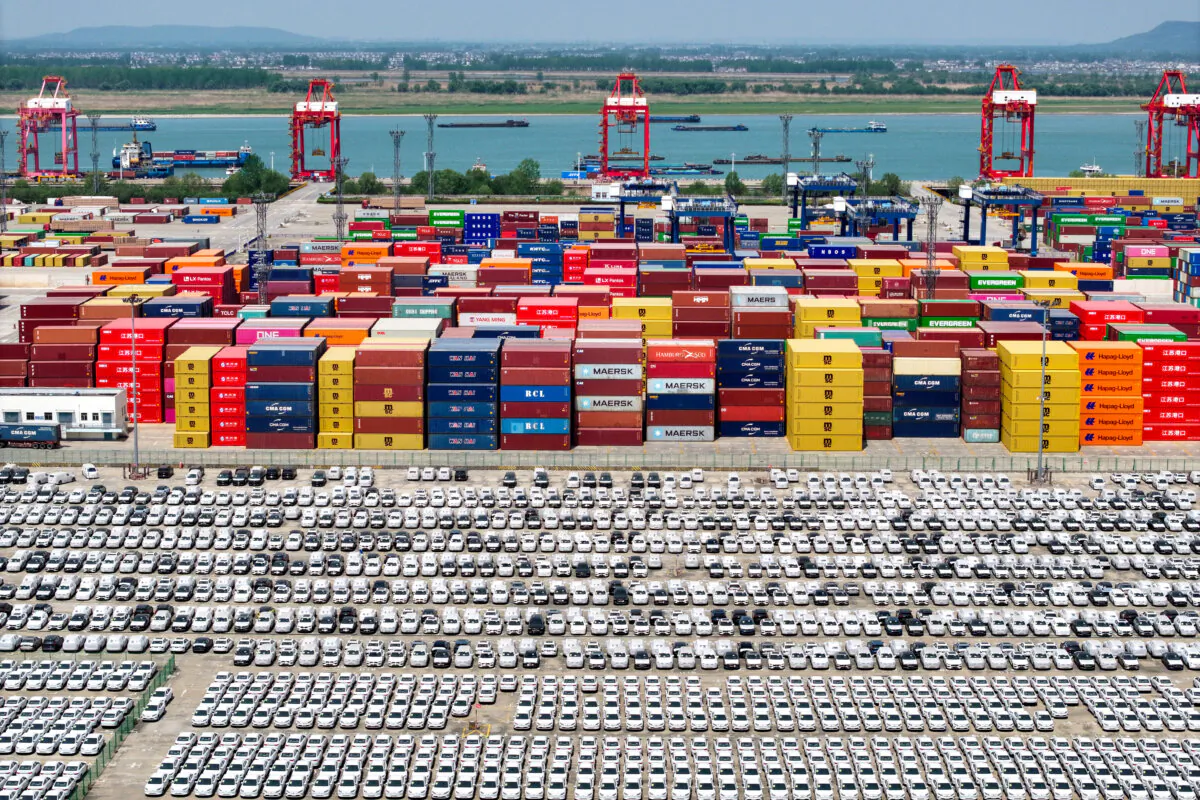

More than two in every five new cars sold in Australia will be made in China within 10 years, according to new research.
By 2035, 43 percent of all imported vehicles in Australia are projected to be manufactured in China, which is already the source of a large number of electric vehicle (EV) brands.
The predicted 10 year charge will see China surpass current leader, Japan, which sits on 22 percent of the market, and Thailand on 11 percent, according to a Centre for International Economics report released (pdf) on July 22.
“Not only is China gaining momentum in supplying vehicles to the Australian market, but they are also on track to become the dominant source of automotive imports by 2035,” it reads.
Vehicles manufactured in Japan accounted for 30 percent of new car sales in Australia this year, while those from China made up 16 percent, according to the Federal Chamber of Automotive Industries.
The report, commissioned by the Australian Automotive Dealer Association (AADA), was released at the 2025 AADA Convention & Expo in Brisbane to over 1,000 new car dealers and industry stakeholders.
Speaking on the research, James Voortman, CEO of AADA, noted that the growth of sales and new brands from China comes on top of the change to electric vehicle drive trains.
“This rate of growth can have unintended implications to consumer protections such as the supply of parts, wait times to service vehicles, and the long-term ability of manufacturers to guarantee their consumer warranties,” Voortman said.
The CEO promised that the association will be speaking with the Government about what consumer protections are adequate and appropriate to support Australian dealers and consumers in what is, on average, the second largest asset Australian’s buy in their lifetime.
Factors Behind China Dominance
Based on the report, China’s growing dominance is caused by a number of factors: Australian policy incentives, such as Labor’s New Vehicle Efficiency Standard (NVES) that prefers zero-emission vehicles, increasing local demand for low-emission choices, China’s lower production costs, and its strategic specialisation in key sectors like electric vehicles.
China’s aggressive market entry is driven by massive Chinese state investment and support to develop battery electric vehicles (BEV), and plug-in hybrid technology and manufacturing capabilities.
While China already dominates Australia’s BEV market leads in battery electric vehicles (65 percent of imports in 2024), it’s also expanding in internal combustion engine (ICE) and diesel segments, especially in light commercial vehicles and SUVs.
In addition, Chinese vehicle prices have steadily declined over the past decade, with the drop accelerating in recent years.
Unlike most major markets where prices have risen since 2020, China stands out for falling prices—driven by cheaper supply chain costs, government backing for EVs, and favourable market conditions.
As a result, prices have remained flat or declined, bucking the global trend of inflation-driven increases.
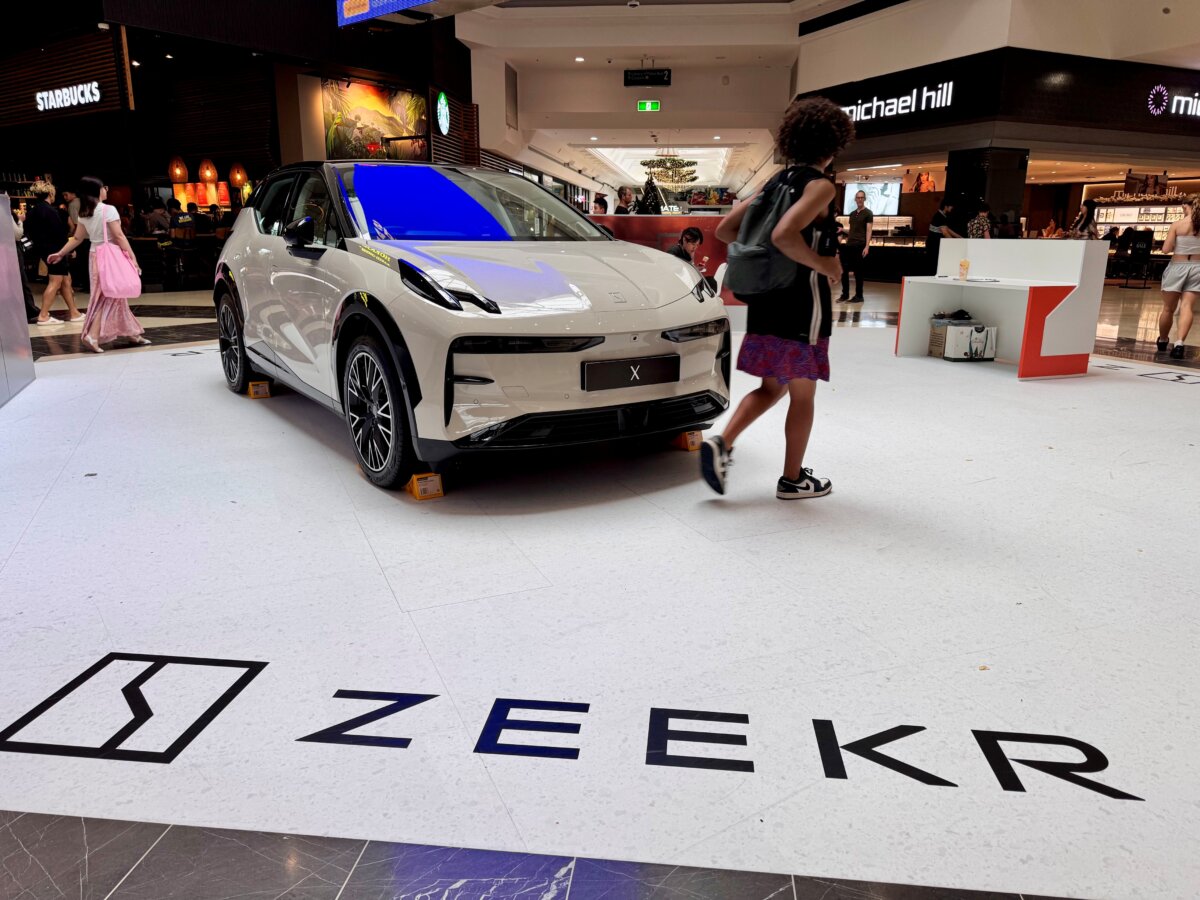
Chinese electric vehicle brands already established in Australia include Xpeng, Zeekr, Geely, MG, Jaecoo, Leapmotor, and BYD, which marked its 60,000th local sale in July.
BYD views Australia as a “key market,” according to President Wang Chuanfu, noting that it was well established and highly competitive.
“Success here is a signal to the world that BYD vehicles can meet and exceed the expectations of mature markets,” he said.
China’s EV Industry Faces Massive Shakeup by 2030
However, the situation may play out differently if a report by AlixPartners rings true.
The annual report by the global consulting firm forecast that only 15 out of China’s 129 currently operating ZEV brands will become financially viable and survive by 2030.
It notes that some key features of China’s “new operating model” for ZEV automakers, including faster speed to market, with 40 to 50 percent less investment and a 30 percent cost advantage, will enable Chinese automakers to control nearly two-thirds of the domestic market and capture 10 percent of the European market share by 2030.
However, gaining market share at home and abroad may not be enough for most Chinese ZEV makers to be financially viable and survive the intense competition.
“China is one of the most competitive … markets in the world, with intense price wars, rapid innovation, and new entrants constantly raising the bar,” Stephen Dyer, Asia leader of automotive and industrial practice at AlixPartners, said in the company’s statement.
“This environment has driven remarkable advances in technology and cost efficiency. But it has also left many companies struggling to achieve sustainable profitability.”
AAP and Panos Mourdoukoutas contributed to this report.
 Friends Read Free
Copy
Facebook
Tweet
Friends Read Free
Copy
Facebook
Tweet