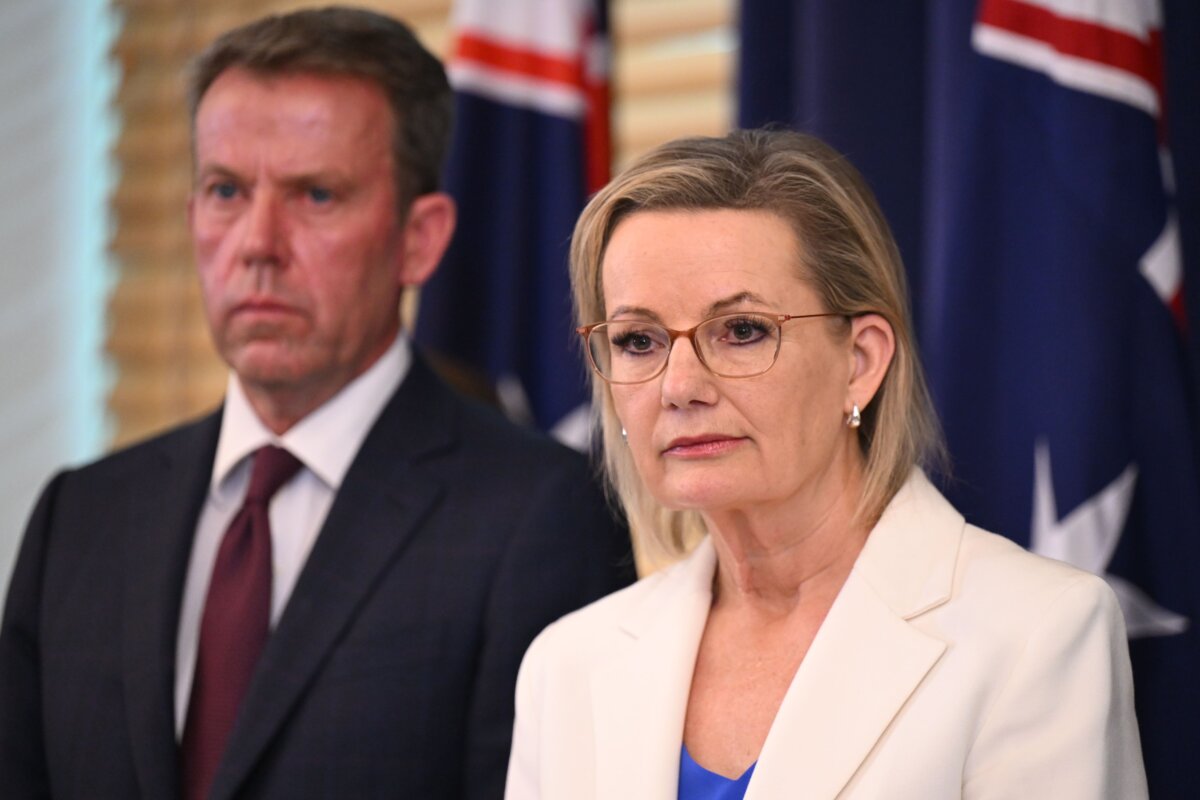

Cost of living, not climate ideology, is the message Opposition Leader Sussan Ley delivered as she officially unveiled the Liberal Party’s decision to formally abandon its 2050 emission targets.
After a marathon party room meeting yesterday, on Nov. 13, the Liberal Party officially dropped the renewables target with the right faction largely aligning against the policy.
In the wake of that decision, Ley said Australians “deserve affordable energy and responsible emissions reduction,” insisting the two goals are compatible—but only if affordability comes first.
Ley argued that under Labor there was a “trifecta of failures, prices up, reliability down, and emissions flatlining,” and that “Labor’s net zero policies of mandates and taxes are hurting businesses, and they’re pushing up prices.”
“Our emissions reduction goals will never come at the expense of Australian families, and this is the principle that will guide every decision we take,” she added.
“To keep faith with that commitment, the Liberal Party will remove a net zero target from our policy, and if elected, we will remove the 43 percent 2030 target and its net zero by 2050 target from the Climate Change Act.”
Ley stressed the Liberals would remain aligned with the Paris Agreement and committed to “doing our fair share to reduce emissions,” but in a way that “protects households and budgets and keeps our economy strong.”
Paris Commitments Remain
Standing alongside her, Shadow Energy Minister Dan Tehan said the Liberals intend to harness Australia’s natural resource “abundance” to lower bills.
Tehan said the party will set five-year emissions targets through Nationally Determined Contributions (NDC)—action plans that countries submit under the Paris Agreement to outline their efforts to reduce greenhouse emissions—and track reductions against “comparable countries.”
“Our policy is firmly focused on reducing emissions and affordable electricity with priority being affordable electricity,” Ley said when asked if remaining in Paris meant accepting net zero beyond 2050.
Australia’s current contribution under the Paris Agreement includes a September 2025 NDC targeting a 62–70 percent emissions cut by 2035 from 2005 levels.
The agreement was first locked in by former Liberal Prime Minister Scott Morrison and continued by current Prime Minister Anthony Albanese with the Labor government recently announcing a 2035 target.
The Liberal Party’s shift comes amid pressure from its right faction, several membership votes against net zero, as well as the conservative-leaning, One Nation party, whose support has ballooned in the six months since the May federal election.
Overseas, the Trump administration has taken bolder steps, ceasing all obligations to the Paris Agreement with a pledge to withdraw from it.
Ley Open to Coal Fired Power
Meanwhile, Ley was pressed on whether she supports extending the life of coal-fired plants or opening next-generation facilities.
She said state governments are already prolonging operations and pointed to the Spanish blackout to highlight the need for baseload power.
“One fault in an entire grid had a cascading effect that shut down the entire Iberian Peninsula … the market operator there had been saying we can run it on renewables,” she said.
Ley reiterated that the Liberals are “technology-agnostic” and will support Queensland, New South Wales, and Victoria in maintaining coal assets.
“We have got to make sure we keep capacity in the system … We will let the market determine how we go about that.”
Most notably, the Queensland LNP government has taken the biggest step towards retaining coal power with a recent decisions to reverse Queensland Labor’s coal closure schedule, while pleding to keep stations running until at least 2046.
“The former Labor government’s decision to close coal units by 2035 regardless of their condition is officially abolished today,” Energy Minister David Janetzki said when releasing the state’s long-term energy roadmap in September.
Labor Says Liberal Party ‘Sweating Coal’
Energy Minister Chris Bowen accused the Liberals of regressing on climate policy.
“The Liberals haven’t listened, they haven’t learnt and they certainly haven’t changed,” he said. “Instead of having a modern energy plan they want to ‘sweat coal,’ which means more ageing, unreliable coal in the system for longer—and Australians will pay.”
“Sussan Ley once said ‘net zero is perfect’ but now the Liberals have defaulted to letting National’s ideology on energy derail climate action,” Bowen said.
Prime Minister Anthony Albanese also seized on the developments, warning that the opposition’s decision would damage investment confidence and undermine Australia’s economic future.
“They’re walking away from climate action because they fundamentally do not believe in the science of climate change,” he told reporters in Sydney.
What Comes Next
Further negotiations are expected to finalise the Coalition’s overall position on Australia’s energy development, with a meeting set for Nov. 16.
Ley said a three-member Liberal team led by Tehan, Anne Ruston, and Jonathan Duniam would work with the Nationals.
“That trio will very soon start those conversations with the Nationals … so that, we hope, and anticipate, we can land after Sunday a joint policy that allows us all to fight the Labor Party,” Ley said.
 Friends Read Free
Copy
Facebook
Tweet
Friends Read Free
Copy
Facebook
Tweet