
The federal Coalition and Greens has expressed serious concerns around Labor’s proposed hate speech laws as academics and advocacy groups also weigh in.
The Combatting Antisemitism, Hate and Extremism Bill 2026 captures the federal Labor government’s full response to the Bondi terror attack that claimed 15 lives and injured 40 others.
The 144-page draft will be debated next week with only a 48-hour period for public submissions.
The draft has already drawn criticism from academics, Jewish, and Muslim groups amid concerns the laws extend beyond anti-Semitism and will capture even legitimate debate.
Opposition Leader Sussan Ley called the proposed laws “unsalvageable.”
“I want to be extremely clear … the opposition has extremely serious concerns about the government’s legislation,” she told reporters in Melbourne on Jan. 15.
“The legislation does not address the real issues that gave rise to the Bondi attack.
“It doesn’t address Islamic extremism. It doesn’t address ISIS influence. And it doesn’t address the rise of anti-Semitism and the terrorist threat in Australia.”
Bill Covers Wide Array of Areas Including Gun Buyback to Hate Speech
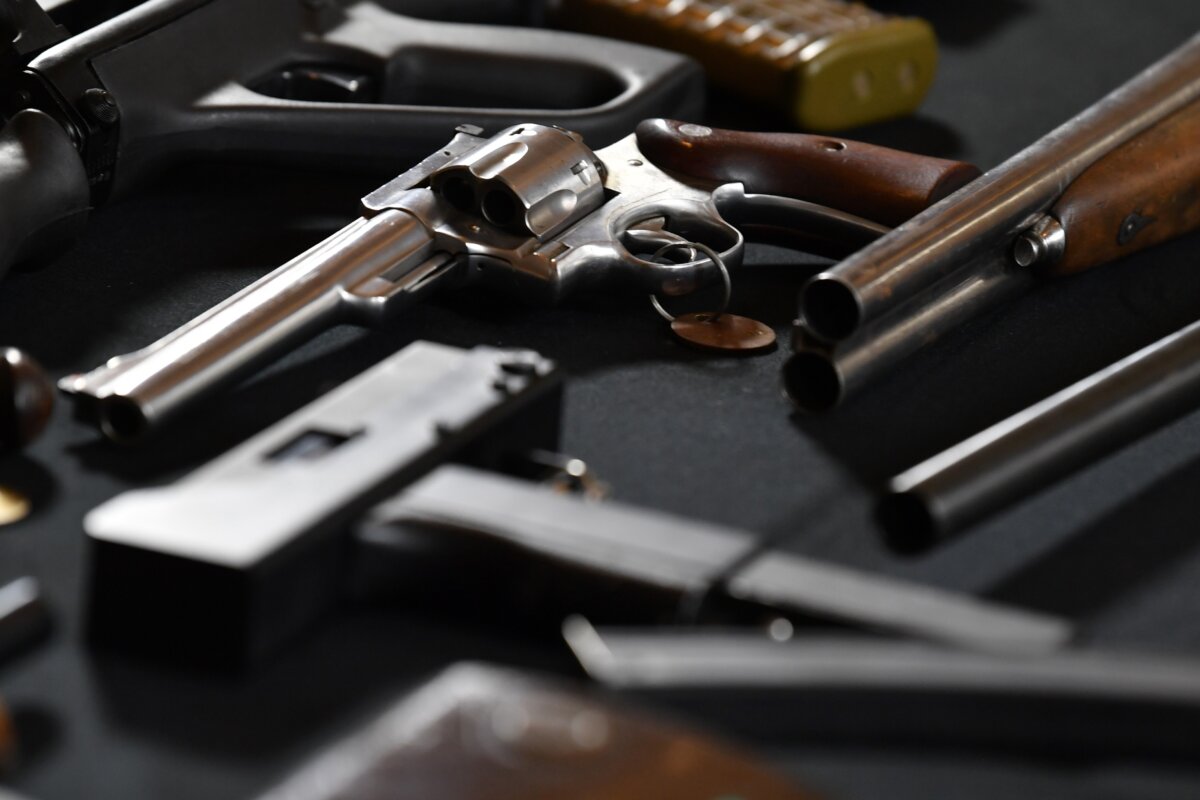
The new laws will govern the Labor government’s impending national gun buyback scheme, as well as grant new visa cancellation powers to the minister.
It also outlines new offences that will criminalise conduct that promotes or incites hatred, serious contempt, or violence against people based on religion and race.
The scheme would also allow the government to proscribe “prohibited hate groups,” making membership or support unlawful, and impose harsher penalties for online or repeat hate conduct..
Criticism of the proposed laws has largely centred around a perceived lack of consultation, overly vague laws that are too open to interpretation, and fears reasonable free speech would be curtailed without dealing with Islamic extremism—the root cause behind the Bondi terror attack that targeted a Jewish celebration on Dec. 14.
Shadow Home Affairs spokesman Jonathan Duniam told ABC Radio National the proposed changes were the most significant change to free speech in Australia in decades.
“The government have dropped the ball here,” he said.
“Yes, get it done urgently, but do it properly and make sure the provisions actually work out. Sadly, it appears they are failing on that.”
Meanwhile, Nationals Leader David Littleproud claims the laws target the wrong segment of society.
“Don’t just stereotype gun owners in capital cities as people who shouldn’t own guns,” he told Sky News Australia.
“They [guns] do much of the heavy lifting in pest mitigation for farmers.
“We don’t have a gun problem, we have an extreme Islamic problem in this country, that’s what we should be focused on—not spending a billion dollars on something that’ll take guns away from lawful gun owners where the states don’t even agree with him.”
Greens Concerned About Civil Liberties
Greens Senator Mehreen Faruqi said her party would not support the bill fearing unintended consequences.
“The legacy of the horrific and appalling violence in Bondi cannot be the undermining of political, civil and human rights,” she told reporters in Canberra.
“This bill is broad, it is vast and it is really complex, and we need to make sure that it is scrutinised and that we do our due diligence on this bill,” she said, adding that all forms of discrimination needed to be dealt with, not just anti-Semitism.
Albanese Accuses Coalition of Contradicting Messages
Australian Prime Minister Anthony Albanese says the proposed laws will address two key elements involved in the Bondi terror attack—hate and firearms.
The leader has accused the Coalition of “backflipping” by calling for immediate laws, but not saying they are rushed.
“They were calling for Parliament to be resumed immediately, to use their words,” Albanese told ABC Radio on Jan. 15.
“Now they’re saying that this is somehow rushed, even though my government has moved in a considered, orderly way, which is the way that we function.
“We’ve said we’re open to amendments in order to make sure that we get this right and we haven’t heard any proposed amendments.”
Albanese said he’d sat down with the opposition leader on Jan. 12, and also with Greens leader Larissa Waters.
“I have transparently outlined a timetable in media conferences in my courtyard. There’s nothing surprising here.”
Labor Foreign Minister Penny Wong, meanwhile, accused the Liberal-National Coalition of “hypocrisy.”
“Now we have legislation that is directly addressing what we know was part of the call from the Jewish community and others for stronger protections in the aftermath of Bondi,” she said.
“And now, the Liberal Party and the National Party have changed their tune.
“Instead, they want to delay. Well, I think Australians can see what is happening and Australians can see that the Liberals and the Nationals never put Australia first.”
Teal MP Backs Laws
“Teal” MP Allegra Spender said the laws should be expanded to include sexuality and disability.
“We need urgent action to combat anti-Semitism and protect Jewish Australians, but all Australians deserve protection,” she said.
“Hate doesn’t appear overnight. It is taught, repeated and normalised—often in public, often online—until it causes real harm.
“We need laws that can step in earlier, before intimidation and incitement turn into violence.”
In contrast, One Nation has already publicly announced that it will oppose the laws.
Submissions regarding the proposed laws have mounted on the government’s website, with 42 uploaded so far as of the morning of Jan. 15.
Aboriginal Call for More Protections
The Centre for Indigenous People and Work and the Baramdagal Darug Tribal Governing Council have called for reforms around Indigenous discrimination.
“Hate and extremism frameworks that focus on individual conduct while leaving institutional racism unexamined risk misdiagnosing the source of harm,” the Baramdagal Darug Tribal Governing Council said in its submission.
Academics Question Fine Print
In his submission, University of Sydney law academic David Brophy said the legislation was too vague and that genuine mainstream support for Israel could potentially be criminalised.
“A prohibition extending to the ‘dissemination of ideas … promoting exclusion, segregation or denial of rights based on race, colour or national or ethnic origin’ would therefore place supporters of Israel in the position of having to defend whether their political views fall foul of the proposed provision, even when those views are expressed in good faith and through lawful democratic advocacy,” he wrote.
“This risk is heightened by the fact that support for Israel is not limited to abstract expressions of solidarity but often entails endorsement of specific legal and political structures …
“If such arrangements are deemed—by critics, courts, or international institutions—to involve exclusion or discrimination on the basis of national or ethnic origin, then advocacy in their defence could, under the bill’s terms, be construed as promoting racial hatred.”
Charles Sturt University Professor Mark Nolan agreed with some elements of the proposal, but expressed concerns around potential retrospective criminal liability, despite the government’s assurances to the contrary.
Nolan wants amendments put in place that would ensure people cannot be prosecuted solely on past conduct and to ensure criminal liability only arises from new conduct after new offences come into being.
 Friends Read Free
Copy
Facebook
Tweet
Friends Read Free
Copy
Facebook
Tweet