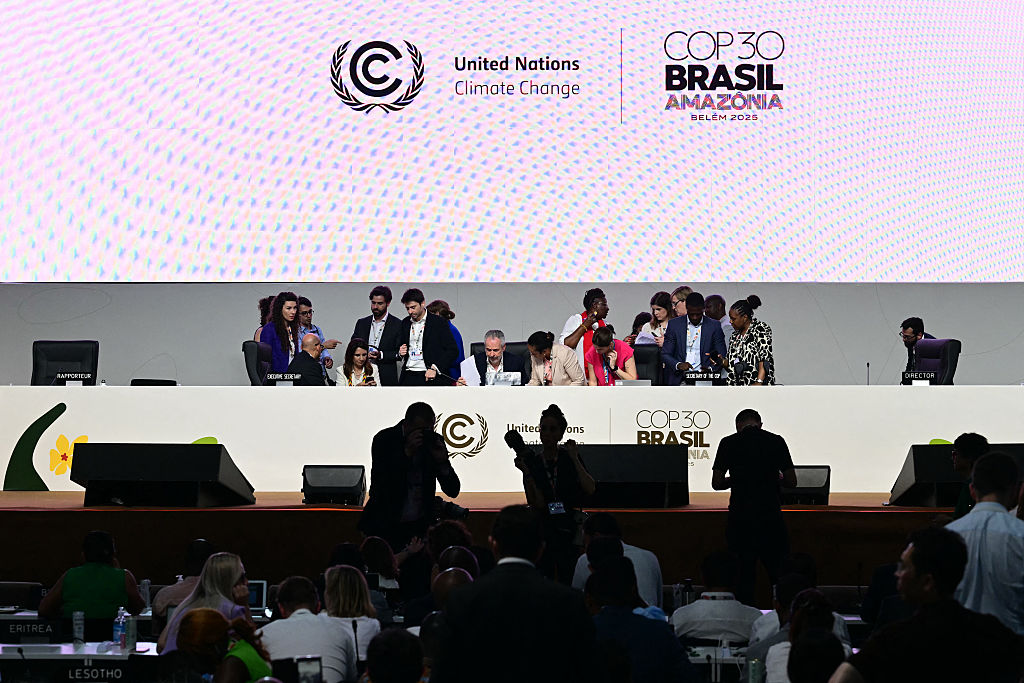

The U.N. Intergovernmental Panel on Climate Change’s (IPCC) primacy as the authority on climate science was challenged in a recent parliamentary inquiry.
In March 2023, the IPCC released the Climate Change 2023 Synthesis Report (pdf), which synthesised the work of hundreds of scientists who assessed thousands of peer-reviewed studies on climate change.
The report concluded that “human activities, principally through emissions of greenhouse gases, have unequivocally caused global warming.”
It also noted that human-caused climate change has contributed to many weather and climate extremes worldwide.
It is worth noting that while the report represents the collective assessment of the global scientific community, it is not a direct representation of their views.
The IPA’s Executive Director Scott Hargreaves argued against the IPCC being the “final word” on climate science given it synthesised peer-reviewed studies, a process he says has “some probative value, but it is not the final word.”
“And we would never accept that it’s the final word on anything, because that’s just not how science works,” he added.
Labor Senator Michelle Ananda-Rajah, the deputy chair of the Committee, asked Hargreaves to clarify what he believed the scientific process entailed, and said the majority of scientists now agree climate change to be caused by human activity.
“Yesterday, we heard 99 percent of scientists now believe [in man-made climate change],” she said.

“The thing about science is it is contested until it is not. When a consensus is arrived at, it is not contested anymore.”
However, Hargreaves disagreed.
“[The IPCC’s report] is a document which represents a particular process and a point in time. There are other scientists out there who dispute key findings of it,” he said.
Everything Is Contestable in Science: Director
At the same time, Hargreaves pointed out that consensus did not equate to finality.
“There is generally a consensus around an explanation for things which lasts until a better explanation comes along,” he said, quoting American historian and science philosopher Thomas Kuhn.
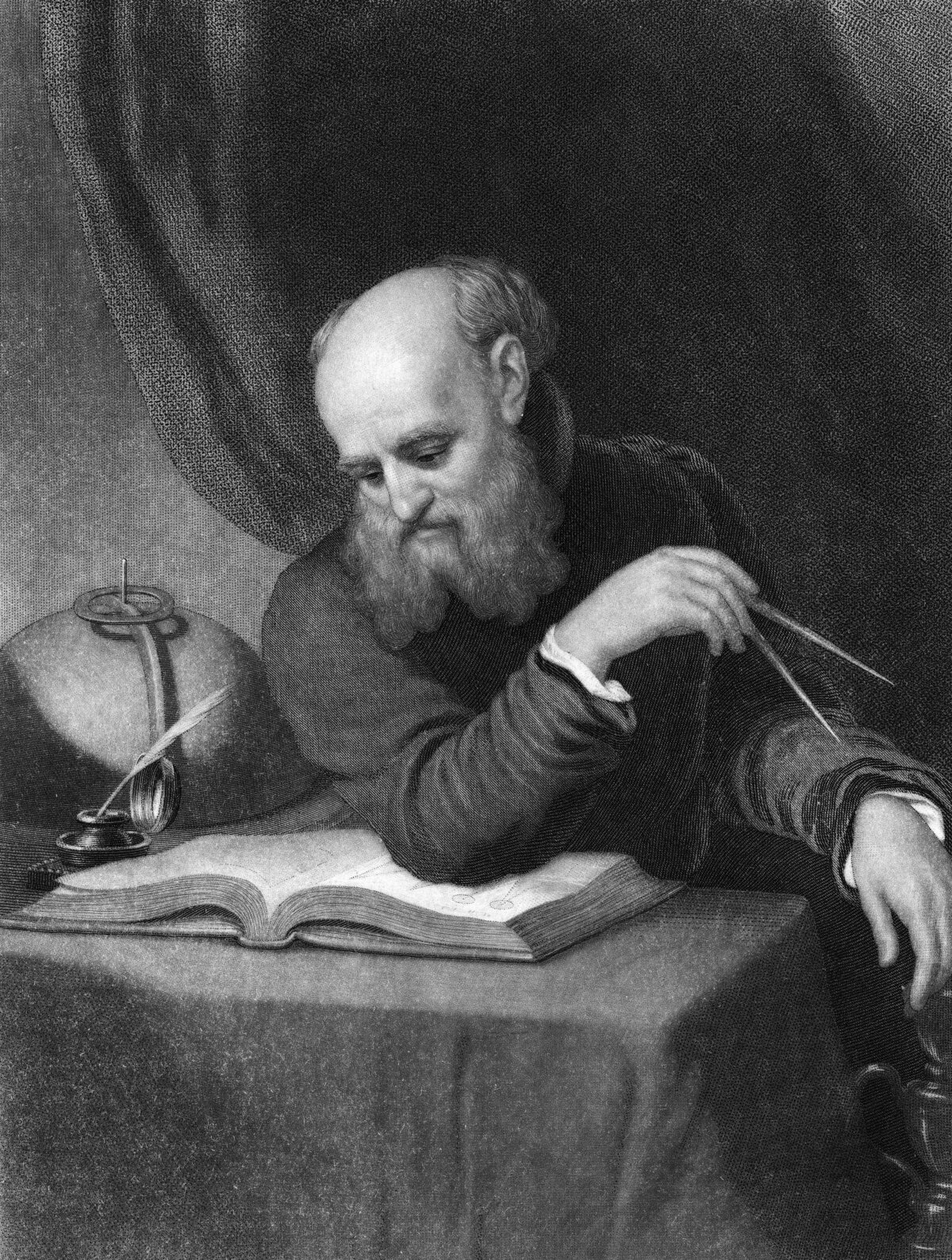
The IPA director gave the example of the Ptolemaic view of the solar system, in which the Earth was considered the centre of the universe, with the Sun, Moon, planets, and stars orbiting it.
“Everybody believed it until telescopes were invented and people like Galileo came along and pointed out that the heliocentric view makes much more sense,” he said.
“So that’s why things must always remain contestable.”
Hargreaves also supported the view that the scientific community should not censor individuals just because they hold fringe perspectives.
“This is how we have progressed throughout history. You would essentially be drawing an end to progress,” he said.
“This doesn’t mean that everyone who has a fringe view is therefore correct, but we don’t know that prospectively. We must allow the process to take its course.”
Greens Senator Points to Tens of Thousands of Climate Studies
Greens Senator Peter Whish-Wilson, the Committee chair, argued that the IPCC’s consensus on climate change was different from the view of the church in the Galileo period.
“In today’s world, we are looking at 90,000 peer-reviewed studies on climate change that fall into the 99.9 percent of scientists who support the IPCC and the 740 scientists in the IPCC from 60 countries,” he said.
“There are actually tens of thousands of climate scientists outside that. That’s a little bit different to the church throwing Galileo under a bus. Don’t you agree?”
In response, Hargreaves said that when something was peer reviewed, it did not mean that it was correct.
The director cited the findings of Stanford University scientist John Ioannidis, who stated that a lot of peer-reviewed research in the field of medical science was non-replicable.
“When you take that peer-reviewed paper and try to reproduce the results, you can’t. The original paper was in error, [and] unsupported. The conclusions were unsupported,” he said.
“And there are institutional reasons that academics, particularly if they’re receiving funding to investigate climate science, have that bias.”
Scientist Points to Issue With Climate Data
Hargreaves’ comments come as several scientists raise issues with the climate change data used by the U.N. and other organisations.
One major issue is the corruption of data caused by a process called “homogenisation,” in which scientists use computer algorithms to correct potential biases in raw temperature data.
While the process is necessary to control various factors that may contaminate temperature data in certain situations, Ronan Connolly, an independent scientist at the Center for Environmental Research and Earth Sciences (CERES), pointed out that it is not always subject to review and close examination.
“While the scientific community has become addicted to blindly using these computer programs to fix the data biases, until recently nobody has bothered to look under the hood to see if the programs work when applied to real temperature data,” he previously told The Epoch Times.
He also cited cases of homogenisation computer programs producing “bizarre” results or not applying adjustments consistently.
In addition, Connolly noted that the practice of blending rural and urban data by algorithms could also lead to data corruption, as urban areas are always hotter.
“A useful analogy is if you mix strawberries and bananas in a blender, afterward you have a blended homogenous mix that is neither strawberries nor bananas,” he said.
“Looking at the temperature data, this means that the homogenised rural records contain the urban warming, too.”
 Friends Read Free
Copy
Facebook
Tweet
Friends Read Free
Copy
Facebook
Tweet