
News Analysis
Alberta’s long-standing goal of an oil pipeline to the B.C. coast has repeatedly met one key caveat from Ottawa: The oil must be “decarbonized.”
But as Alberta prepares to submit a proposal for the project to Ottawa’s Major Projects Office by July 1, pushback is emerging over the proposed carbon capture and storage system—estimated to cost between $16.5 billion and $20 billion—that would accompany the new pipeline, as well as the industrial carbon tax and other net-zero emissions policies.
Supporters of the policies and the carbon capture system say Canada can be a long-term environmental and industry leader that pursues both lower emissions and higher energy production. Critics, meanwhile, say the carbon capture component of the pipeline and other restrictions don’t make sense as war in the Middle East drives up demand for oil and the United States creates a more favourable environment for investment while Canada adds to the industry’s costs.
The dispute leaves the pipeline proposal caught between Ottawa’s desire to lead the world in curbing emissions and the oil industry’s concerns that the debate over net-zero emissions policies could cost Canada a historic opportunity to expand exports and bolster the economy.
Carbon Capture and Industrial Carbon Tax
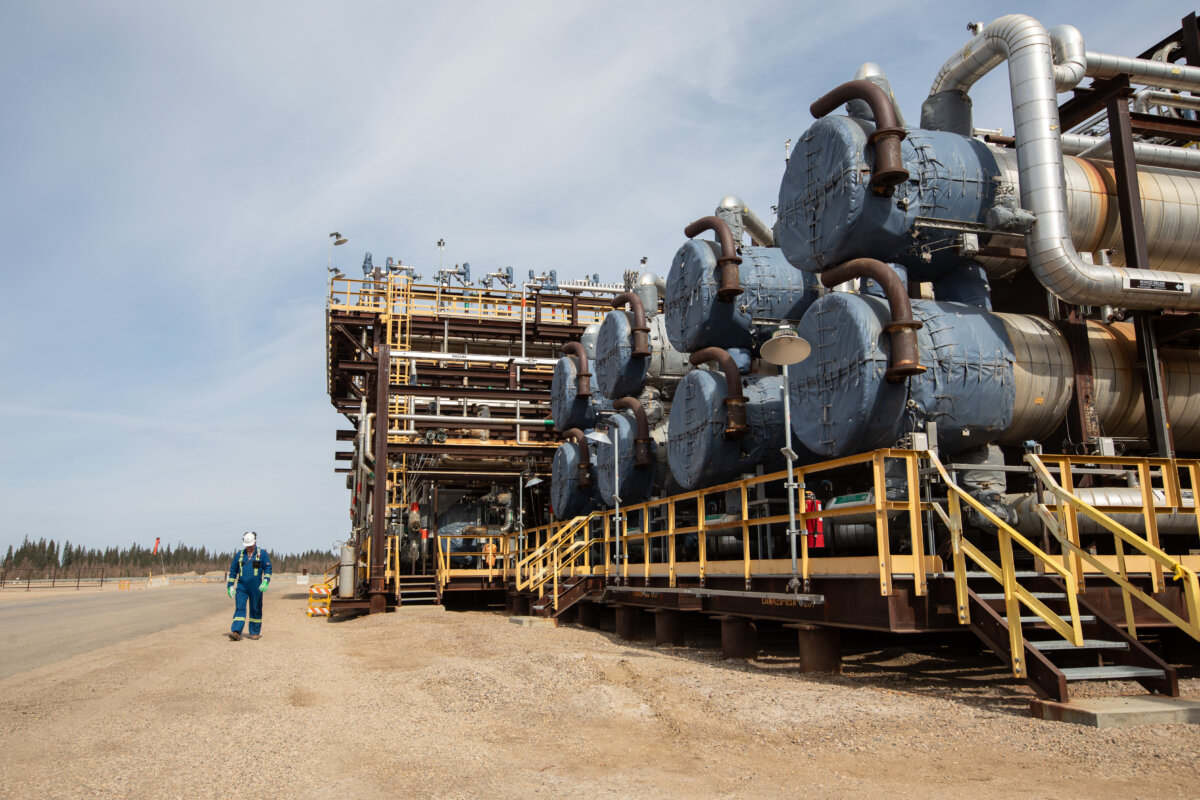
Carbon capture and storage is designed to prevent carbon dioxide emissions from entering the atmosphere. At an oilsands plant, carbon dioxide is produced during the process of separating oil from sand and water. Instead of escaping through smokestacks, the gas is captured by industrial filtering systems, compressed into a liquid-like form, and transported by pipeline to underground storage sites.
The technology has been used for decades, including in Norway’s Sleipner gas field project, which has stored carbon dioxide beneath the North Sea since the 1990s. Shell’s Quest project in Alberta has also stored millions of tonnes of carbon dioxide under rock layers.
A November 2025 memorandum of understanding between Alberta and Ottawa proposing an oil pipeline from Alberta to the B.C. coast includes a major carbon capture component, in addition to the province agreeing to raise the industrial carbon tax. The agreement calls for “the world’s largest carbon capture, utilization, and storage” system, led by the Oil Sands Alliance, a coalition of six companies, including Cenovus, Suncor, and ConocoPhillips Canada.
The proposed Pathways Project would connect more than 20 oilsands plants in northern Alberta to a network of pipes carrying captured liquid carbon dioxide to storage sites near Cold Lake, Alta. The alliance says the project’s goal is to reduce carbon dioxide emissions by 22 million tonnes annually by 2030, and help Ottawa meet its 2050 net-zero emissions targets.
The project is still in the negotiating stage as long-term financing, tax credits, and carbon pricing guarantees are worked out.
In a sign of mounting frustration, the Oil Sands Alliance issued a statement May 4 to say Canada is at risk of missing the chance to become an energy superpower.
“While both governments have taken steps toward this critical national interest objective since signing the MOU, the pace of change has been slow, and we are at risk of letting this opportunity pass Canada by,” the group wrote.
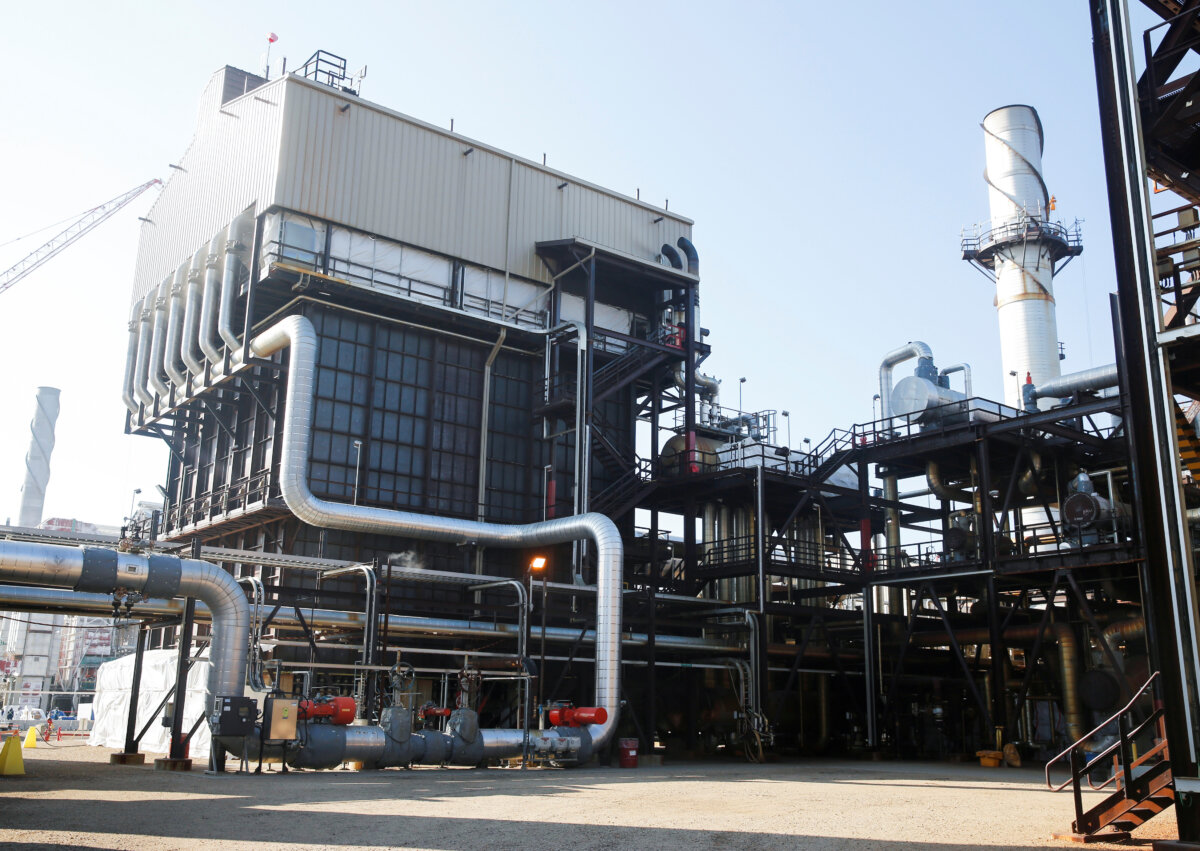
The Oil Sands Alliance added that since 2013, there has been no major new oilsands project because of “complex regulatory processes, uncompetitive carbon frameworks and fiscal systems that do not incent growth.”
Jon McKenzie, CEO of Cenovus, an Oil Sands Alliance member, said on May 7 that “the national dialogue on further development of the oilsands has been myopically focused on the climate agenda and climate policy.”
McKenzie had said earlier that the focus on emissions is motivating companies to invest outside of Canada.
Conservative MP Shannon Stubbs, her party’s energy critic, echoed those concerns in a May 6 response on social media, saying carbon tax poses a further challenge to Canadian competitiveness.
“This tax will continue to put Canadian operators at an even further disadvantage to the Americans, who don’t impose this tax on themselves federally,” she wrote.
Key Selling Point
In response to criticism from the Cenovus CEO, Prime Minister Mark Carney said Canada’s low-emissions energy sector would become a major selling point for international buyers.
“One of the key selling points for Canadian conventional energy will be that it’s low risk, … low-cost, low marginal cost, … and low carbon,” Carney said.
He added that he met with a number of heads of state from around the world and “that’s what they’re looking for.”
Carney also said oil production in Canada, largely from oilsands, has risen over the past decade from 3 million barrels per day to over 5 million barrels per day.
“That brings great benefits to the country but it also is a source of our emissions,” he said.
Carney met with Alberta Premier Danielle Smith on May 8 in Ottawa, where the two discussed the proposed Alberta-B.C. oil pipeline project. Smith said after the meeting that they made “significant progress towards reaching an agreement on a West Coast pipeline and carbon pricing.”
Heather Exner-Pirot, director of energy, natural resources, and environment at the Macdonald-Laurier Institute, said tying West Coast pipeline development to carbon capture has sapped industry enthusiasm, even as demand spikes amid the Iran war.
“We’re in the middle of the worst oil shock in history right now,” she told The Epoch Times. “The priority for every customer, and the priority for all projects, is reliability, not sustainability.”
She added that the industry has been “actively disincentivized” from the Alberta-B.C. pipeline due to the cost attached to carbon capture and storage, and it has “better options” anyway.
These options, she said, include a capacity upgrade to the Trans Mountain Expansion, optimization of the Enbridge Mainline into the United States, and the proposed South Bow-Bridger pipeline from Alberta to Wyoming, with the American portion already authorized by U.S. President Donald Trump.
“They don’t need the Northwest coastal pipeline,” Exner-Pirot said. “The government has made that the most expensive and the most critically risky pipeline.”
Others argue that Canada can still pursue both higher production and lower emissions.
Richard Masson, executive fellow at the University of Calgary’s School of Public Policy and former CEO of the Alberta Petroleum Marketing Commission, said governments and industry have strong reasons to pursue emissions reductions alongside oilsands expansion.
“We’ve got to make sure that we are doing it in a way that we can live with over time, so the system doesn’t change every election cycle,” Masson said in an interview.
For now, both projects remain largely in the planning stage. The Pathways carbon capture network is still under negotiation as governments and industry work through financing, tax credits, and carbon pricing guarantees, while Alberta has almost two months to submit its pipeline proposal to Ottawa’s Major Projects Office.
Any pipeline project would still require a private-sector proponent willing to finance and build it before construction can move ahead.
 Friends Read Free
Copy
Facebook
Tweet
Friends Read Free
Copy
Facebook
Tweet