
MOOSE JAW, Sask.—Saskatchewan-born airman Camille Robespierre Bonseigneur was one of 117 Canadians who flew in the Battle of Britain in 1940, but he died before the pivotal three-month battle ended.
Bonseigneur, 22, was killed on Sept. 3, 1940, when a German plane shot down his Hurricane. He was one of 23 Canadian pilots killed during the battle.
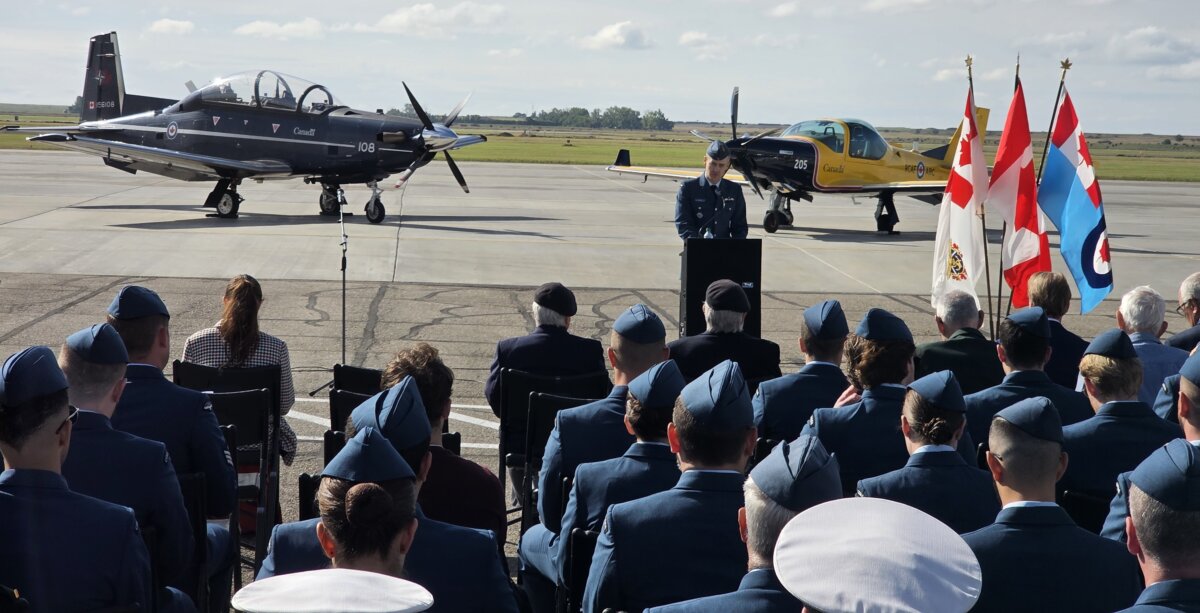
His sacrifice, along with those of his fellow Canadian and Allied airmen, was remembered on Sept. 20 at 15 Wing Air Base in Moose Jaw, Sask., during a ceremony marking the 86th anniversary of the Battle of Britain.
The ceremony took place near the runway, with an older CT-156 Harvard II trainer and the new CT-102B Astra II trainer serving as the backdrop.
“Though [Bonseigneur’s] life was cut short, his courage and commitment earned him a place amongst the few,” Lt.-Col. Craig Cloete, the acting base commander, said during the ceremony.
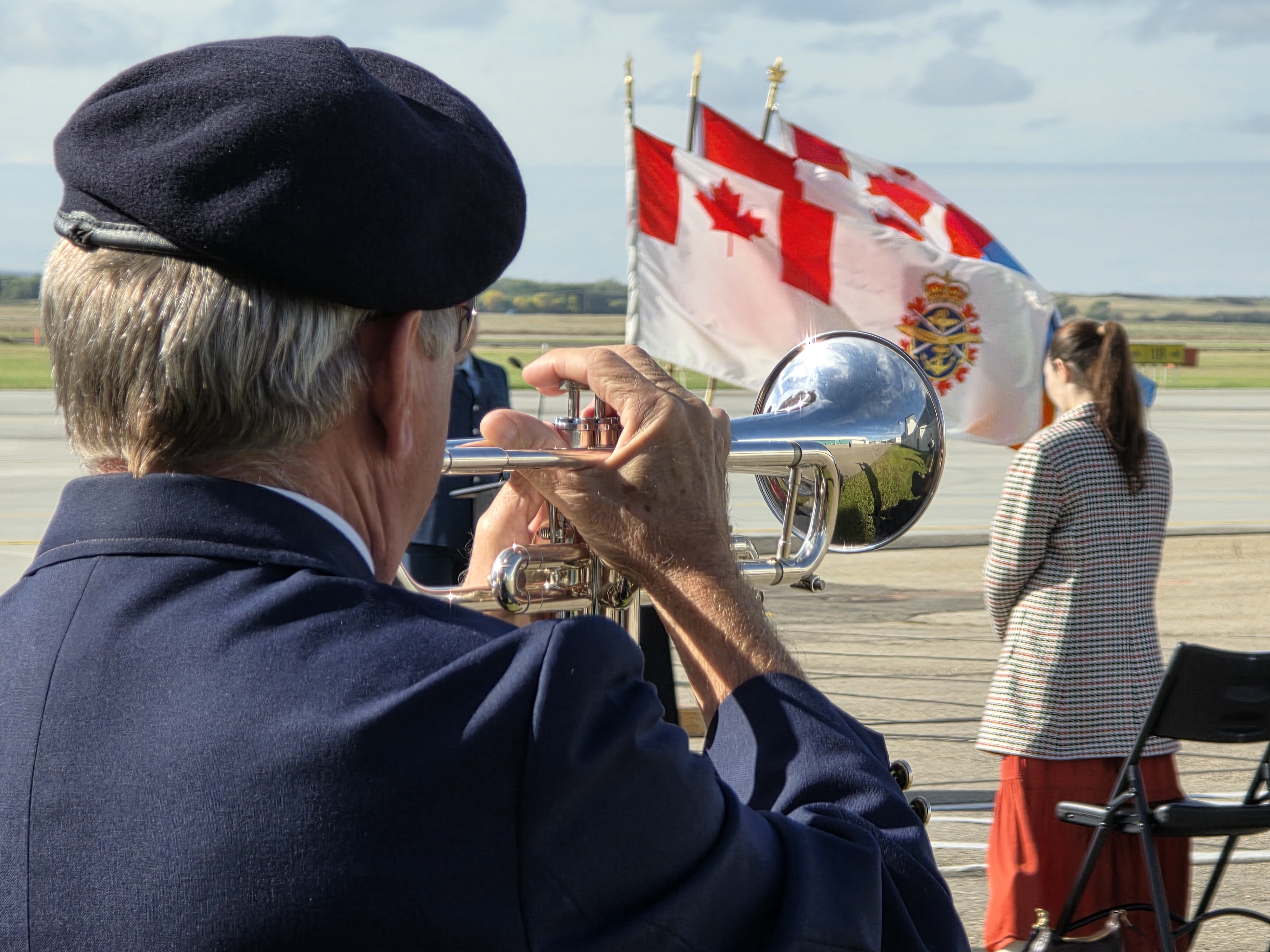 Capt. Rick Elmer, now retired, plays the “Last Post” on his trumpet, during a Battle of Britain ceremony at 15 Wing Airbase in Moose Jaw, Sask., on Sept. 20, 2026. (Jason G. Antonio/The Epoch Times)
Their example “reminds us that courage is not the absence of fear; rather, it’s the willingness to act despite fear,” he said.
Cloete compared the Battle of Britain pilots to firefighters protecting a city from a major fire and preventing it from spreading.
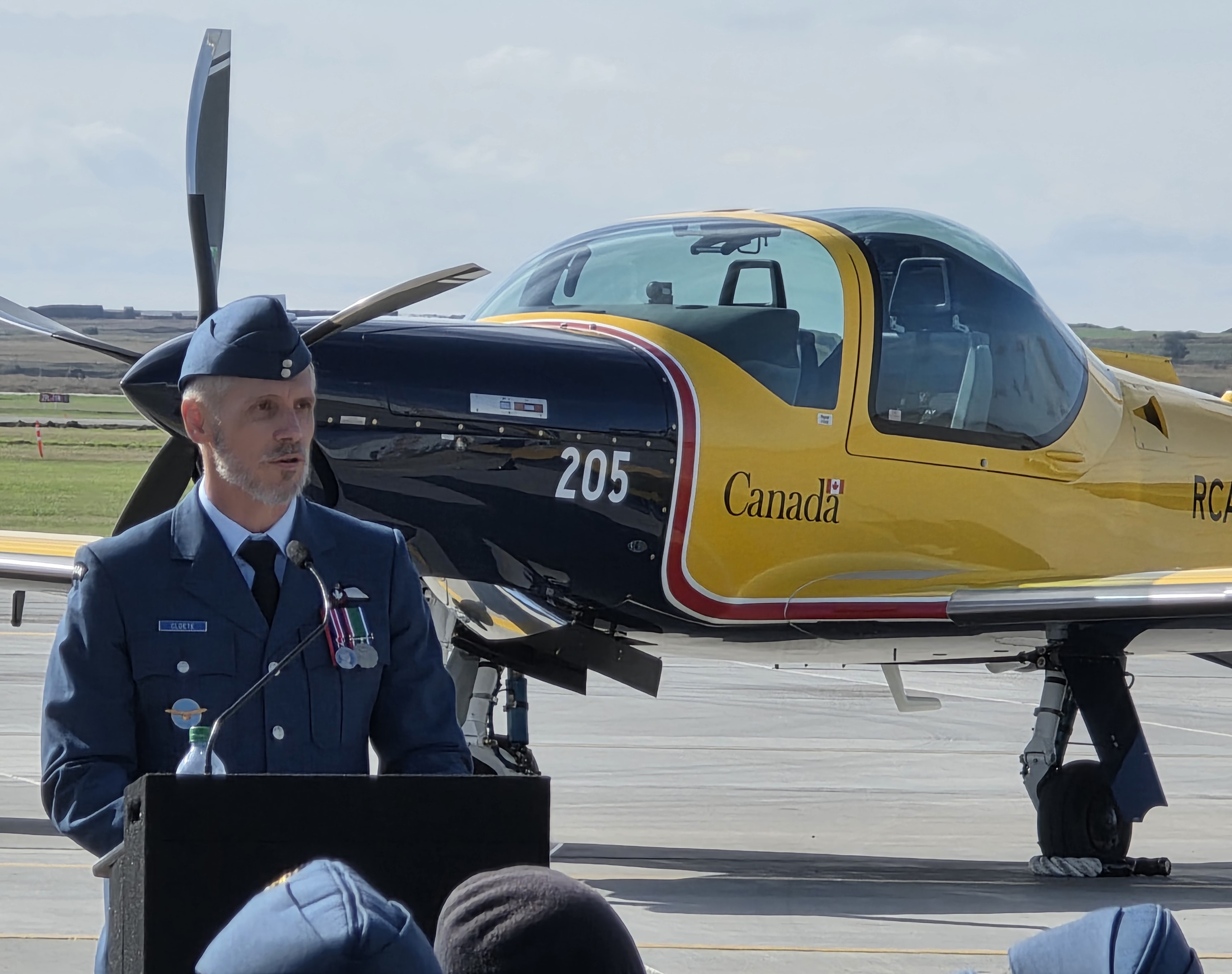 Lt.-Col. Craig Cloete, acting base commander at 15 Wing Airbase in Moose Jaw, Sask., speaks during the Battle of Britain ceremony on Sept. 20, 2026. (Jason G. Antonio/The Epoch Times)
He also said today’s training programs build on the heritage established by the British Commonwealth Air Training Plan during World War II.
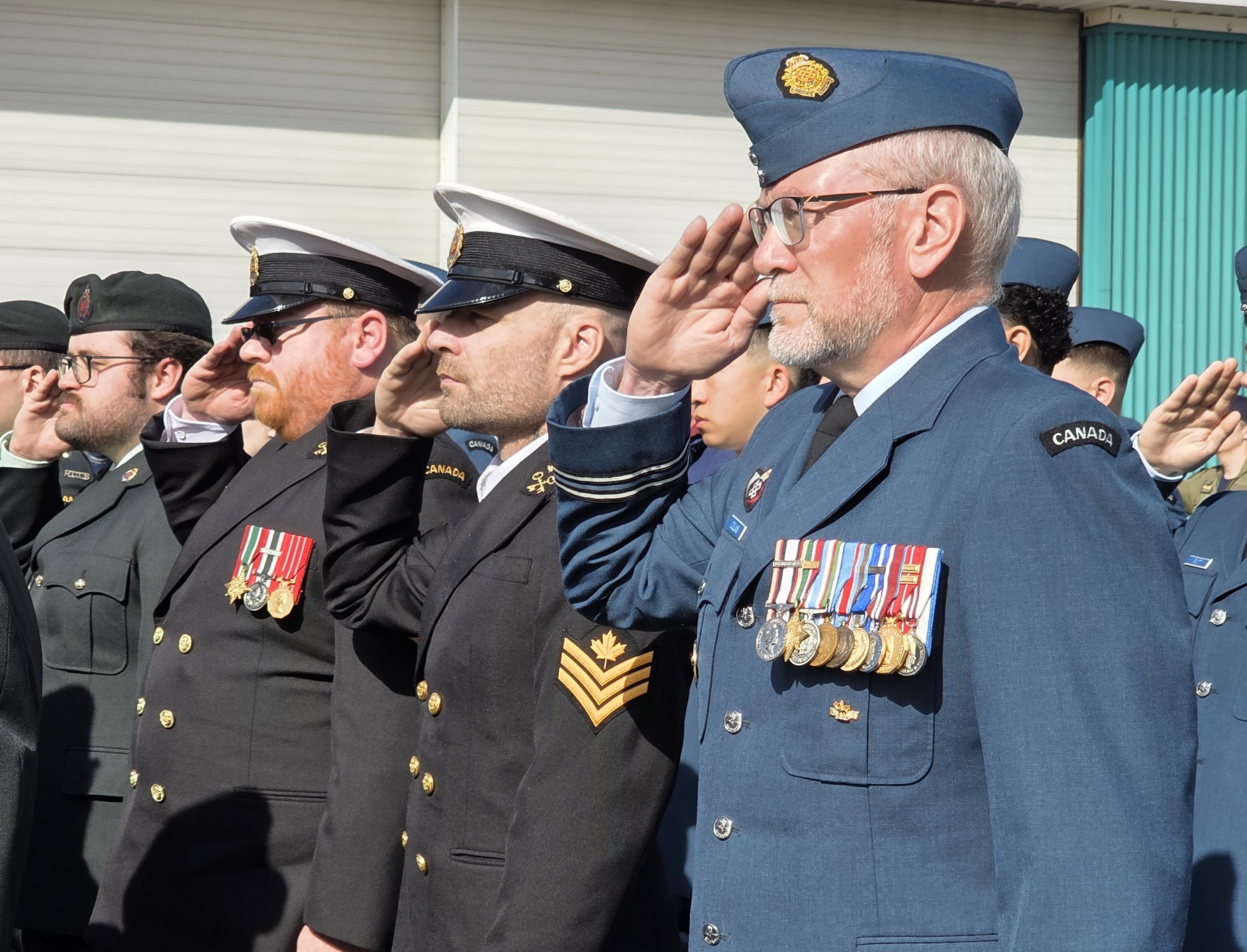 Military personnel stand at attention during the playing of “Reveille” in Moose Jaw, Sask., on Sept. 20, 2026. (Jason G. Antonio/The Epoch Times)
“To the heroes of the Battle of Britain … know that your sacrifice has not been forgotten,” he said. “Your courage inspires us, your legacy still endures, your example still lights the way for those who serve.”
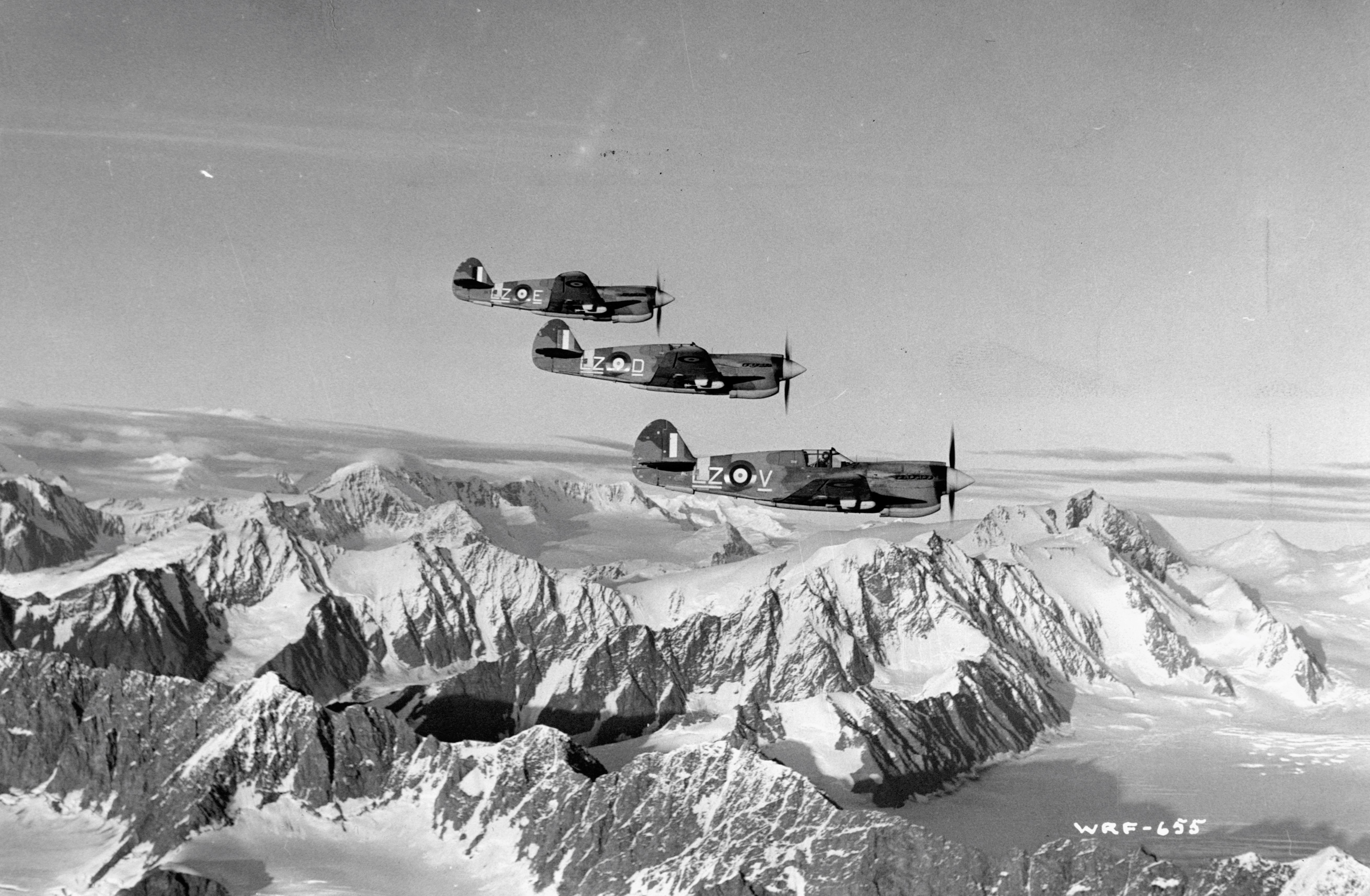 Royal Canadian Air Force Kittyhawks fly over northern Alaskan mountain ranges to defend against Japanese aggression during World War II. (Authenticated News/Archive Photos/Getty Images)
“More than 80 years later, the legacy of ‘the few’ lives on in every generation of aviators who choose service before self and in every Canadian who enjoys the freedoms they help preserve,” Cloete said.
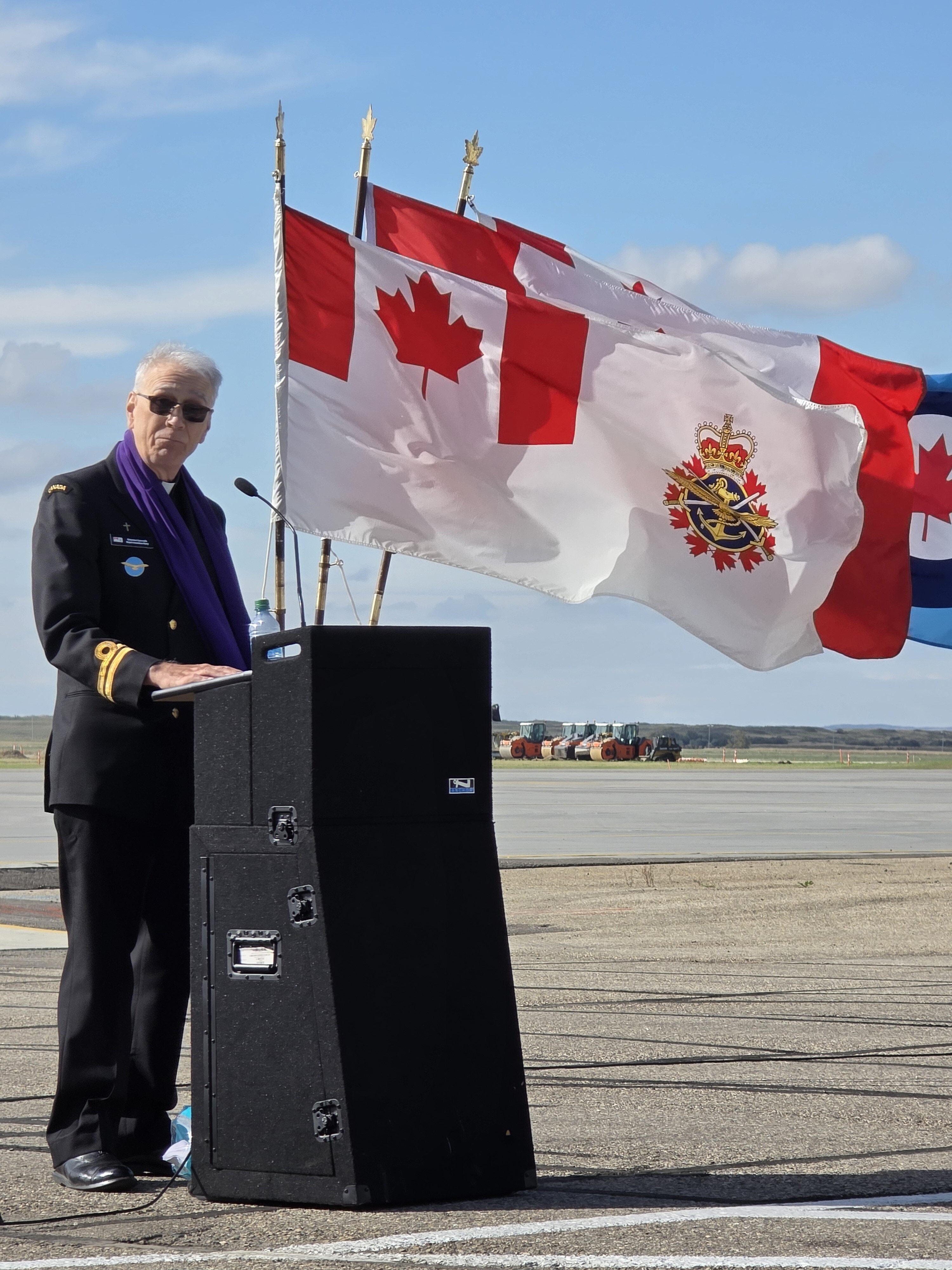 Padre Lt. (Navy) Graeme Carruth gives a spiritual reflection during the ceremony, on Sept. 20, 2026. (Jason G. Antonio/The Epoch Times)
Flying can be dangerous, risky, and sometimes paralyzing, he said, but fear cannot prevent pilots from doing what is required.
“We have to do what the mission requires of us because there’s a lot of people that count on us,” Blouin said.
Blouin has trained on the Harvard II for more than a year and described it as “a wonderful machine” that demands a lot from him as a pilot. He added that he will complete his training on the Harvard II, making the RCAF’s transition to the Astra “slightly bittersweet.”
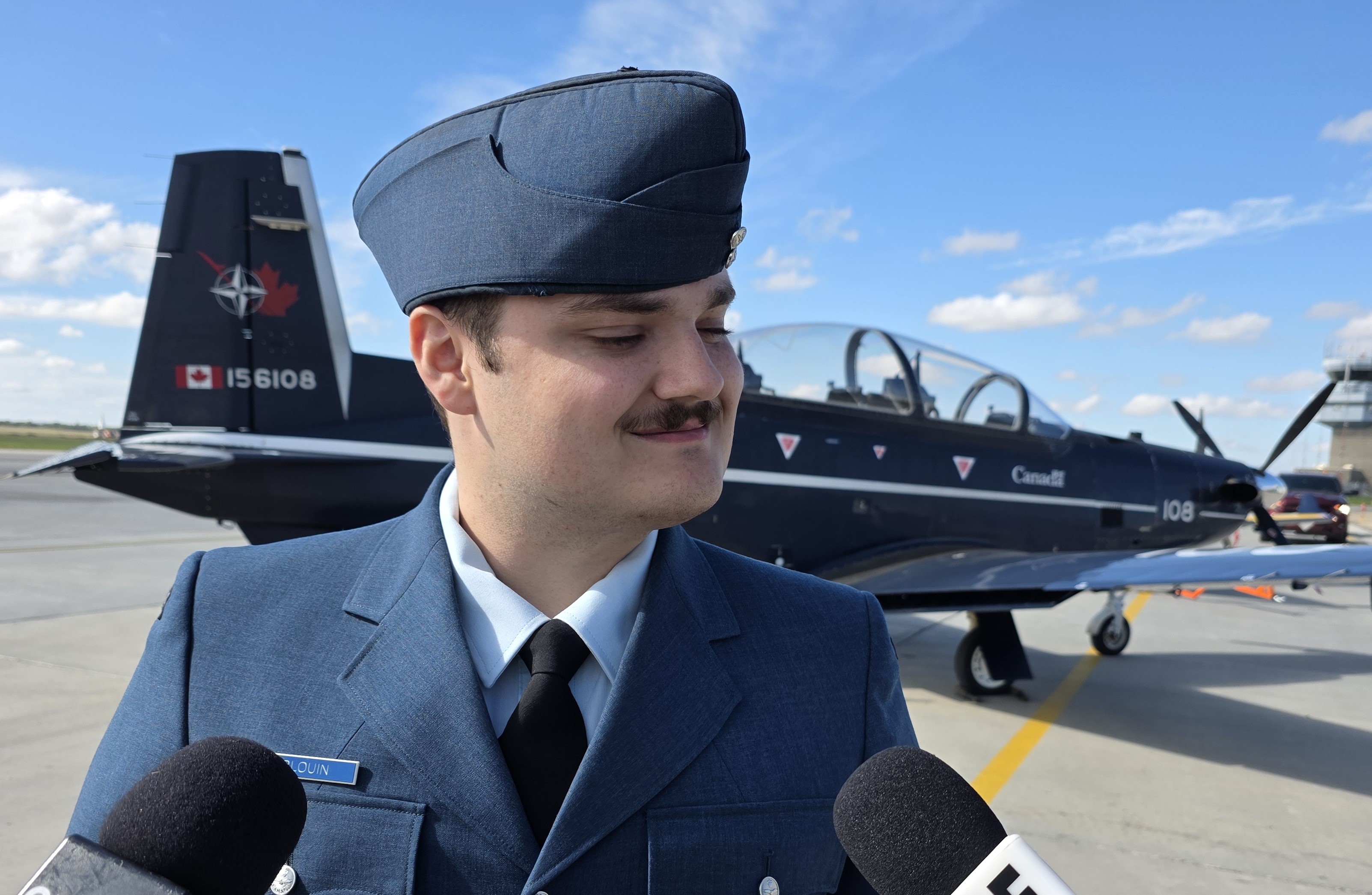 Second Lt. Maxime Blouin, a student pilot, speaks to media after the Battle of Britain ceremony, on Sept. 20, 2026. Blouin trains on the CT-156 Harvard II trainer, which is pictured behind him. (Jason G. Antonio/The Epoch Times)
She said such ceremonies also help her focus on “the bigger picture” during her training and before her next flight.
“You remember why you’re here, why you’re in uniform,” Panashtia said. “And to me, that’s a very special reminder. This is something I’ve wanted to do my whole life.”
Panashtia said she is working to uphold the responsibility Canadians have placed on her while emulating the selflessness that previous generations of pilots have demonstrated.
She said it is difficult to comprehend that many of the young airmen who died in past wars were roughly her age.
“It’s almost unimaginable,” she said, reflecting on how people so young had committed themselves to a cause much bigger than themselves.
 Friends Read Free
Copy
Facebook
Tweet
Friends Read Free
Copy
Facebook
Tweet