

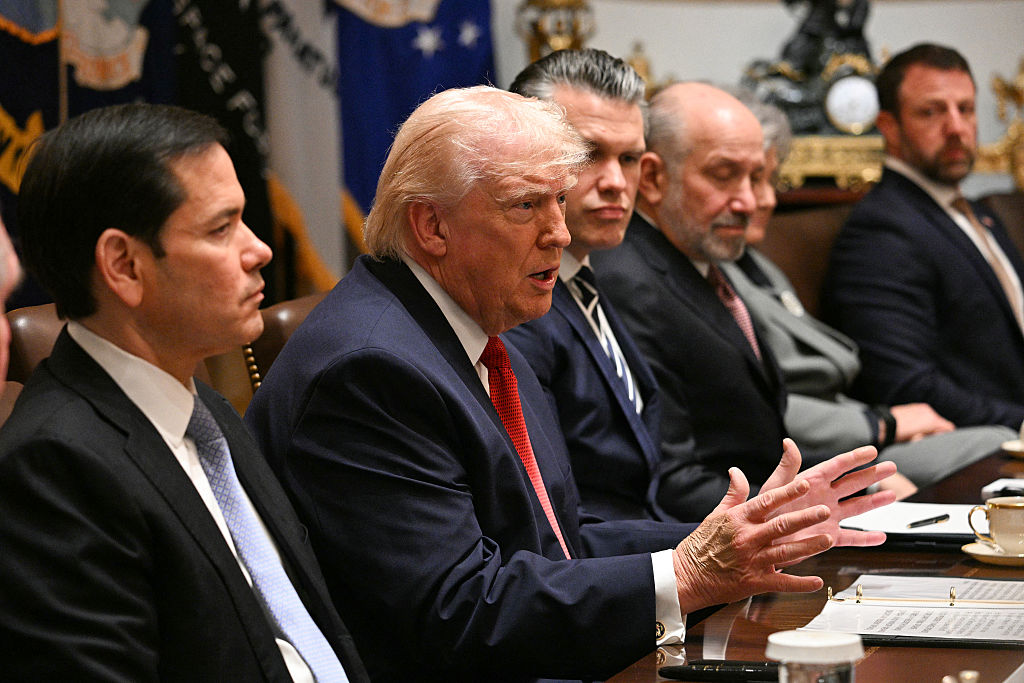
U.S. Secretary of State Marco Rubio said on March 31 that the United States could see the “finish line” in its military operation with Iran, echoing President Donald Trump’s earlier comments that the conflict was nearing an end.
“We can see the finish line. It’s not today, it’s not tomorrow, but it is coming,” Rubio told Fox News’ “Hannity.”
He also said that if a peace agreement is not reached with Iran, strikes by the United States will continue.
“We’re not going to allow … the failure of talks to impede our ability to defend this country and to protect this country from a real threat,” he said.
The United States and Israel are now five weeks into their military operations against Iran.
The Israel Defense Forces (IDF) said in a post on X that it had conducted another wave of strikes on Tehran, targeting regime infrastructure.
The IDF also said in a post on Telegram that it had identified missiles being launched toward Israel from Iran and was intercepting them, and advised the public to take shelter.
Iranian strikes against Gulf states also continue, with Qatar saying that an Iranian cruise missile struck an oil tanker off its coast on April 1. Two other missiles were intercepted, the Qatari Defense Ministry said.
QatarEnergy, the state-owned company that contracted the tanker, said there was no environmental impact from the attack.

A Bangladeshi citizen was killed in an Iranian drone attack on Fujairah, one of the United Arab Emirates’ seven emirates, on April 1. The Fujairah media office said he was killed when Emirati defense systems intercepted a drone, and shrapnel struck him.
Saudi Arabia said earlier that it had intercepted and destroyed two Iranian drones.
Kuwait International Airport was subjected to a drone attack, which targeted fuel tanks, according to an April 1 post on X by the state-run news agency KUNA, which said that the attacks led to a “large fire” and firefighters were working to bring the blaze under control. The news agency said that the attacks were conducted by Iran “and the armed factions it supports.”
Operations Could Conclude in Weeks
On March 31, Trump said that the U.S. combat operations could be concluded in a few weeks.
“I would say that within two weeks, maybe two weeks, maybe three,” he said during a White House news conference.
Trump said that while there is a possibility of reaching a deal with Tehran, the operation could still end without one.
In a March 31 interview with Al Jazeera, Iranian Foreign Minister Abbas Araghchi said he had received direct messages from U.S. special presidential envoy Steve Witkoff.
“We receive messages from the American side. Some are direct, and others come through our friends in the region. Wherever necessary, we respond to them. Therefore, there is currently no negotiation between us. Claims made in this regard are not correct,” he said.
“The exchanges through intermediaries are ongoing. Mr. Witkoff, as before, continues to send messages. But this does not mean negotiation. Rather, it means the exchange of messages that continues in conditions of peace and war.”
The U.S. president is due to address the nation on April 1 at 9 p.m. ET to provide an update on the Iran war, the White House said.
Additional U.S. Forces Arriving in the Middle East
In recent days, additional U.S. forces have begun to arrive in the region.
The U.S. military has dispatched an amphibious ready group and an embarked Marine Expeditionary Unit, consisting of around 4,000 to 5,000 sailors and Marines, to the Middle East. A second amphibious ready group has also departed from California and has been sailing west across the Pacific.
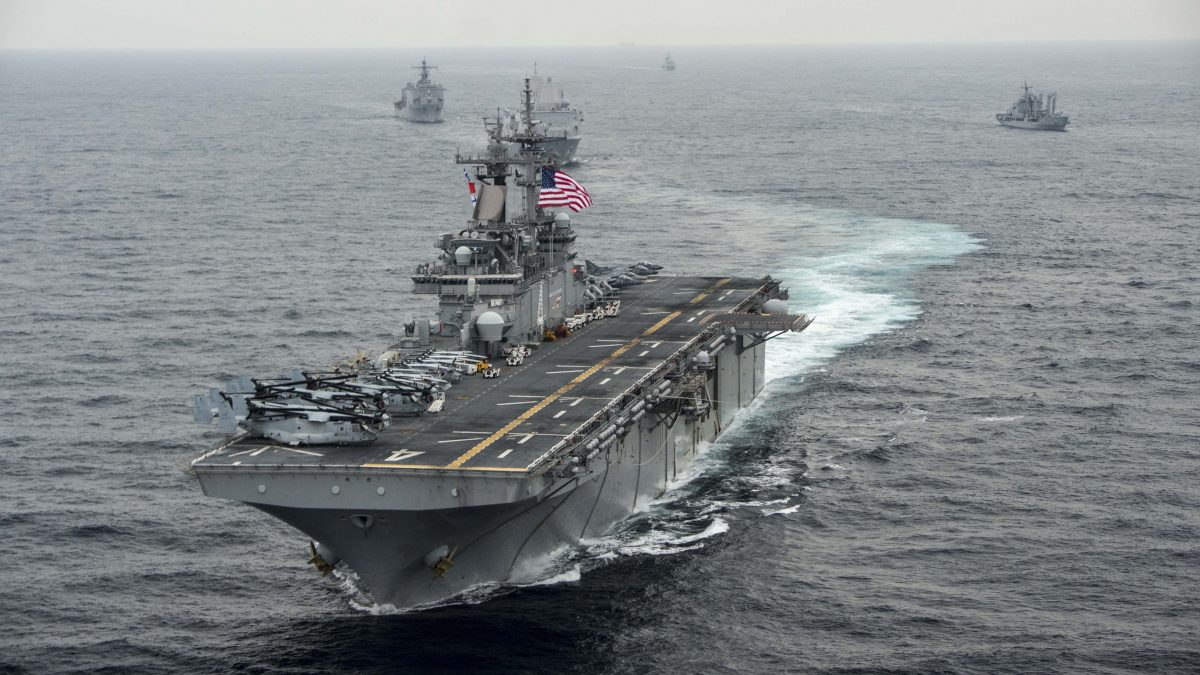
The Pentagon also dispatched elements of the U.S. Army’s 82nd Airborne Division to the Middle East, including the division’s 1st Brigade Combat Team.
Rubio said during a visit to France last week that the United States can complete its military campaign without deploying ground troops, but that additional troops heading to the Middle East offer the president a range of military options.
On March 31, China and Pakistan called for an immediate cease-fire in the Middle East and put forward a five-point peace plan.
Aldgra Fredly, Ryan Morgan, and The Associated Press contributed to this report.
 Friends Read Free
Copy
Facebook
Tweet
Friends Read Free
Copy
Facebook
Tweet