
Russia said on Dec. 25 that negotiations with the United States aimed at ending the war in Ukraine are making slow but steady progress, as Moscow accused Western European countries of trying to derail diplomatic efforts and Kyiv warned that key issues remain unresolved.
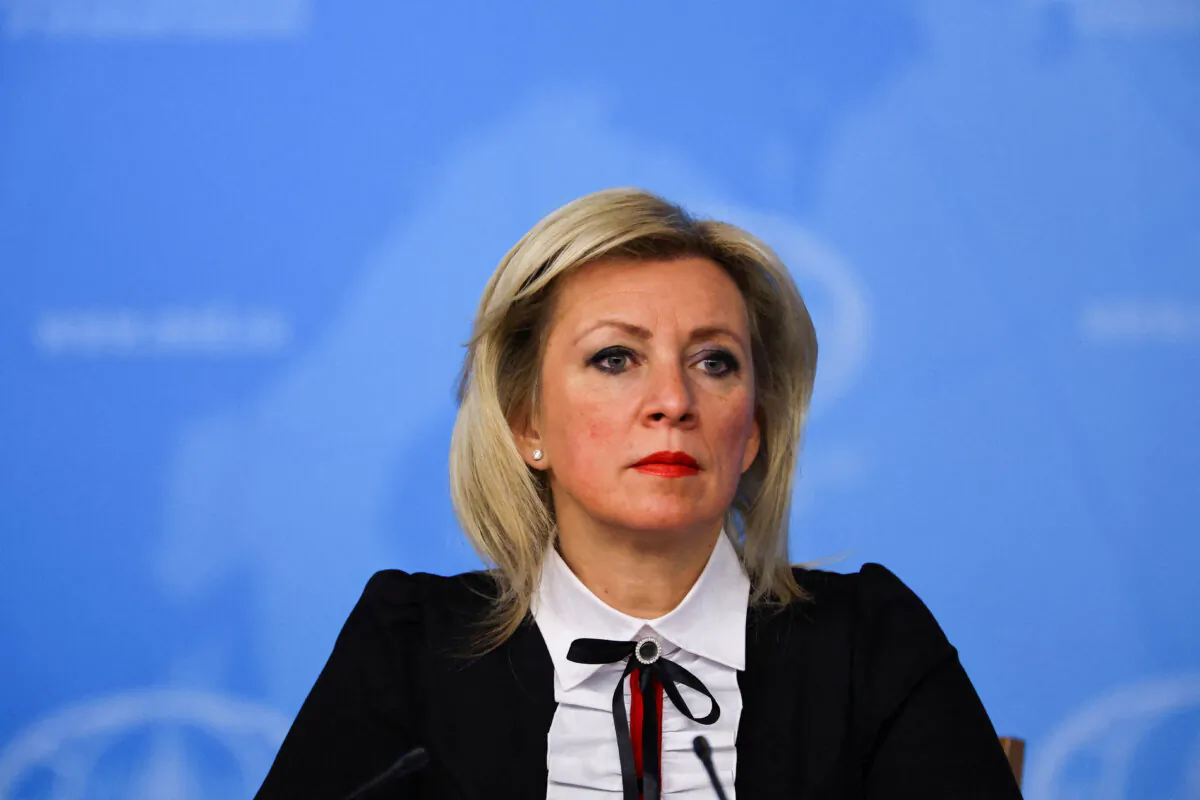
Russian Foreign Ministry spokeswoman Maria Zakharova told reporters in Moscow that talks with Washington on a possible settlement between Russia and Ukraine were advancing, albeit gradually, and urged the United States to resist what she described as disruptive actions by European allies.
“In the negotiation process on a settlement of the Ukraine conflict, I mean in the negotiation process with the United States, there is slow but steady progress,” Zakharova said at a briefing. She added that the talks were being accompanied by “highly harmful and even malicious attempts by a group of countries, primarily Western European ones, to torpedo these efforts and derail the whole diplomatic progress that has been achieved.”
Zakharova said Moscow was repeatedly calling on U.S. officials “to actively counter this destructive process,” with her remarks coming amid persistent tensions between Russia and European governments that continue to back Ukraine militarily and politically.
Putin Reaffirms War Aims As Diplomacy Continues
Her remarks follow comments made by Russian President Vladimir Putin at an annual meeting with the defense ministry on Dec. 17, in which he criticized both European leaders and U.S. President Joe Biden’s administration.
“Europe’s little pigs immediately joined in the work of the previous American administration, hoping to profit from the collapse of our country,” Putin said, while accusing the Biden administration of having “deliberately steered the situation towards an armed conflict.”
Putin said the aims of what Moscow calls its “special military operation” in Ukraine would be met “unconditionally.”
“If they do not want a substantive discussion,” he said, “then Russia will liberate its historical lands on the battlefield.”
Trump Pushes Peace in Parallel Talks With Both Sides
It comes as U.S. officials have been holding separate rounds of talks with Russian and Ukrainian negotiators, most recently in Miami on Dec. 20–21, as the Trump administration seeks to broker an agreement to end nearly four years of war.
U.S. special envoy for peace missions Steve Witkoff, who took part in the talks, said on Dec. 21 that the meetings with the Russian delegation were “productive and constructive” and that he believes both sides are fully committed to achieving peace in Ukraine.
“Our shared priority is to stop the killing, ensure guaranteed security, and create conditions for Ukraine’s recovery, stability, and long-term prosperity,” Witkoff said in a separate post. “Peace must be not only a cessation of hostilities, but also a dignified foundation for a stable future.”
Kremlin spokesman Dmitry Peskov said that Russia was reviewing the latest developments following a report to Putin from Kirill Dmitriev, the head of the Russian Direct Investment Fund and a special presidential envoy involved in the talks.
“Now, we will take into account the information received by our head of state to formulate our further positions and continue our contacts through the available channels as soon as possible,” Peskov told reporters, according to Russian state news agency TASS.
Earlier, Russia’s Deputy Foreign Minister Sergey Ryabkov reiterated Russia’s opposition to a temporary cease-fire, saying that Moscow wants a “sustainable cessation of hostilities” addressing what Russia calls the root causes of the conflict, including territorial claims and security arrangements.
Ukraine Says Deal Near but Key Issues Unresolved
Kyiv has offered a different assessment of both Russia’s intentions and the state of the negotiations. Ukrainian President Volodymyr Zelenskyy said on Dec. 24 and 25 that talks with the United States and Europe were “very close to a real result,” but added that Russia continued to reject genuine cease-fire proposals while pressing its military campaign.
In a Christmas Eve message, Zelenskyy accused Moscow of launching fresh missile and drone attacks on Ukraine’s energy grid rather than pausing hostilities for the holiday.
“Regrettably, Russia continues to reject real ceasefire proposals, as it has done throughout the year,” he said. “Instead, it is clearly seeking ways to prolong the war and continue attacks.”
Zelenskyy has said the current talks are focused on a 20-point framework plan, pared down from an earlier 28-point draft, that would serve as a political foundation for ending the war. He said the document largely reflects a joint Ukrainian–American position, though several sensitive issues remain unresolved, particularly territorial control in eastern Ukraine and the future of the Russian-occupied Zaporizhzhia nuclear power plant.
According to Zelenskyy, Kyiv’s position is to end hostilities along current battle lines, while Moscow wants Ukrainian forces to withdraw from the entire Donetsk region, even though significant portions remain under Ukrainian control. Control of the Zaporizhzhia plant, Europe’s largest nuclear facility, is also a major sticking point.
Zelenskyy said on Dec. 25 that he spoke for nearly an hour with Witkoff and U.S. envoy Jared Kushner, describing the conversation as constructive but that work remains to be done to address “sensitive issues.”
“We have some new ideas in terms of formats, meetings, and, of course, timing on how to bring a real peace closer,” he said, adding that further talks were expected later in the day between Ukrainian Defense Minister Rustem Umerov and the U.S. team.
U.S. Vice President JD Vance has cautioned against excessive optimism, saying earlier this week that while progress had been made, he would not say “with confidence” that a peaceful resolution was assured. He identified Donetsk and the Zaporizhzhia plant as major obstacles and described territorial concessions as a “terrible” but central issue in the talks.
Zelenskyy said the negotiating parties “have significantly aligned most positions,” but added that final decisions on territory would require discussions at the leaders’ level and, for Ukraine, ratification by referendum.
U.S. President Donald Trump told reporters at his Mar-a-Lago resort in Florida on Dec. 23 that negotiations were “going along,” while acknowledging “tremendous hatred” between Putin and Zelenskyy.
Trump pledged to do what is necessary to end what he called a war that “everyone is tired of.”
Guy Birchall contributed to this report.
 Friends Read Free
Copy
Facebook
Tweet
Friends Read Free
Copy
Facebook
Tweet