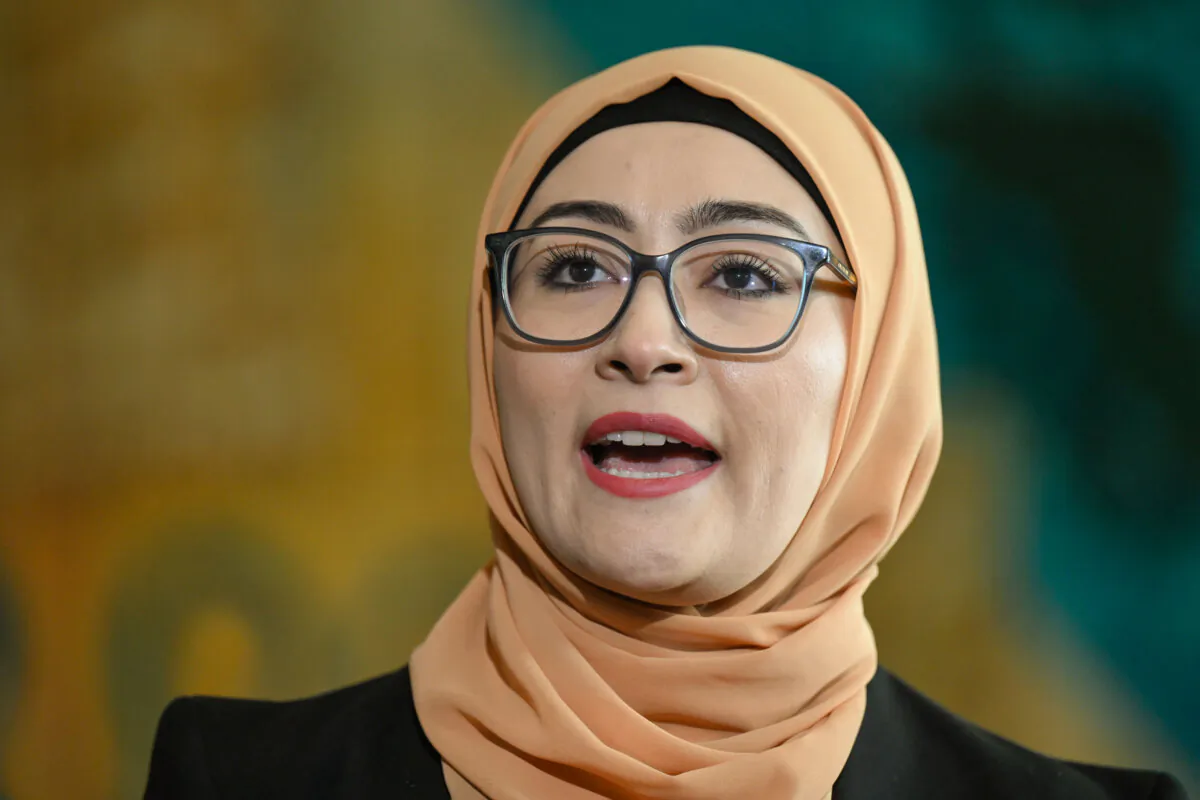

Independent Senator Fatima Payman has successfully moved a Senate motion requiring the government to release any plans for future misinformation and disinformation legislation.
In November 2024, the Labor government withdrew the Communications Legislation Amendment (Combatting Misinformation and Disinformation) Bill 2024 after it failed to garner enough support.
However, Payman now wants to see all correspondence between the new Labor minister for communications and the government department with the media regulator, the Australian Communications and Media Authority, on any upcoming plans for the bill.
The motion (pdf) also called for “analysis of why the bill failed to earn support in the Senate or in the community and preparations for any future legislation dealing with online misinformation and disinformation.”
It received support from the Coalition, Greens, and independent Senators, with 34 in favour and 21 against the documents being released.
Payman was one of the independent Senators who expressed public opposition to the mis and disinformation bill before it was dropped.
“Freedom of speech is a pillar of our democracy, and this Bill threatens that. I’ve heard from so many of you who share this concern, and I agree,” she said at the time.
She said the powers that it would have granted could lead to “over-censorship” with the government deciding what “does and doesn’t count as truth.”
The scrapped bill defined mis- and disinformation as online content that was “reasonably verifiable as false, misleading or deceptive” and “likely to cause or contribute to serious harm.”
Corporations that contravened the rules could have been slapped with fines of up to 5 percent of their global revenue.
Michelle Rowland, who is now the attorney-general, oversaw the bill in her capacity as the former communications minister.
Minister Looking into ‘Digital Duty of Care’
Anika Wells, the current communications minister, is looking into a Digital Duty of Care to address online “harms” including misinformation.
The digital duty of care is a regulatory framework that would require digital platforms, including social media companies, to protect users from harm.
In an interview with Sky News Australia on Sept. 2, Wells discussed misinformation in the context of spreading “conspiracy theories.”
“I think that’s distinguishing between what are conspiracy theories and prolific misinformation compared to what are the facts. And online, it’s increasingly harder to work that out for yourself, and anything that I can do as minister for comms, I’m looking at,” she said.
Wells was asked if there was a way that Australia could be more vigilant as a nation to ensure “misinformation” wasn’t just peddled right across these platforms.
In response, Wells said, “I think that speaks to the Digital Duty of Care, because if you’re a platform and you’re allowing 600 hours of content to be uploaded every minute to your platform, there is a responsibility on you to have some knowledge of what that content is and to police it.”
Describing the internet as the “wild west,” Wells said social media allows uploads of “anything” and noted any inappropriate content falls to the victim to report.
“I know I would speak for our broadcasters, if they have entire shows that are uploaded to a platform, the onus is on them to report that to the platform to take it down. There needs to be a Digital Duty of Care,” she said.
In a separate media release on Sept. 2, Wells referenced that the “forthcoming Digital Duty of Care” would complement the social media minimum age law and actions against “abusive technology.”
 Friends Read Free
Copy
Facebook
Tweet
Friends Read Free
Copy
Facebook
Tweet