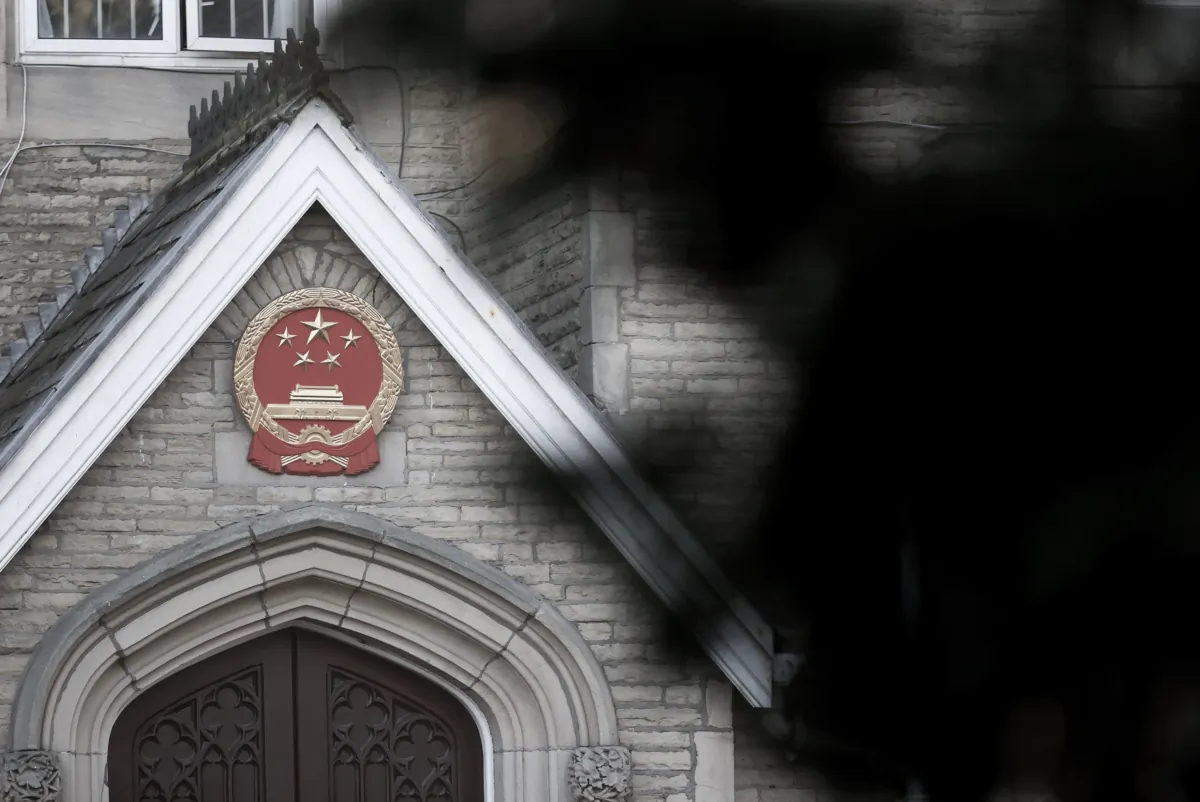
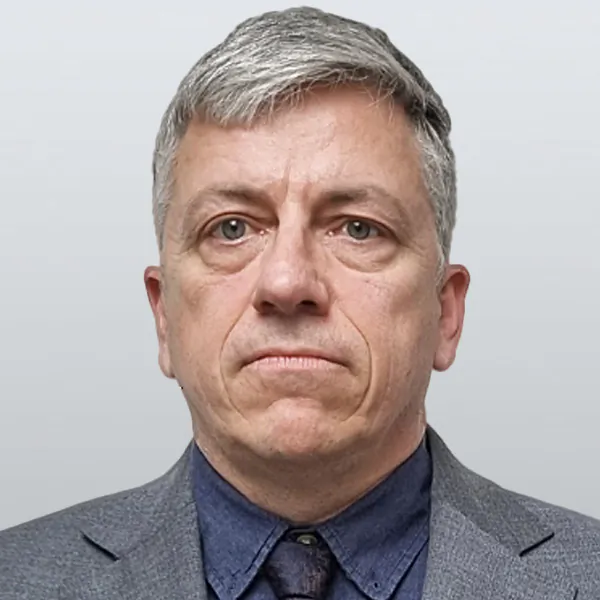
The recent collapse of the trial of two men accused of spying for China has highlighted how relations between London and Beijing have shifted in the past decade.
Along with questions about the degree of Beijing’s influence in the inner corridors of Westminster, at the heart of the recent controversy was the question of whether the Chinese Communist Party (CCP) should be labeled an “enemy” of the UK or merely a strategic “threat.”
But whatever the answer to the question, there is no doubt that the terms of the debate on China have shifted since the so-called golden era of closer ties, before the heads of the UK intelligence services began to increasingly sound the alarm over Beijing’s antics.
Here is a rundown of the key moments.
Cameron Shares a Pint With Xi
From Oct. 19 to Oct. 23, 2015, Chinese leader Xi Jinping made a state visit to the UK, the first since the visit of his predecessor, Hu Jintao, in 2005.
Then-Prime Minister David Cameron took Xi to a traditional English pub, The Plough at Cadsden, and the pair were photographed drinking pints of beer.
At a joint news conference on Oct. 21, 2015, Cameron said: “This visit marks the start of a new era. Some have called it a golden era in relations between Britain and China, an era of stronger economic ties, deeper trade links, closer relations between our peoples and meaningful dialogue on the issues that matter to us both.”
Xi also said he made the state visit to the UK to “take China–UK ties to a new level.”
Defense Secretary Sacked Over Huawei Leak
Cameron—who had signed the UK up to the Beijing-backed Asian Infrastructure Investment Bank—resigned as prime minister in June 2016, following the Brexit referendum, and was replaced by Theresa May.
During a visit to Beijing in January 2018, May declined to go further and sign on to China’s Belt and Road Initiative.
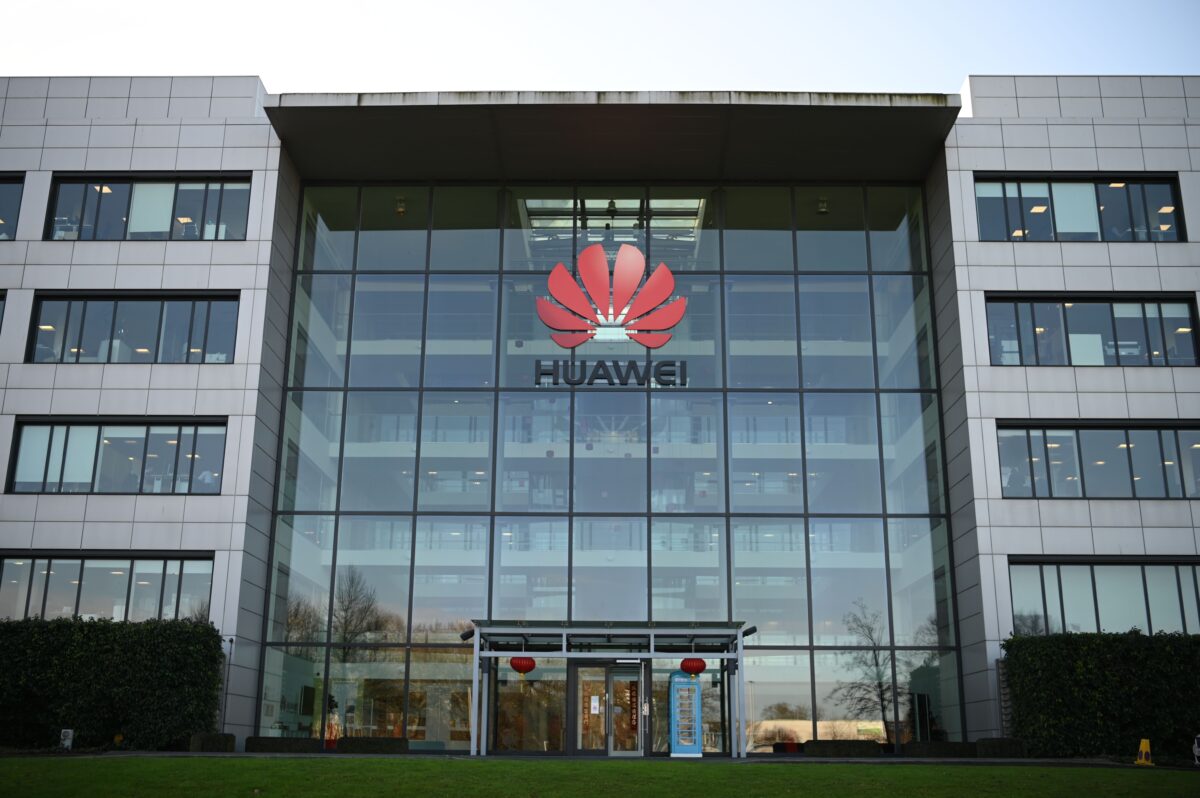
In May 2019, then-Defense Secretary Gavin Williamson was sacked by the prime minister after being accused of leaking information about Huawei’s plans to rebuild the UK’s 5G network.
The Daily Telegraph published an article stating that the National Security Council, which is attended by government ministers and intelligence chiefs, had decided to allow Huawei to build non-core infrastructure for the 5G network.
In a letter to the prime minister, Williamson “strenuously” denied responsibility for the leak.
Johnson Expunges Huawei
In July 2020, then-Prime Minister Boris Johnson’s government announced that, following a review by the National Cyber Security Center, Huawei would be completely removed from the UK’s 5G network by the end of 2027.
The National Cyber Security Center stated that the review examined the implications of new sanctions imposed by the United States against Huawei.
According to Washington, the U.S. government has sanctioned Huawei and its affiliates because they “pose a significant risk of involvement in activities contrary to the national security or foreign policy interests of the United States.”
Huawei has denied receiving funding from the CCP.
Tensions Over Hong Kong
On July 1, 2020, Johnson accused the Beijing-run Hong Kong government of breaching the Sino-British Joint Declaration, which was signed in 1984, with its new “national security law,” and offered visas to 3 million Hongkongers.
Critics, legal experts, and human rights advocates have said the ambiguous new law has been used by authorities to suppress dissent in Hong Kong.
Then-British Foreign Secretary Dominic Raab also suspended the extradition treaty with Hong Kong in July 2020. In December of that year, he criticized the charges against Hong Kong media tycoon Jimmy Lai under the national security law.
Lai was jailed for five years and nine months in December 2022 for fraud after being convicted of breaching a lease contract for the headquarters of Apple Daily, his now-defunct pro-democracy newspaper.
Hong Kong’s national security law has also been used to target several activists in the UK, including Nathan Law, a former member of Hong Kong’s Legislative Council; Simon Cheng, founder of the nongovernmental organization Hongkongers in Britain; and pro-democracy activists Finn Lau and Christopher Mung.
Uyghur Compromise in Parliament
The China Research Group, which was set up to promote “fresh thinking about how Britain should respond to the rise of China,” was incorporated in May 2020, and included Conservative Party lawmakers Tom Tugendhat and Alicia Kearns on its board.
On Feb. 2, 2021, Parliament passed a compromise version of an amendment to its post-Brexit trade bill on curbing trade with countries where there are “credible reports of genocide.”
The debates around the genocide amendment were largely focused on the CCP’s treatment of Uyghur Muslims in the Xinjiang region of China.
In March 2021, Beijing sanctioned five members of Parliament, two members of the House of Lords, and two other citizens for highlighting reports of human rights abuses against Uyghurs. The CCP labels these reports as “lies and disinformation.”
Christine Lee as Suspected CCP Agent
In January 2022, MI5 issued an interference alert—which was emailed to Speaker of the House of Commons Lindsay Hoyle—against Christine Lee, a London-based lawyer, warning members of Parliament that she was a suspected Chinese agent who had engaged in “political interference activities” on behalf of the CCP.
At a tribunal in June 2024, Lee’s lawyers said that she denied the accusations and that the interference alert amounted to “overkill” and had “destroyed the private and professional life of the claimant.”
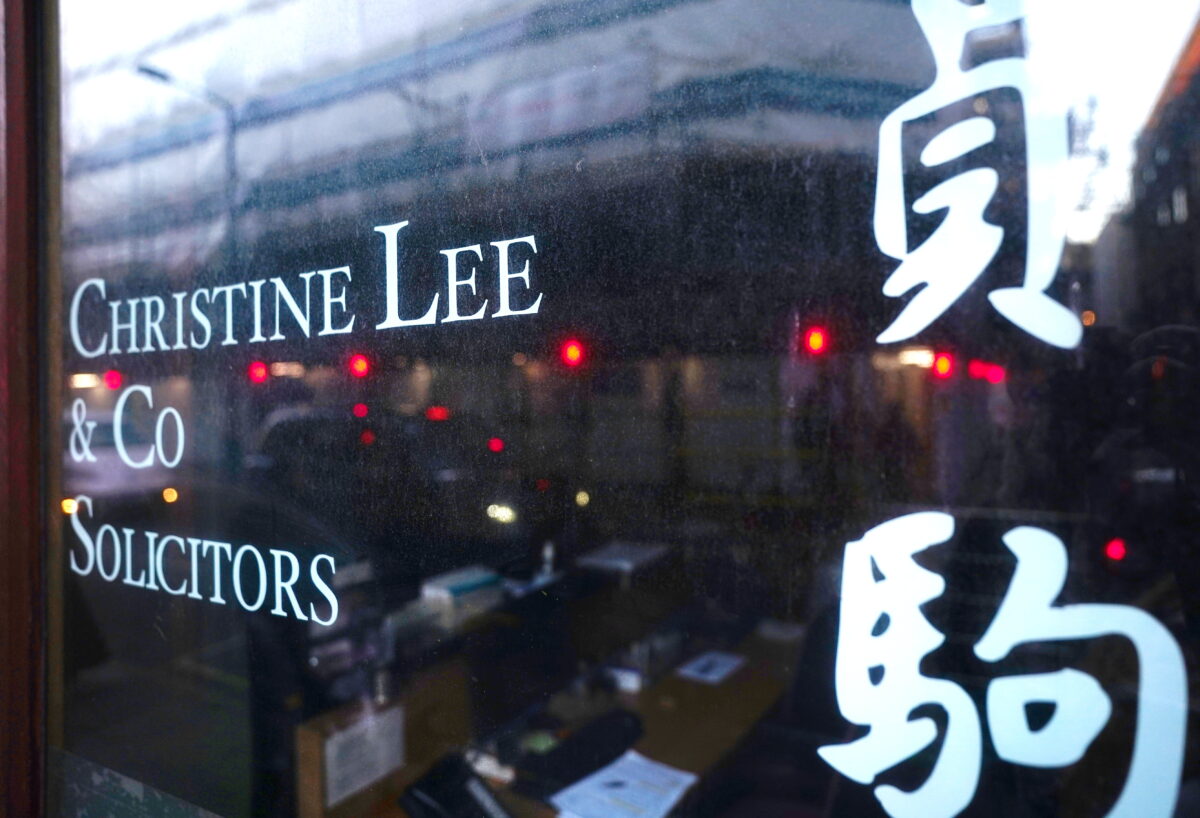
Lee lost her appeal in December 2024, with three tribunal judges ruling that MI5 had issued the warning for “legitimate reasons.”
Truss to Taiwan’s Defense
In a speech at the Mansion House in London in April 2022, then-Foreign Secretary Liz Truss called for a “global NATO” to “ensure that democracies like Taiwan are able to defend themselves.”
Sunak: ‘Golden Era Over’
Truss replaced Johnson as prime minister but lasted only six weeks, from September 2022 to October 2022, before quitting and being replaced by Rishi Sunak.
In November 2022, Sunak declared that the “golden era” of the Sino–UK relationship was over.
He cited the government’s decision to order a Chinese-owned company, Nexperia BV, to sell the biggest microchip company the UK had acquired, saying that the UK and its allies would “manage the sharpening competition” from Beijing with diplomacy, engagement, and improving resilience.
Later that month, UK government departments were told to stop installing surveillance cameras made by Chinese companies and were advised to replace existing ones, on security grounds.
In October 2022, a Chinese company, which wanted to buy a share of an electricity network, was forbidden from accessing sensitive information about the UK power grid.
Cleverly Says China ‘Ruthless’
In April 2023, then-Foreign Secretary James Cleverly said in a speech: “I’m often asked to express that policy in a single phrase, or to sum up China itself in one word, whether ‘threat,’ or ‘partner,’ or ‘adversary.’ And I want to start by explaining why that is impossible, impractical and—most importantly—unwise.
“Dealing with China I can assure you, is not for the fainthearted; they represent a ruthless authoritarian tradition utterly at odds with our own.”
Sunak Backtracks on Confucius Institutes
In May 2023, Sunak backtracked on a promise he made during his 2022 leadership campaign to ban all 30 Confucius Institutes in the UK.
Confucius Institutes are Chinese state-sponsored organizations that run Mandarin courses and facilitate cultural events. They have been accused of censoring speech, discriminating against Chinese ethnic minorities, propagating communist ideology, and exerting undue influence on their host institutions.
In July 2023, Parliament’s Intelligence and Security Committee published a report stating that the UK’s response to the CCP threat was “completely inadequate.”
Sunak said the report was not up to date, as his government had “already taken actions” since the security committee acquired the bulk of its evidence in 2020.
Cameron Changes Tune on China
In November 2023, Sunak appointed Cameron as foreign secretary, replacing Cleverly. Cameron was given a peerage to take the job. Cleverly was appointed as home secretary following the sacking of Suella Braverman.
The following month, Cameron, speaking in Washington, said China had become “so much more hostile” since he left office in 2016, citing the communist regime’s treatment of Uyghurs, its actions in Hong Kong, and its “wolf warrior” diplomacy.
Cameron said the West needed to “harden [its] systems and be very clear-eyed” to deal with China.
On Sept. 14, 2023, a government minister told Parliament that the Conservative Party had dropped two potential candidates—who were not named—who were suspected by MI5 of being Chinese spies.
On the same day, the government said the Chinese regime had tried to headhunt UK officials and other people in “key positions.”
In May 2024, the government shut down a UK army payment system after it was hacked by what the Ministry of Defense called a “malign actor.” A spokesperson for the Chinese Embassy in London denied that Beijing was behind the attack.
The revelation came after the UK and the United States, in an unprecedented joint operation in March 2024, accused Beijing of carrying out a global campaign of malicious cyberattacks.
Alleged China Spies Charged
In April 2024, Christopher Cash, a parliamentary researcher for the Conservative Party who had resigned from the China Research Group in June 2023, was charged, along with Christopher Berry, with breaking the Official Secrets Act.
The allegation against Cash and Berry was that, between December 2021 and February 2023, they had “for a purpose prejudicial to the safety or interests of the state, obtained, collected, recorded, published or communicated to any other person articles, notes, documents or information which were calculated to be … useful to an enemy.”
Also in April 2024, the government floated the idea of MI5 vetting academics to protect sensitive research from China.
Transnational Repression
In July 2025, a parliamentary committee warned in a report that transnational repression by foreign governments has been growing “unchecked” and that the Chinese regime is conducting “the most comprehensive [transnational repression] campaign of any foreign state operating in the UK.”
Spy Trial Collapses

On Sept. 15, 2025, the charges against Cash and Berry were suddenly dropped.
The head of the Crown Prosecution Service wrote a letter on Oct. 7 to the chairs of two parliamentary committees, stating that his organization had written to the government seeking clarification on whether China was considered an “enemy” or “threat” at the time of the allegations against Cash and Berry.
On Oct. 15, Prime Minister Keir Starmer promised to release Deputy National Security Adviser Matt Collins’s witness statements, which had been handed over to the Crown Prosecution Service in August 2025.
Cash and Berry, who had both pleaded not guilty, have always protested their innocence.
Cash said on Oct. 15: “I wish to reiterate that I am completely innocent. Not just because the case against me was dropped, but because at no point did I ever intentionally assist Chinese intelligence.”
MI5 Reiterates China Threat
On Oct. 16, the government published Collins’s three witness statements, in which he stated that the CCP’s intelligence services were conducting large-scale espionage operations against the UK, targeting “those working in [His Majesty’s Government], industries, or on research of particular interest to the Chinese state.”
The director general of MI5, Ken McCallum, said on Oct. 16 that “Chinese state actors” present a daily threat to the UK’s national security.
Conservative lawmaker Bob Blackman told The Epoch Times in an interview on Oct. 16: “Collins supposedly gave evidence to the [Crown Prosecution Service] without any political oversight. That’s unbelievable. It’s beyond credibility.”
Blackman said of the China spy trial affair, “This is going to run and run.”
Lily Zhou contributed to this report.
 Friends Read Free
Copy
Facebook
Tweet
Friends Read Free
Copy
Facebook
Tweet