A 30-year-old Sudanese asylum seeker has been charged with attempted murder over a knife attack in Belfast on June 8.
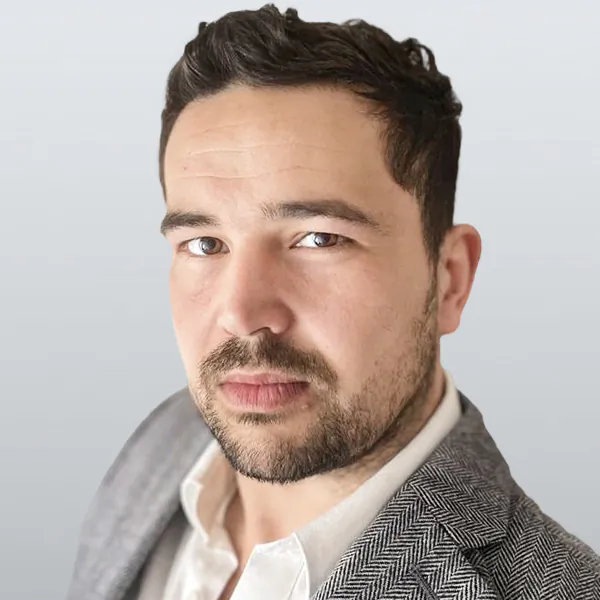
The accused was named in court on June 10 as Hadi Alodid. The victim, who is in his 40s, was identified as Stephen Ogilvie. Alodid appeared before Belfast Magistrates’ Court charged with attempted murder.
A detective said Ogilvie was blinded in the left eye during the knife attack. Alodid was also charged with possessing a knife and threatening to kill a radiographer while being treated for a hand injury after the assault.
When police arrived at the crime scene, they found Alodid on the victim, armed with a kitchen knife, the detective said. Alodid later told hospital staff: “I’ve killed someone; I don’t know if they are dead,” and “I will kill you.”
He refused legal representation through an Arabic interpreter and did not enter a plea.
In the footage, shared widely online on June 8, a man is seen repeatedly stabbing a blood-drenched man and shouting in what appears to be a foreign language as horrified members of the public shout for help, screaming that the attacker is trying to “cut his head off.”
Bystanders then intervene, trying to get the attacker off, before police arrive. Assistant Chief Constable Ryan Henderson declared the assault a “critical incident.”
Granted Asylum
Chief Constable of the Police Service of Northern Ireland Jon Boutcher said at a press conference on June 9 that the suspect was “granted leave to remain in the United Kingdom on the 28th of September of 2023.”
“Again, this is to be confirmed, but I’m informed that he made his way from Sudan to Paris at dates unknown, and from Paris he flew to Dublin at a date yet to be determined. From my current understanding, he then travelled from Dublin to Belfast by bus on the 10th of February of 2023 and claimed asylum on that date,” Boutcher said.
“There is no trace of this suspect on any of our national security databases, and he was not known to the Police Service of Northern Ireland.”
Boutcher said he had “been in direct contact with the head of the counterterrorism policing in the UK; at this stage, we have no information to suggest that this was terrorist-related.”
Concerning Alodid’s legal status, Boutcher said there “was nothing to prevent that individual from coming into this country” and that Alodid sought permission to remain through his asylum application.
“His status when he crossed that border is still undetermined by us, but it’s something that we’ll be looking at and will come out in the fullness of time,” he said.
Deputy First Minister of Northern Ireland Emma Little-Pengelly said at the same press conference that “the criminal justice process must be allowed to take place.” She added that if Alodid is convicted, he should be deported.
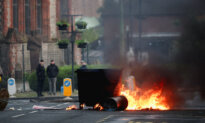
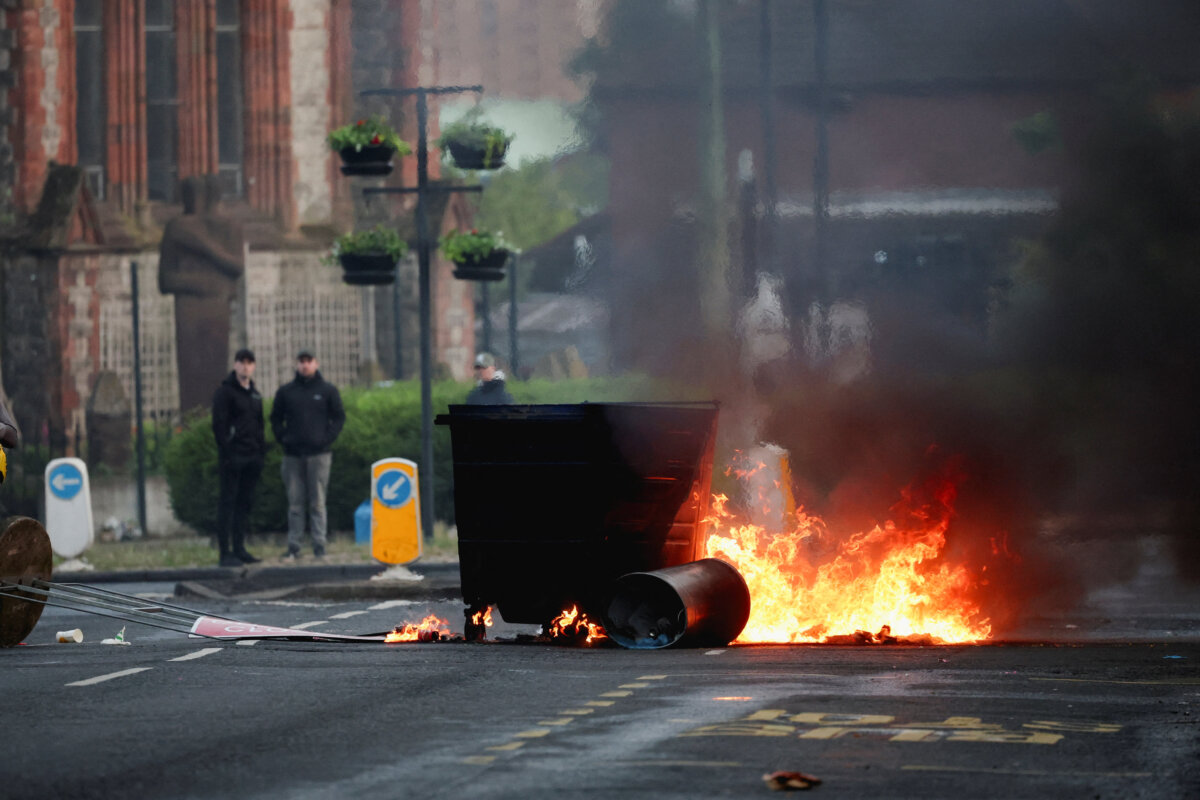
Hundreds of protesters, many with their faces covered, attacked police and burned vehicles in several locations across Northern Ireland overnight after the knife attack. Several cars and a bus were set on fire and reduced to shells.
Police had to help one family escape from a burning house.
In a June 9 post on Facebook, Pastor Jack McKee of New Life City Church in Belfast said that a Christian woman who has been with his church for more than 20 years “had her home attacked tonight, because she is black.”
“The scenes in Belfast last night were shocking and completely unacceptable,” British Prime Minister Keir Starmer wrote in a June 10 post on X.
“There is no justification for the violence and disorder that we saw threatening our communities, nor for those who encouraged it, online or elsewhere.”
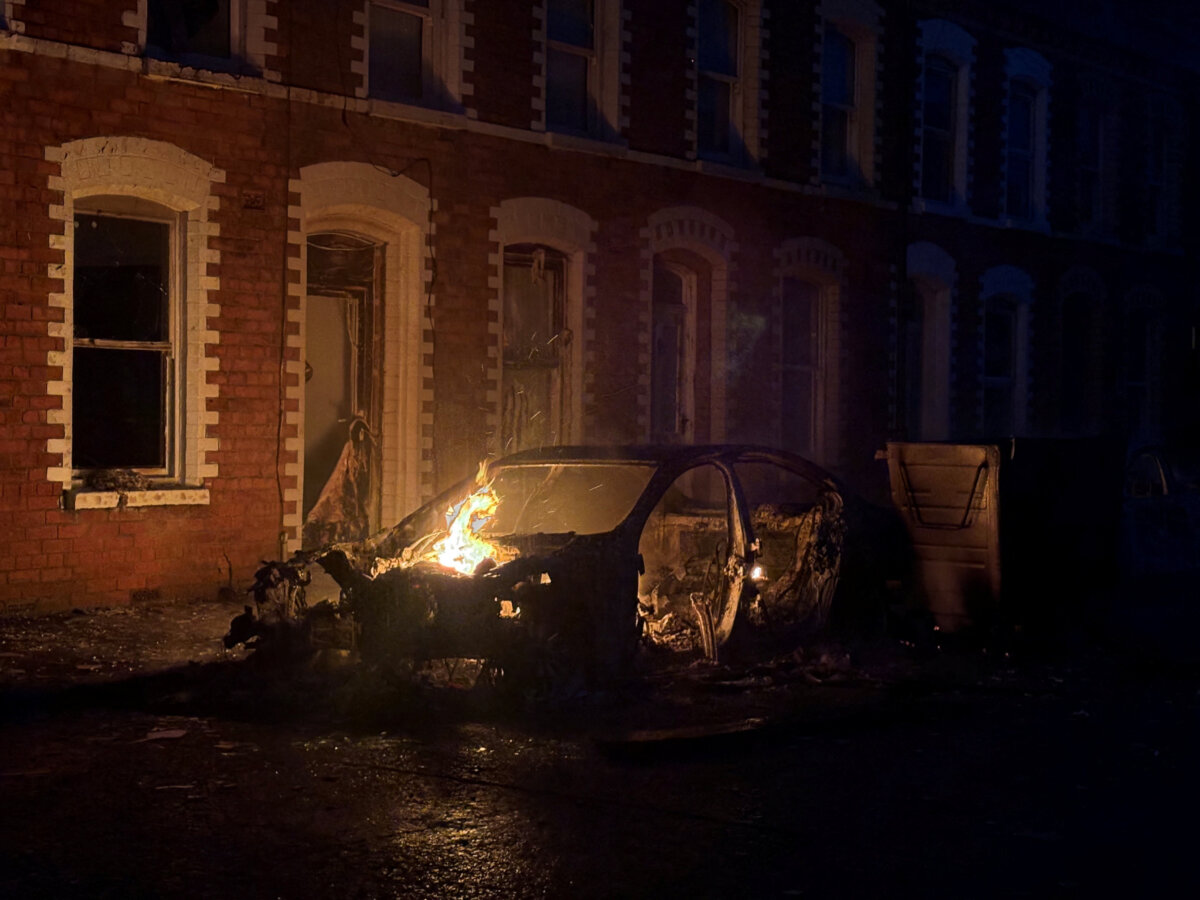 A car burns in east Belfast during a protest after a knife attack on June 8 left a man seriously injured, in Belfast, Northern Ireland, on June 9, 2026. (Isabel Infantes/Reuters)
All public transport in Northern Ireland was suspended from 6 p.m. because of “expected protests,” according to a statement from the official operator, Translink.
Unrest in Northern Ireland
Northern Ireland has seen a couple of major episodes of unrest since August 2024 linked to anger over alleged crimes or incidents involving immigrants or foreign nationals.
One in Belfast in 2024 followed the wider UK unrest about the Southport, England, murders of three young girls that hit several cities and resulted in hundreds of arrests, after restrictions around naming the teenage suspect helped create an information vacuum.
Axel Rudakubana, who was born in Cardiff to Rwandan parents, was sentenced on Jan. 23, 2025, to life imprisonment with a minimum term of 52 years for the three murders and attempting to murder 10 others, including eight children, in the July 29, 2024, knife attack at a Taylor Swift-themed holiday club in Southport.
In June 2025, violence broke out in the Northern Irish town of Ballymena after two Romanians aged 14 and 15, who spoke through a Romanian interpreter in court, were charged with serious sexual assault on a teenage girl. The attempted rape charges were dropped in November 2025.
Official figures show that there were 2,379 people on asylum support in Northern Ireland as of March 31, with a further 2,640 people on Ukrainian and Afghan “humanitarian” routes.
Reuters and The Associated Press contributed to this report.
 Friends Read Free
Copy
Facebook
Tweet
Friends Read Free
Copy
Facebook
Tweet