
Taiwan has reached a general consensus with the United States on a trade deal, Taipei said on Jan. 13, following months of negotiations with Washington.
Talks began in April last year to hash out a trade deal after President Donald Trump announced a 32 percent tariff on Taiwanese exports, which was lowered to 20 percent in July that same year.
“Taiwan and the United States have reached broad consensus on the relevant issues,” Taiwan’s Office of Trade Negotiations said on Jan. 13.
“The two sides are currently discussing the timetable for holding a concluding meeting.”
The Epoch Times reached out to the White House for comment, but did not receive a response by the time of publication.
According to the International Trade Administration (ITA), Taiwan accounts for more than 60 percent of global foundry revenue and more than 90 percent of the world’s most advanced chip manufacturing capacity.
In 2024, Taiwan’s semiconductor sector generated more than $165 billion in revenue, representing about 20.7 percent of gross domestic product, the ITA said.
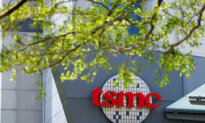
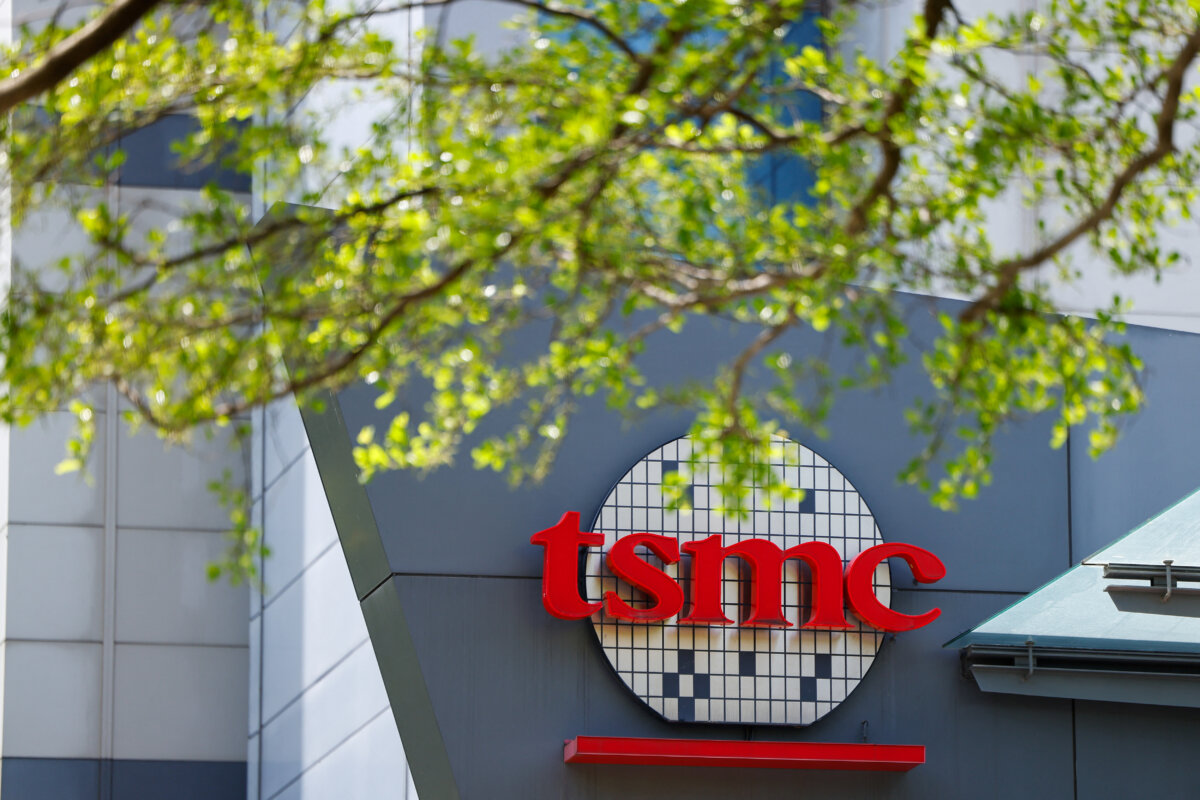
Taiwan’s chip manufacturing is led by Taiwan Semiconductor Manufacturing Co. (TSMC), which on Jan. 1 said that the U.S. Department of Commerce had approved an annual licence, allowing U.S. chipmaking equipment to be supplied to its Nanjing fabrication plant in China.
At the same time, TSMC has pledged to dramatically expand its footprint in the United States.
In March 2025, the company announced plans to increase its investment in advanced U.S. semiconductor manufacturing by an additional $100 billion.
“Building on the company’s ongoing $65 billion investment in its advanced semiconductor manufacturing operations in Phoenix, Arizona, TSMC’s total investment in the U.S. is expected to reach $165 billion,” TSMC said.
The company added that the expansion would include three new fabrication plants, two advanced packaging facilities, and a major research and development center, making it the largest single foreign direct investment in U.S. history.
In August 2025, Trump threatened tariffs of up to 300 percent on chip imports.
Wu Cheng-wen, Taiwan’s minister of the National Science and Technology Council, said Washington was unlikely to impose such high tariffs, according to an interview published by the Financial Times on Nov. 20, 2025.
Wu said Taiwan was looking to create a “second silicon shield,” a deterrent against the Chinese regime’s military aggression, by expanding into areas such as drones, robotics, and medical technology, an effort to diversify its strategic assets beyond semiconductors.
However, he stressed that Taiwan intended to retain its most advanced research and development capabilities at home, citing security concerns.
“If we move our [research and development] overseas, it’ll be dangerous for us,” Wu said in the interview. “New weapons and defense systems rely on advanced chips.”
Washington’s Interests
U.S. officials have been increasingly explicit about their expectations for Taiwan’s role in reshaping semiconductor supply chains.
Commerce Secretary Howard Lutnick said on Sept. 27, 2025, that Washington wants Taiwan to relocate half of its semiconductor production to the United States, according to remarks made to NewsNation.
He said that the United States aims to capture at least 40 percent of the global semiconductor market, a goal that would require $500 billion in domestic investment, Lutnick said.
“That has been the conversation we had with Taiwan, [telling them] that ‘you have to understand it’s vital for you to have us produce 50 percent,’” he said.
Economic, Geopolitical Role
Washington noted Taiwan’s economic and geopolitical significance in the U.S. National Security Strategy released on Dec. 4.
The document said that maintaining the U.S. economic and technological preeminence is essential to deterring large-scale conflict and noted that Taiwan’s importance stems partly from its semiconductor dominance and partly from its strategic location along the Second Island Chain.
Given that one-third of global shipping passes through the South China Sea each year, deterring conflict over Taiwan is a U.S. priority, the strategy said.
It also reaffirmed that Washington does not support unilateral changes to the status quo in the Taiwan Strait.
Taiwan’s Foreign Minister Lin Chia-lung on Dec. 6 welcomed the language and thanked the United States for recognizing Taiwan’s importance to global supply chains and geostrategy.
Reuters contributed to this report.
 Friends Read Free
Copy
Facebook
Tweet
Friends Read Free
Copy
Facebook
Tweet