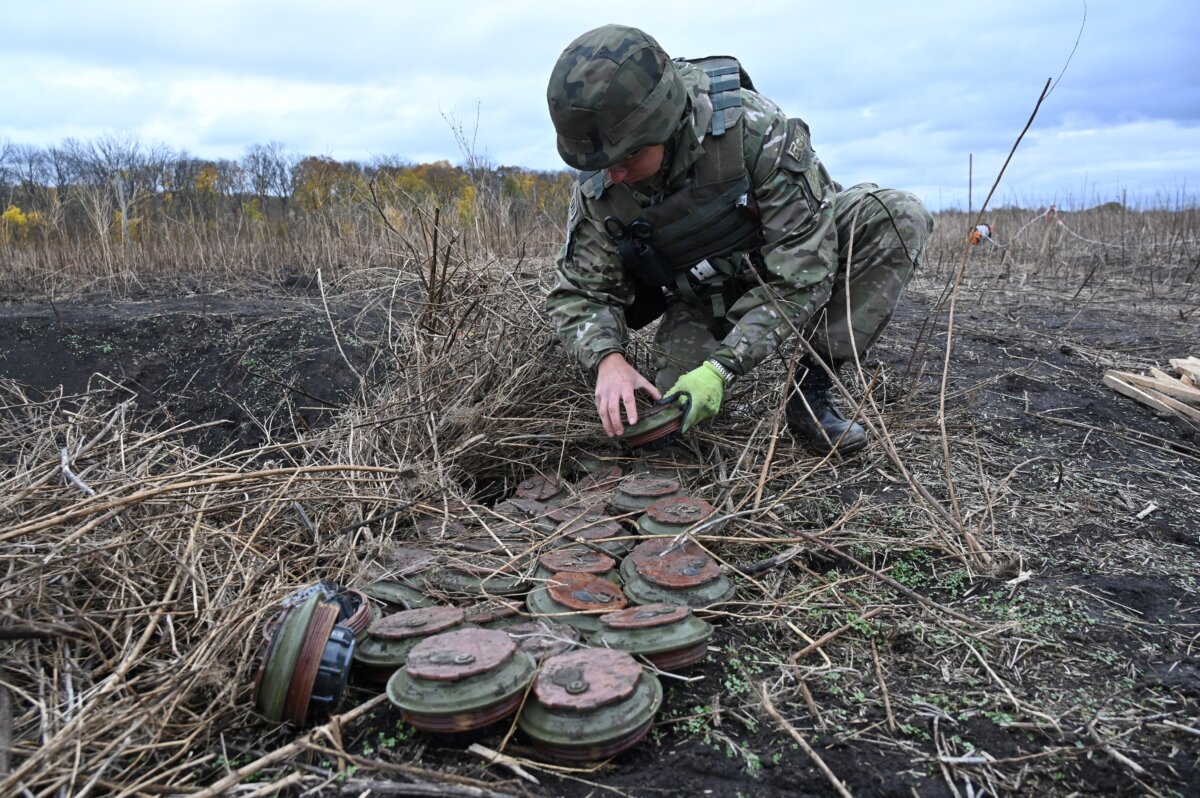
From his desk in Australia, environmental scientist Allan Dobrovolsky is leading a quiet war against one of the deadliest legacies of the Russia-Ukraine War: landmines.
His grassroots non-profit, the International Action Alliance, is betting that local fundraising can help deploy the latest drone technology to shave critical time off Ukraine’s slated centuries-long recovery.
“During a visit to Ukraine in 2023, I travelled to devastated regions, including areas downstream of the destroyed Kakhovka Dam, and saw firsthand the deadly impact of landmines on civilians,” he told The Epoch Times, noting that he personally encountered a couple of floating mines.
“That experience underscored a simple truth: no recovery or environmental restoration is possible without first addressing the landmine crisis,” said the contamination expert, who has also produced documentaries on environmentalism.
Dobrovolsky recalls his participation in an environmental conference in Ukraine and a meeting with former UK Prime Minister Boris Johnson cementing his determination to take on the cause.
“After that, I decided to help Ukraine. I thought it would be helpful if we could raise funds for [land] remediation, demining and rebuilding the country.”

Ukraine and the Horrors of Modern Warfare
The Russia-Ukraine War is now a hotbed of warfare innovation—earning the moniker the “Silicon Valley of Defence Tech“—but is also a modern exposé into the horrors of combat.
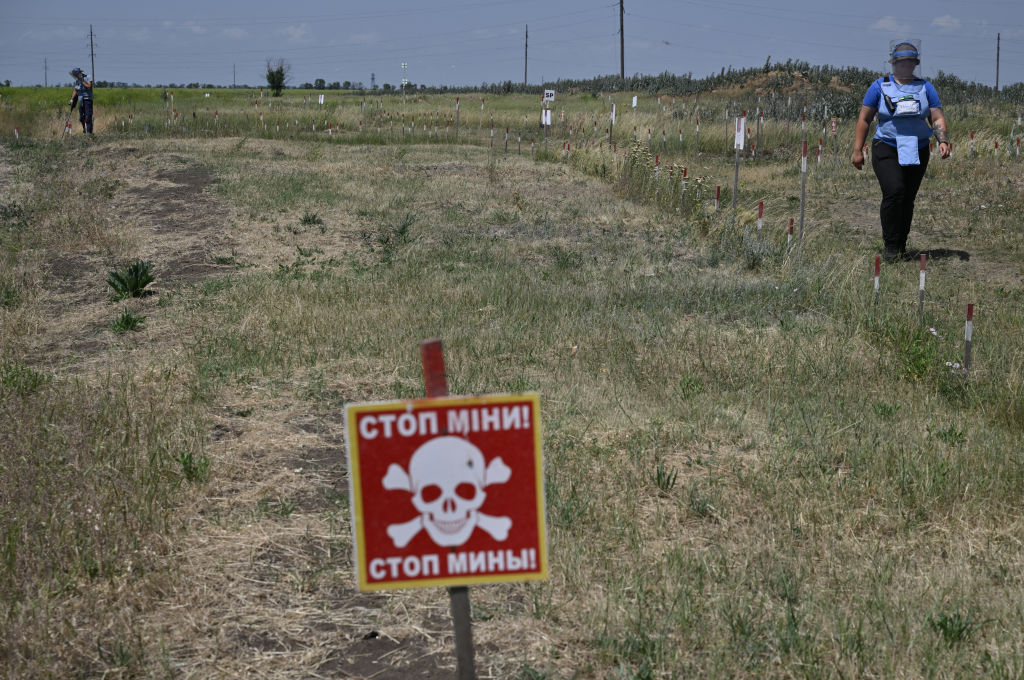
“It was calculated that approximately 30 percent of Ukraine’s [territory] is now affected by mines, particularly the agricultural fields or areas adjacent to them, which is particularly of concern because Ukraine depends a lot on the agricultural industry for revenue,” he said, citing data from the Ukrainian government.
The mines used in the conflict are anti-personnel and anti-vehicle/anti-tank mines (ATMs) deployed by the Russian military and, to a lesser extent, Ukrainian forces.
“Over the [past] three and a half years, the Russian forces were advancing, and the Ukrainian forces laid mines to protect their positions,” he said.
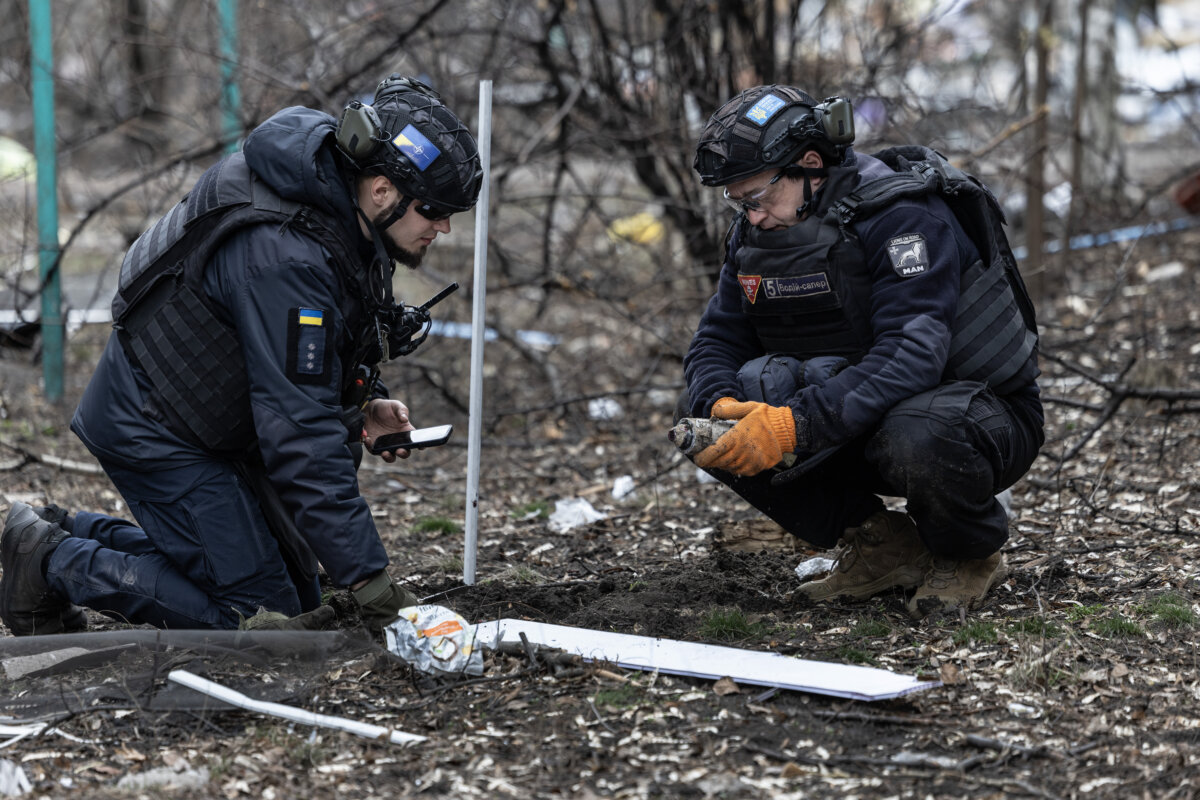
“And then the situation changed, and the Russians were implanting mines in their defence positions and so on.”
In November 2024, the Center for European Policy Analysis (CEPA) estimated that around 2 million mines were scattered across Ukraine since the start of the invasion.
While Dobrovolsky added that recovery could take centuries.
“Somebody was estimating that it may take up to 700 years with the current speed of clearing the mines,” he said.
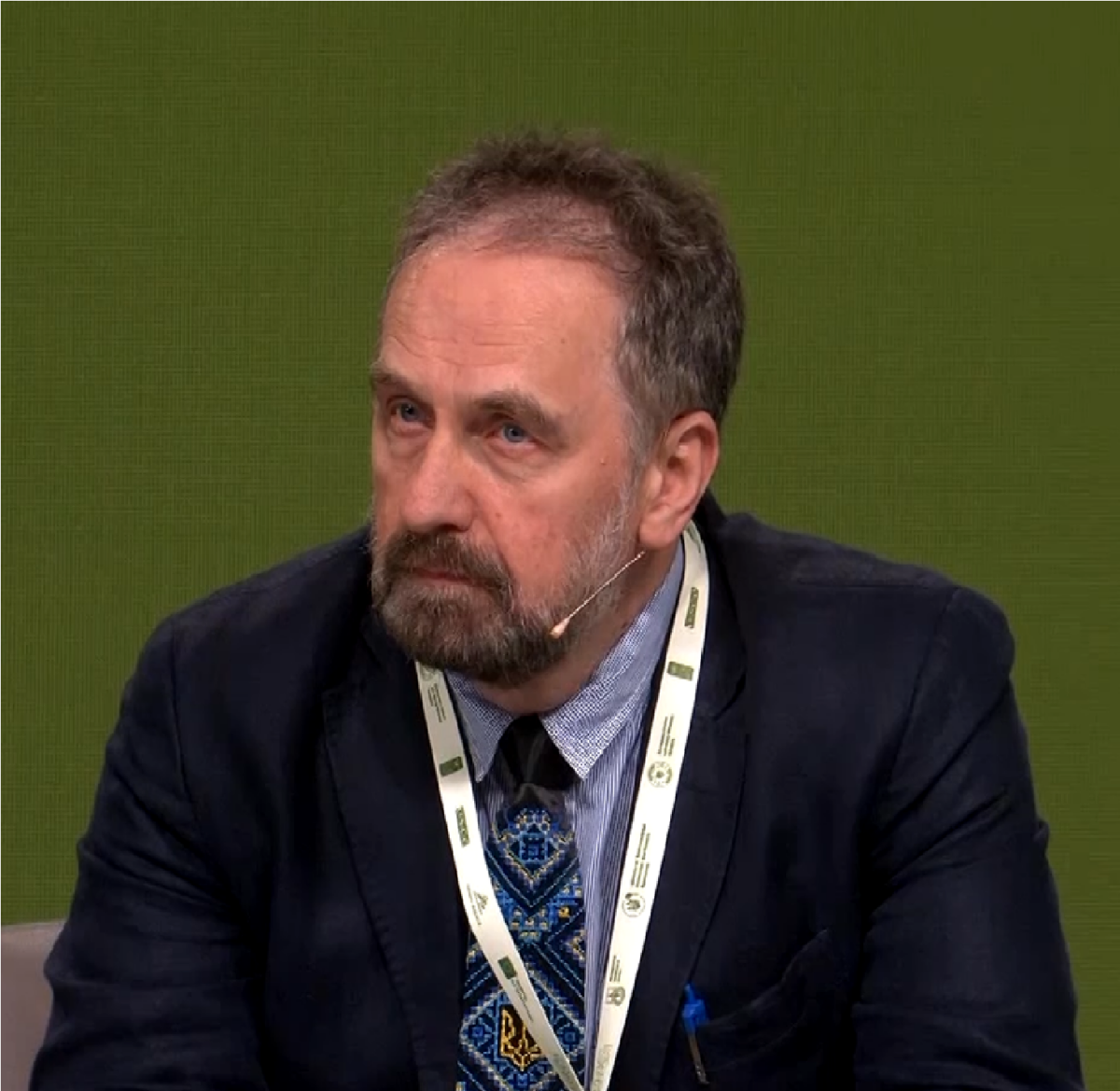
Valon Kumnova, chief of mine action programs at the Geneva International Centre for Humanitarian Demining, previously acknowledged that demining Ukraine would be a formidable challenge.
“I was born in Kosovo, and I’ve seen firsthand the suffering that landmines present,” he said.
“As a refugee myself, I understand that the last thing one wants in that situation is to know you’re coming back to your home, but your home no longer has a roof, the farmland is mined so you can’t grow food, and there’s no way to earn a living. It’s devastating.”
‘Butterfly Mines’ and Other Explosives
A variety of mines have been deployed by Russian forces including anti-personnel mines to target Ukrainian infantry and civilians, like the POM-3, PFM-1, OZM-72 (bounding fragmentation mine), and the MON-series (directional fragmentation mines).
Of these, the PFM-1 “butterfly mine” is especially of concern, given its unique toy-like design.
The PFM-1 is a lightweight, high-explosive mine with small plastic wings, intended to incapacitate by blowing off a victim’s foot.
Since its introduction, the mine has drawn heavy criticism for its seemingly benign appearance, which makes it especially appealing to children.
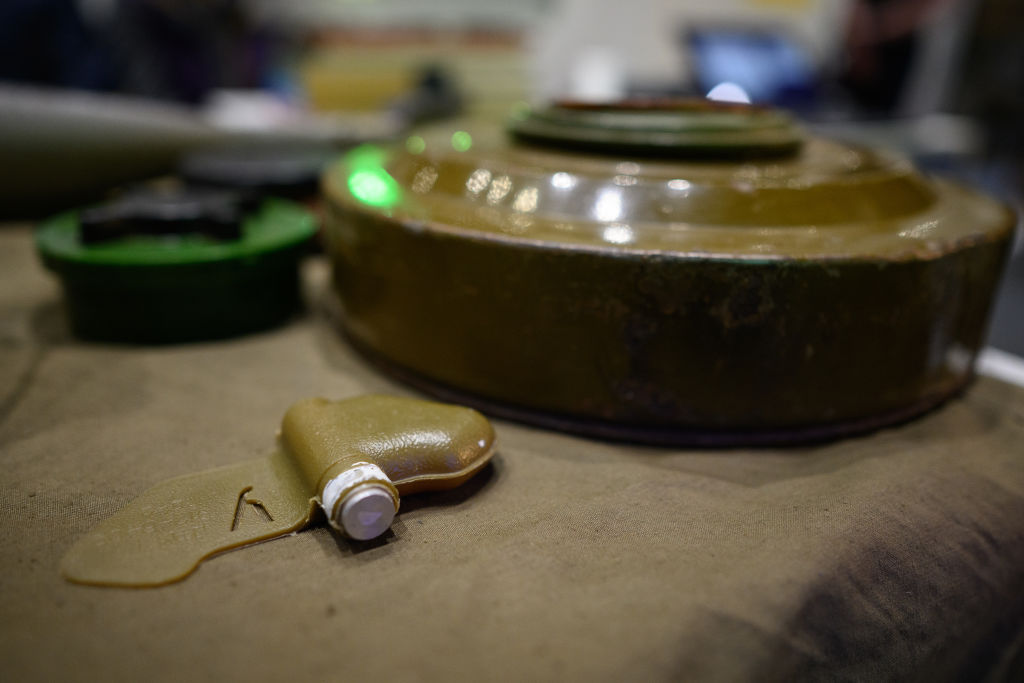
A 2018 study revealed that the PFM-1 mines were widely deployed during the Soviet-Afghanistan war in the 1980s and resulted in high casualty rates among Afghan children.
While anti-personnel mines can be laid manually by sappers, they are often deployed remotely by rockets or other delivery systems, which allows for their faster deployment and spread
“Russian forces use ISDM ‘Zemledelie’ rocket-based systems to scatter POM-3 mines over vast areas in minutes,” Dobrovolsky said.
“Artillery, rockets, and aircraft are used to spread PFM-1 and PTM scatterable mines far behind Ukrainian lines, often in civilian-populated areas.”
Another major threat is the use of booby traps, tripwires, and improvised explosive devices, where mines are combined with grenades, shells, or household items to target civilians and mine sweepers.
Recent data from the Ukrainian Ministry of Defence (MOD) indicated that since the start of Russia’s invasion, 355 Ukrainian civilians, including 18 children, have been killed by Russian explosive ordnance. Around 75 percent of these incidents involved mines.
The MOD has outlined several challenges it faces in clearing mines.
For example, many mines are now made with plastic casings and contain minimal metal components, making it difficult for mine detectors to detect them.
In addition, poor quality and prolonged storage often make mines deployed by Russian forces unpredictable and extremely hazardous.
Fundraising for Mine-Sweeping Drones
Dobrovolsky’s International Action Alliance (IAA) is aimed at conducting assessments and mapping in the clean-up effort.
The IAA is now collaborating with the Australian Federation of Ukrainian Organisations, and Ukrainian Ambassador to Australia Vasyl Myroshnychenko to organise fundraising events to fund its activities.
“The biggest challenge is basically organising the fundraising,” Dobrovolsky said, but noted the success so far.
Ideally, most of the funding will go towards the purchase of demining drones, while the remaining will support environmental assessments in areas near the frontline.
The scientist said the group is considering buying the latest model of the Zmiy v1.2 (named after the mythic Ukrainian dragon), a reusable demining robotic system produced by Ukraine.
Zmiy v1.2 has a compact design and is equipped with armour that can withstand anti-tank mine explosions.
Rovertech, the manufacturer, says Zmiy v1.2 can navigate the most hazardous zones and can cover 1–2.5 hectares per day.
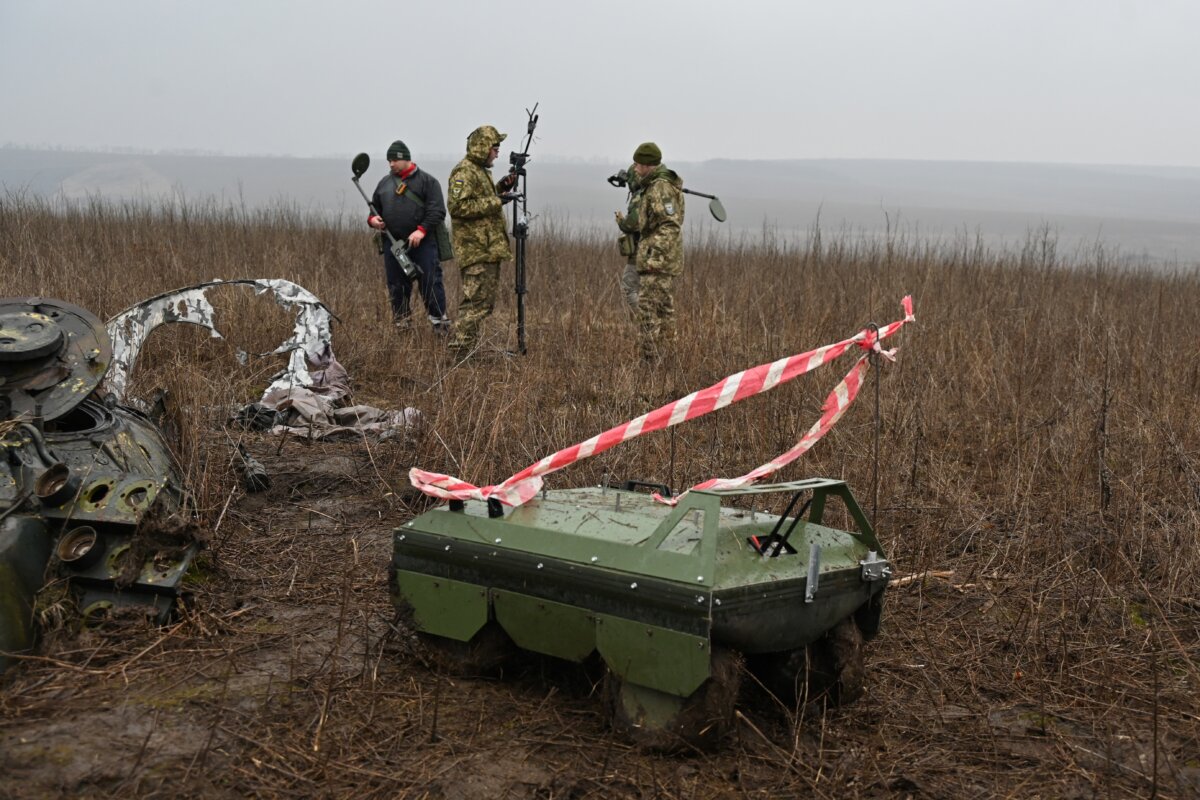
A major advantage of Zmiy v1.2 is its cost-effectiveness. Rovertech said the drone can reduce demining costs by up to 40 times compared to conventional methods.
Furthermore, Zmiy v1.2 has low repair costs thanks to its modular, inexpensive components.
“The way that particular model was designed is quite simplistic, and that’s what Ukrainian forces actually need, because it’s easy to operate and replace parts,” Dobrovolsky said.
“These compact, robust machines reduce risk to human life and enable faster clearance of landmines, allowing safe return of farmland and communities.”