
One day after the U.S. and Israeli militaries hit Tehran in a coordinated series of strikes to topple the Iranian regime, thousands of flights were canceled or delayed on March 1 across many of the busiest airports in the Middle East.
Large portions of the region’s airspace remain closed after the U.S. and Israeli strikes killed Iranian leader Ali Khamenei and other top Iranian officials on Feb. 28. Israel said it had launched a second wave of strikes on Iran on March 1.
Critical transport hubs, including Doha in Qatar and Dubai and Abu Dhabi in the United Arab Emirates (UAE), have been closed or face significant disruptions after Iran retaliated with a series of attacks on its neighboring Gulf nations.
The strikes hit airports in Abu Dhabi and Kuwait, and Dubai International Airport sustained damage.
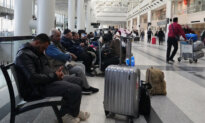
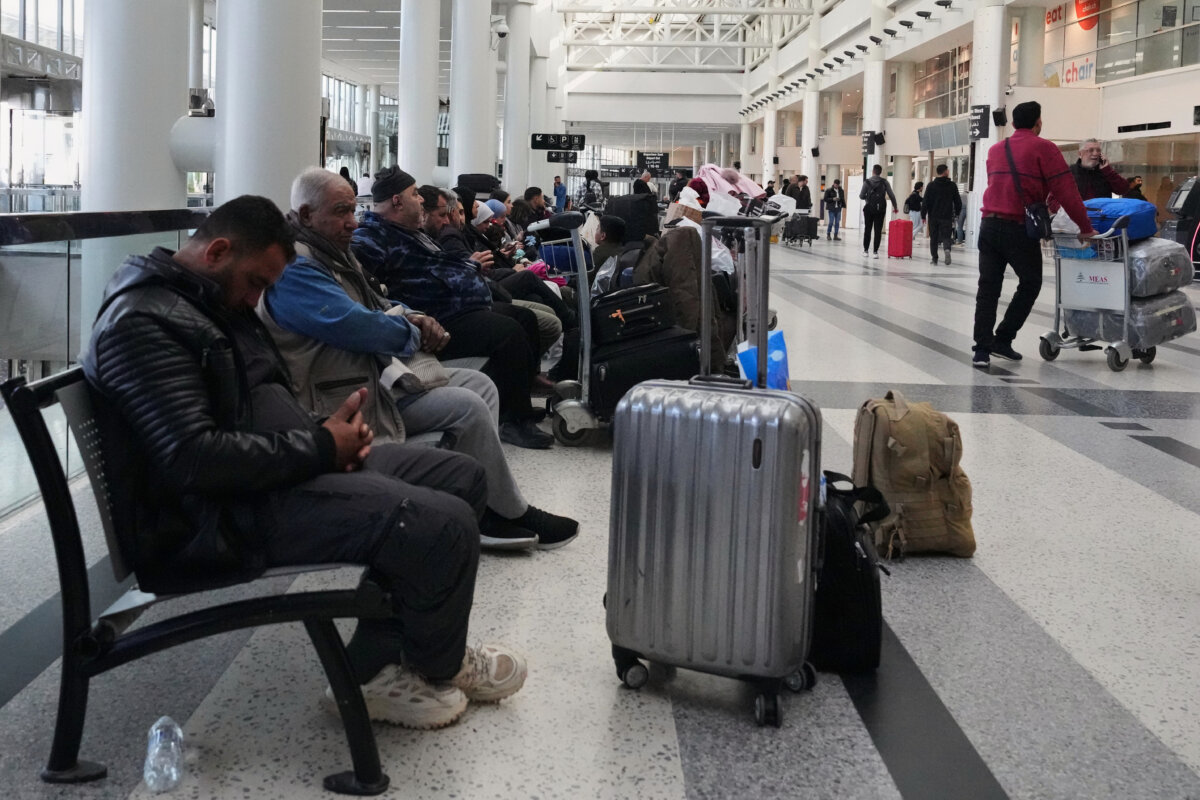
Thousands of flights had been canceled or delayed in airports throughout the Middle East by the morning of March 1, according to flight tracker FlightAware.
The UAE’s Dubai International Airport and Abu Dhabi International Airport, Qatar’s Hamad International Airport, Israel’s Ben Gurion Airport, Saudi Arabia’s King Abdulaziz International Airport, and Bahrain International Airport faced the most flight cancellations.
Hundreds of delays also affected airports throughout Asia, including in Malaysia, China, India, Thailand, and Vietnam.
Maps from FlightRadar24 early on March 1 showed that airspace over Iran, Kuwait, Iraq, Syria, Lebanon, and the UAE was nearly empty; there were some flights over Qatar, Oman, Jordan, and Israel. Most of the region’s flight activity appeared to be concentrated over Saudi Arabia after airlines were forced to reroute flights over the weekend to avoid targeted airspace.
A new Notice to Airmen alert closed all airspace over Iran until March 3, according to FlightRadar24.
When U.S. Secretary of State Marco Rubio designated Iran as a state sponsor of “wrongful detention” on the night of Feb. 27, hours before the U.S. and Israeli militaries hit Tehran in a series of strikes, he warned Americans to avoid traveling to the nation and said any Americans still in Iran should “leave immediately.”
Flight disruptions began right after the coordinated strikes on Feb. 28, stranding or diverting hundreds of thousands of travelers as airports in Israel, Qatar, Syria, Iran, Iraq, Kuwait, and Bahrain closed their airspaces.
After the UAE announced a “temporary and partial closure” of its airspace on Feb. 28, there was no flight activity over the nation, as airports in Dubai, Abu Dhabi, and Doha were shut down, according to FlightRadar24. The closure also resulted in more than 1,800 flight cancellations by major airlines in the Middle East.
Emirates, Qatar Airways, and Etihad Airways—the three largest airlines that operate throughout the UAE—usually service roughly 90,000 passengers daily across those hubs and additional travelers flying to other airports in the Middle East, according to aviation analytics firm Cirium.
The UAE government criticized what it referred to as a “blatant attack involving Iranian ballistic missiles” on two of its airports on Feb. 28.
Four people were injured at the UAE’s largest airport, Dubai International. One person was killed and seven were injured following a drone strike on Zayed International Airport in Abu Dhabi. Kuwait International Airport also reported strikes.
Iran has not publicly claimed responsibility for the attacks. The extent of the retaliatory strikes that Gulf nations attributed to the Iranian regime reaches far beyond the U.S. bases that Tehran initially vowed to target.
Many of the airlines across the Middle East are rerouting their flights to avoid areas targeted in the conflict; many have been diverted over Saudi Arabia.
Reuters and The Associated Press contributed to this report.
 Friends Read Free
Copy
Facebook
Tweet
Friends Read Free
Copy
Facebook
Tweet