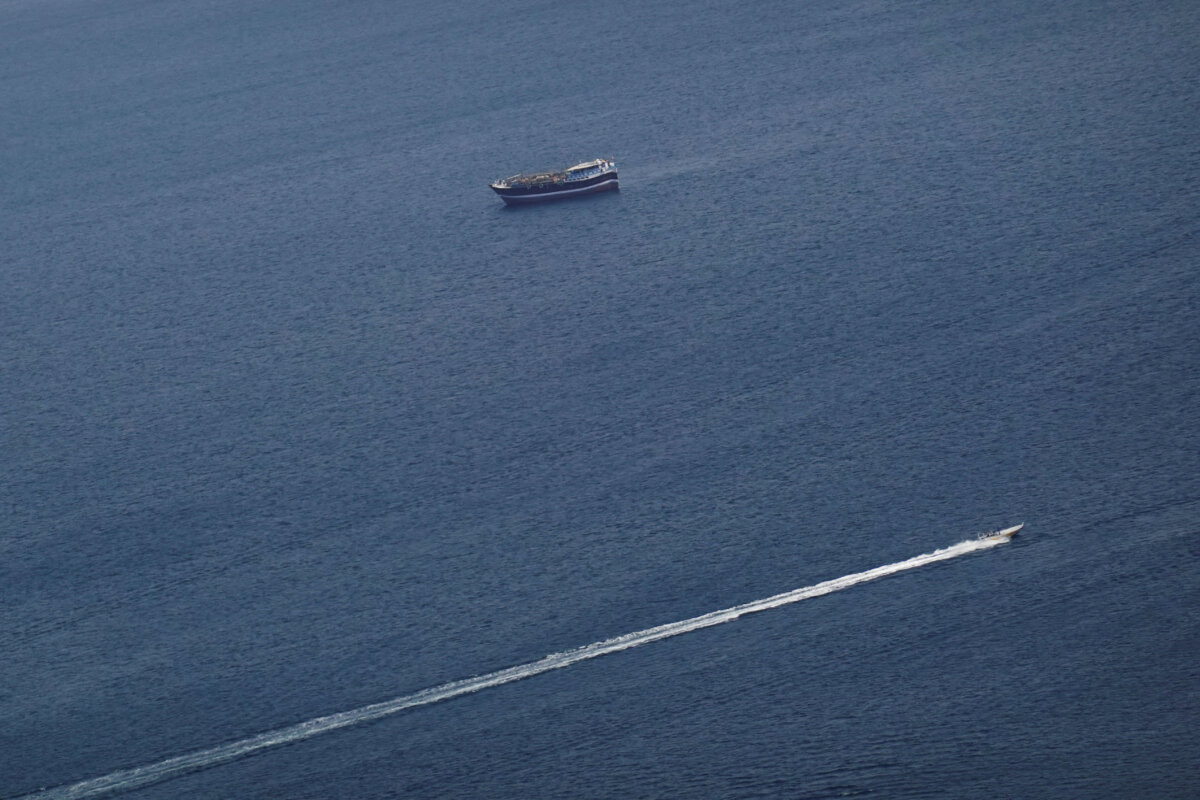
Three commercial vessels were struck by projectiles in and around the Strait of Hormuz overnight as Iran ramped up regional attacks, UK maritime officials said on March 11, with one of the strikes sparking a fire that forced most of the crew to abandon ship.
The UK Maritime Trade Operations (UKMTO), which monitors shipping security in the region, issued multiple alerts describing the incidents and advising vessels to transit with caution while investigations continue.
In one incident early on March 11, UKMTO stated that it received a report from the master of a bulk carrier located about 50 nautical miles northwest of Dubai, United Arab Emirates (UAE), noting that the vessel had been hit by an unknown projectile.
“There is no report of any environmental impact. The crew are reported safe and well,” UKMTO stated in its alert, noting that authorities were investigating the incident.
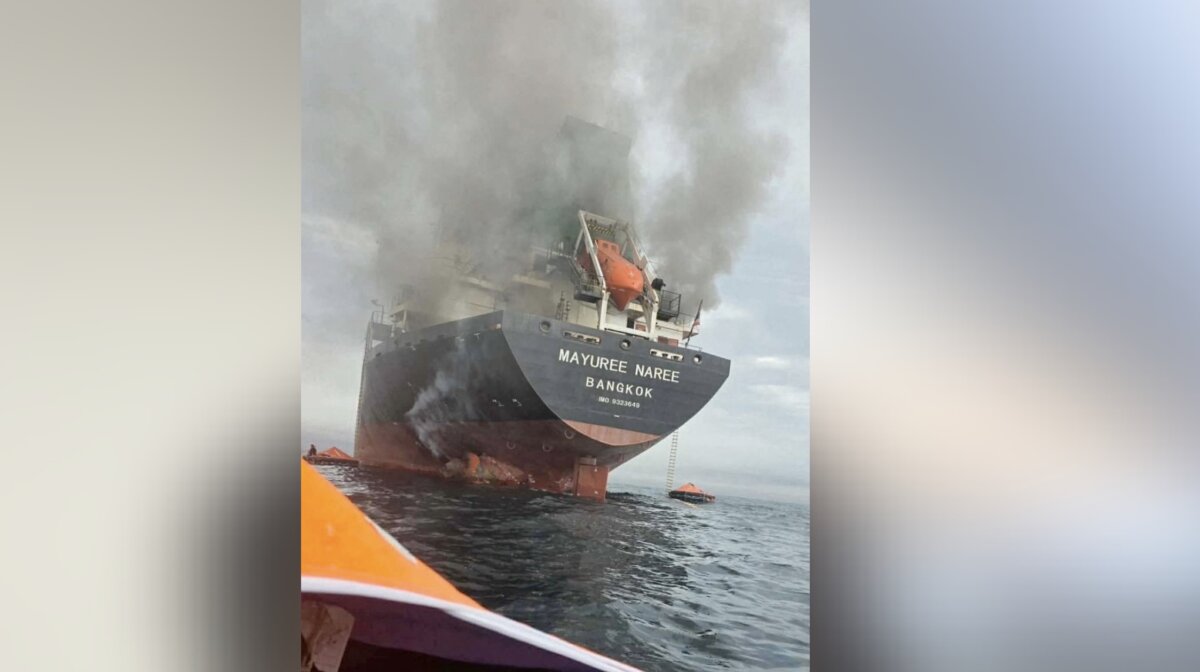
In a second attack reported later the same morning, a cargo vessel approximately 11 nautical miles north of Oman in the Strait of Hormuz was struck by an unknown projectile, triggering a fire onboard. UKMTO stated that the vessel requested assistance and that crew members were evacuating the ship as the situation unfolded.
Thailand’s Transport Ministry said on March 11 that 20 crew members from a Thai ship hit in the incident had been rescued by the Omani navy, while three others remained missing. The ministry stated that an explosion at the stern caused a fire in the engine compartment, where the missing crew members had been working.
A third vessel, a container ship operating in the region, also reported being damaged by a suspected projectile, according to a separate advisory issued by UKMTO.
The master of the vessel reported that the ship had sustained damage, although the extent of the damage remained under investigation by the crew, UKMTO stated, noting that all crew members were safe and accounted for.
The incidents are part of a broader escalation in maritime security threats since Iran began targeting regional assets of the United States and its allies in response to the Feb. 28 joint U.S.–Israeli military operation that Washington and Tel Aviv say is to prevent Iran from acquiring nuclear weapons.
In a summary covering the period from Feb. 28 to March 11, UKMTO stated that it had received 17 reports of incidents affecting vessels operating in the Arabian Gulf, the Strait of Hormuz, and the Gulf of Oman, including 13 attacks and four reports of suspicious activity.
Escalating Threats to Shipping, Energy Markets
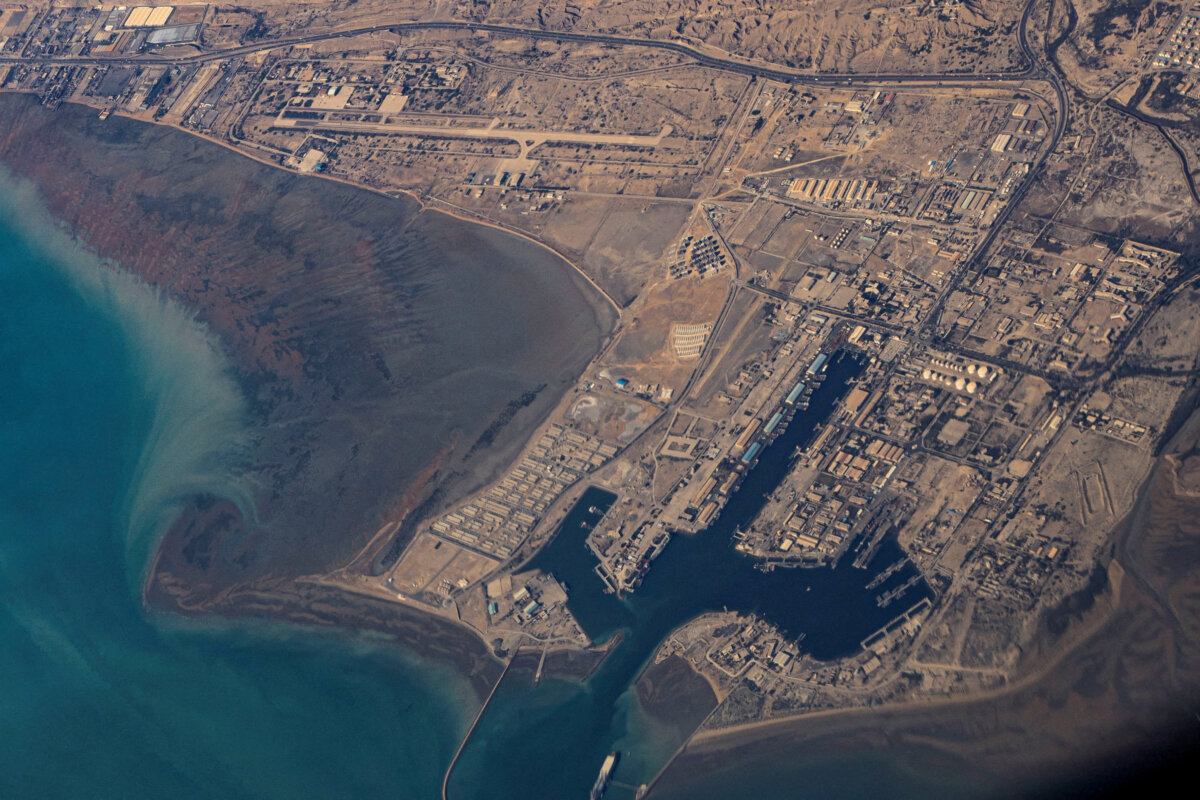
The Strait of Hormuz is one of the world’s most critical maritime chokepoints, connecting the Persian Gulf to the Gulf of Oman and serving as a key route for global energy shipments. Roughly one-fifth of the world’s oil and liquefied natural gas supplies typically pass through the narrow waterway.
A spokesperson for Iran’s Islamic Revolutionary Guard Corps (IRGC) said on March 9 that Tehran would block Middle Eastern oil from reaching the United States or its allies as long as attacks against Iran continue.
The spokesperson, Gen. Ali Mohammad Naeini, was cited by the IRGC-affiliated Tasnim News Agency as saying that Iranian forces “will not allow a single liter of oil to be exported from the region until further notice due to ongoing aggressions” by the United States and Israel.
Naeini suggested that an Iranian oil shipment blockade would send crude prices soaring and that any attempts by the United States and its allies to bring down oil prices would prove “temporary and fruitless.”
Crude prices surged earlier this week but pared gains after U.S. President Donald Trump said the war against Iran was “very complete, pretty much,” helping equities rebound.
The United States and other countries have been exploring options to protect commercial shipping in the region as the conflict continues, amid warnings that prolonged disruption to shipping through the Strait of Hormuz could have significant consequences for global energy and commodity markets.
Oil prices, which briefly surged to nearly $120 per barrel on March 9, have since fallen below $90, signaling investor expectations that the war could end and the Strait of Hormuz reopen before a major supply shock hits the global economy.
US Strikes 16 Iranian Mine-Laying Boats
U.S. forces destroyed 16 Iranian mine-laying boats near the Strait of Hormuz on March 10, according to the Pentagon.
The minelayers were among multiple Iranian naval vessels “eliminated” by the United States, U.S. Central Command stated in a post on X.
Trump, in an earlier post on Truth Social, warned Tehran that if “for any reason mines were placed, and they are not removed forthwith, the military consequences to Iran will be at a level never seen before.”
Iran Expands Regional Military Operations
The latest strikes against vessels in the strait came as Tehran renewed attacks on regional targets.
Video footage released on March 11 by Iran’s state-run Islamic Republic News Agency shows what it stated were missiles being launched. The footage was released following a statement from the IRGC claiming that it had launched its most intense operation since the start of the war.
The statement, carried by the Tasnim News Agency, states this wave included more than three hours of continuous missile fire as part of a multilayered attack against U.S. bases and targets in Israel.
In what the IRGC called “fierce attacks,” the statement states that Iran hit an Israeli satellite communication center south of Tel Aviv, Israel along with Israeli military installations in Be’er Ya’akov, al-Quds, and Haifa, as well as “extensive American targets,” including the Fifth Naval Base in the region, all of which came under what the IRGC claimed was “severe firepower.”
Air defenses across the Gulf were activated as the UAE, Bahrain, Saudi Arabia, and Kuwait reported intercepting Iranian missiles and drones.
The United States has struck more than 5,000 targets across Iran since the launch of military operations across Iran on Feb. 28, according to U.S. Central Command.
U.S. War Secretary Pete Hegseth told reporters at a March 10 briefing that the United States was “winning with an overwhelming and unrelenting focus on our objectives.”
Hegseth said March 10 would be the most intense day yet of U.S. strikes in Iran.
US Evacuations From the Region
More than 43,000 U.S. citizens in the Middle East have returned safely to the United States since Feb. 28, when the Iran conflict began.
Dylan Johnson, assistant secretary of state for global public affairs, said in a March 10 post on X that the U.S. State Department had directly assisted nearly 30,000 Americans through its round-the-clock task force, with the assistance including operating more than two dozen charter flights.
“While commercial flight availability across the region continues to improve, Department of State charter flights and ground transport operations continue to operate,” Johnson said.
Officials said available seats on U.S. State Department charter flights currently exceed demand from Americans in the region, with flights operating at an average capacity of less than 40 percent.
Chris Summers, Evgenia Filimianova, and Naveen Athrapully contributed to this report.
 Friends Read Free
Copy
Facebook
Tweet
Friends Read Free
Copy
Facebook
Tweet