
The Liberals, joined by the Bloc Québécois, NDP, and the Green Party have voted down a motion put forward by the Conservatives asking MPs to support an oil pipeline from Alberta to the B.C. coast.
The motion was defeated with 196 opposed and 139 in favour during a vote Dec. 9 in the House of Commons.
Conservatives amended the motion prior to the vote on Dec. 9 using language from the Nov. 27 memorandum of understanding signed between Prime Minister Mark Carney and Alberta Premier Danielle Smith, which proposes an oil pipeline from Alberta to the B.C. coast paired with a carbon capture project should a private proponent come forward, along with rolling back several Trudeau-era energy regulations and making any necessary “adjustments” to the oil tanker ban on B.C.’s north coast. The provisions were allowed in exchange for Alberta increasing its industrial carbon tax and committing to reducing methane emissions.
The Tories amended their original motion after opposition expressed by Liberal MPs and members of Carney’s cabinet.
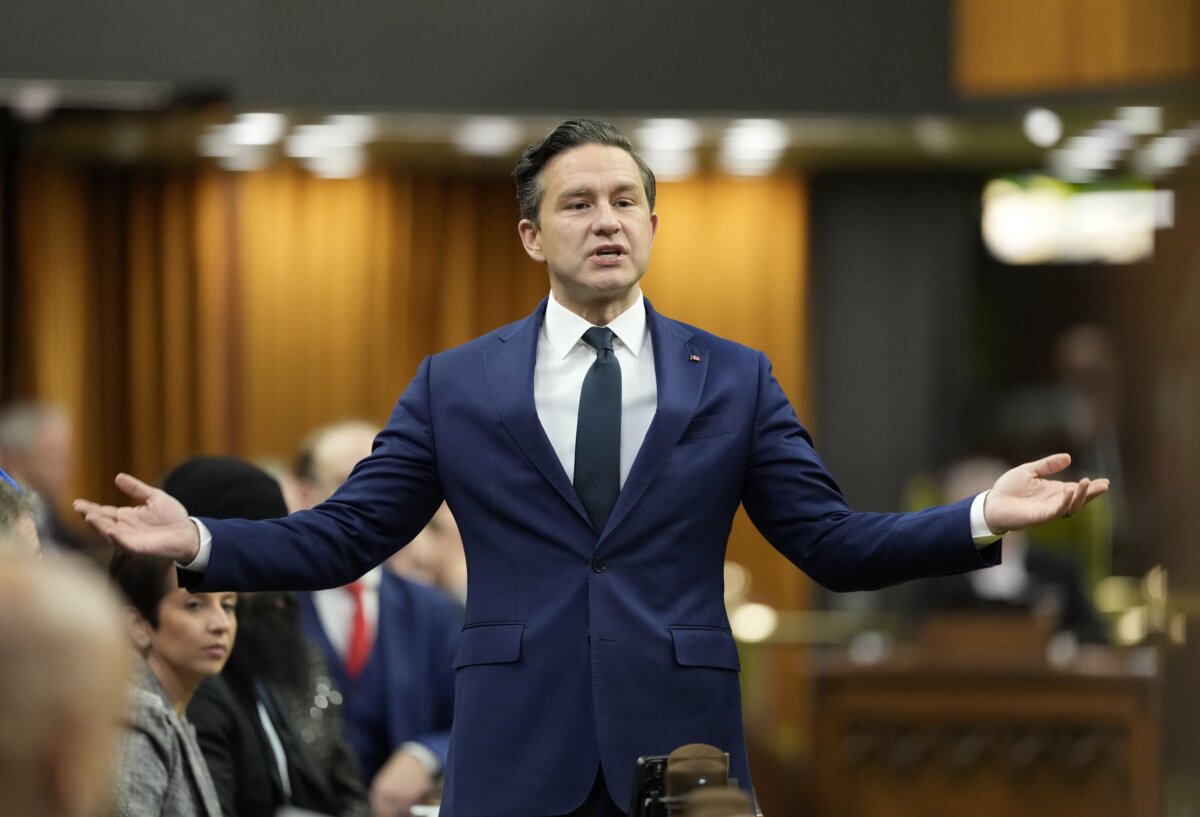
After the Liberals voted against the motion, Conservative Leader Pierre Poilievre said the Liberals have “voted against their own deal — blocking a pipeline to the Pacific and keeping Canadian energy landlocked.”
Conservative Deputy Leader and MP Melissa Lantsman had said prior to the vote that the motion would clarify where the Liberals stand on the pipeline deal, as some Liberal MPs had voiced different positions than that of their leadership.
“Carney promised a pipeline. His Liberal MPs are promising it’ll never happen,” Lantsman said on social media on Dec. 5. “They’re hiding behind fake vetoes and excuses instead of backing the project their own PM signed onto.”
Speaking to reporters on Dec. 9, Energy Minister Tim Hodgson referred to the Tories’ original motion tabled the same day as a “cheap political stunt.”
Other Liberal cabinet members expressed opposition, saying it was too narrow in scope in asking for a “yes” or “no” in support of the pipeline, and on wording regarding any “appropriate adjustment” to the oil tanker ban on B.C.’s north coast.
Amended Motion
The Tories’ amended motion includes more language from the memorandum of understanding (MOU) around indigenous co-ownership, carbon capture, private funding, and engaging with B.C.—language that the party says is being included in “the spirit of collaboration.”
“The Liberals claim their caucus cannot support a motion on Carney’s pipeline agreement because it only mentions the pipeline he committed to,” the Tories wrote in a Dec. 9 release.
“That’s why, in the spirit of collaboration, Conservatives will amend the motion to add even more language straight out of the Liberals’ own MOU on private funding, indigenous equity, engagement with British Columbia and greenlighting the Pathways project.”
Environment Minister Julie Dabrusin told reporters the original Tory motion was “intentionally divisive” by leaving out key aspects of interprovincial “climate action.”
What we see is a motion that doesn’t include some of the really important pieces to this memorandum of understanding that show how we can work collaboratively with provinces to move forward on climate action,” Dabrusin said in Ottawa on Dec. 9.
Government House Leader Steve Mackinnon subsequently said that Liberals will still vote against the amended Conservative motion.
Liberal MP Kody Blois, who serves as parliamentary secretary to the prime minister, told the House his party would have supported the motion had it contained the entire Ottawa-Alberta MOU.
“It was a bit cute by half to see the leader of the Official Opposition move an amendment today to try to add a few more tidbits of the MOU, not the whole MOU, but the parts that his party could support,” said Blois, who added the amended motion doesn’t include the portion about strengthening the industrial carbon price in Alberta.
Meanwhile, Liberal MP Corey Hogan, who represents a Calgary riding, said the Tory motion was designed to “trap” and “divide” his party.
Some Liberal MPs have criticized the MOU, including Steven Guilbeault who resigned from cabinet over the issue. Hodgson, however, told reporters on Dec. 9 that the Liberal caucus supports the MOU.
Bloc Québécois Leader Yves-François told reporters on Dec. 9 the Tory motion was a “skillful” way to try to highlight divisions within the Liberal caucus, but he said his party would vote against. The Bloc is opposed to the MOU and to the expansion of domestic pipelines.
Poilievre, meanwhile, said that only his party would “build the pipeline without a carbon tax, get our energy to tidewater, and restore Canadian independence.”
House of Commons Debate
During debate over the original motion in the House of Commons Conservative MP Ellis Ross of B.C. addressed Liberal opposition, saying the motion is only seeking clarity.
“Having the Liberals oppose and debate their own motion, their own wording, is confusing. And this is why we’re trying to put this motion forth today, because Canadians deserve an answer—yes or no,” Ross said.
Hodgson said in debates that the motion didn’t address engagement with First Nations or B.C., though the original motion did include wording on “respecting the duty to consult Indigenous Peoples.”
Poilievre told the House the pipeline is necessary for Canada’s economy and the well-being of Canadians.
“The biggest problem in Canada today is people cannot afford to live after Liberals doubled housing costs, doubled the cost at the grocery store, doubled lineups at food banks and doubled our national debt,” Poilievre said. “When you export more Canadian goods abroad, you force other countries to buy Canadian dollars. That raises the dollar and therefore the purchasing power of our people.”
The Conservative leader also said the oil tanker ban only punishes Canada, as American tankers can ship oil between Alaska and the West Coast of the United States.
“So apparently it’s safe when the Americans transport oil through those same waters, but not when Canadians do it. Clearly an act by this government of economic self-harm, of discriminating against Canadians,” Poilievre said in support of his party’s motion.
 Friends Read Free
Copy
Facebook
Tweet
Friends Read Free
Copy
Facebook
Tweet