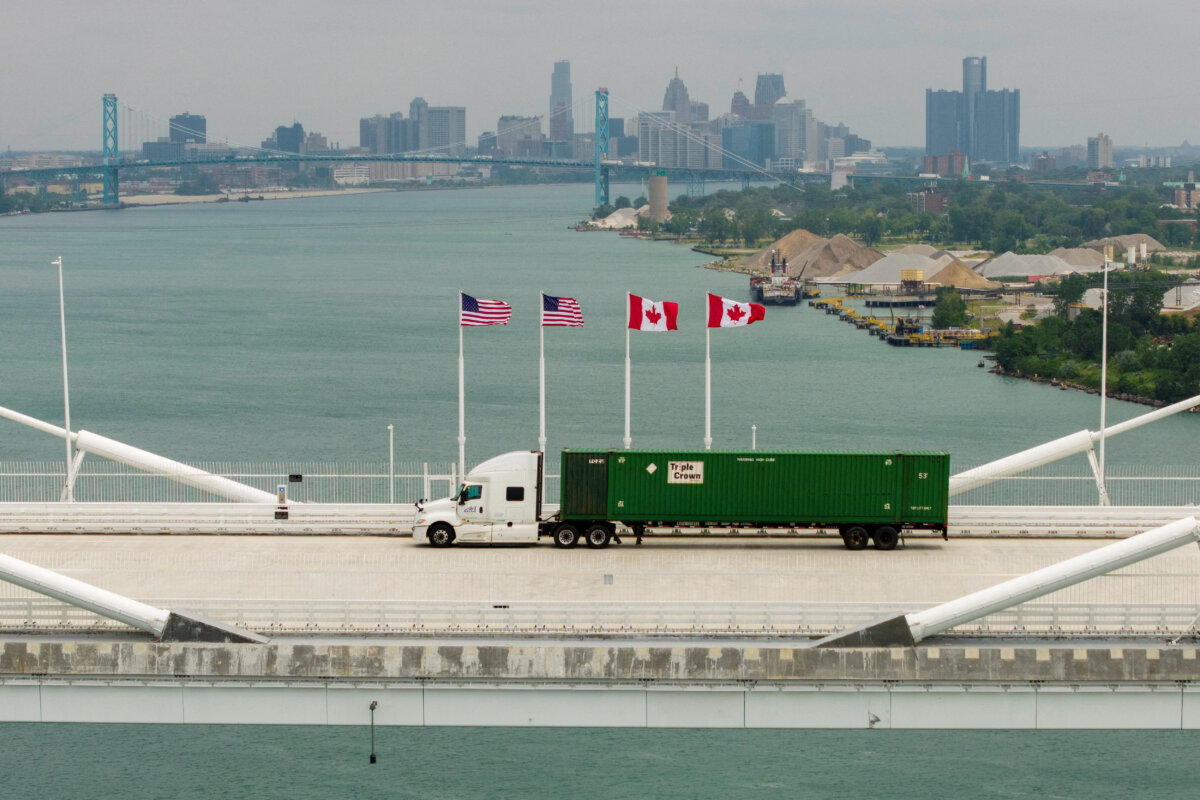

U.S. President Donald Trump signed a series of executive orders on Sept. 8 to ban imports of certain Canadian goods into the United States, including most alcoholic products, certain dairy products, and motorcycles.
Earlier in the day, Trump also announced that he is restricting Canadian companies from certain U.S. government procurement contracts. The announcements came as Canada proceeded with imposing its previously announced counter-tariffs on U.S. products on Sept. 8.
Trump signed five new executive orders on Sept. 8, imposing new 50 percent tariffs on some Canadian products and removing them on some others effective Sept. 15, and banning imports of certain Canadian products as of Sept. 29.
Among the newly banned Canadian products are certain alcoholic drinks including beer and various types of wines and spirits, whey products, and motorcycles.
Senior U.S. officials said the removal and addition of certain products from the 50 percent tariff list were done as part of “housekeeping,” and the overall value of Canadian goods subject to new 50 percent tariffs remains at around US$20 million. Some of the new products subject to the tariff include all-terrain vehicles, certain types of motorboats, and certain cheese products. Products removed from the list include cement, road salt, and certain hospital pads.
Canada also removed seafood from the list of products it had originally subjected to counter-tariffs after hearing from domestic industry players. It instead announced tariffs on other U.S. products to maintain the nearly US$20 billion value of its retaliatory tariff package.
The newly announced U.S. measures were signed pursuant to Section 338 of the Tariff Act of 1930.
“I determine that it is consistent with the interests of the United States to issue this further proclamation directing that certain products of Canada shall be excluded from importation into the United States,” reads one of the proclamations signed by Trump.
Canada’s 15 to 20 percent counter-tariffs on about US$20 billion worth of American products came in response to the United States imposing new 50 percent tariffs on about the same amount of Canadian imports, which Trump had said are in response to Canada’s dairy supply management and provincial bans on alcohol. The two sides had been negotiating a trade deal to avoid the new U.S. tariffs, but Canadian Prime Minister Mark Carney said he told his team to abandon the deal, accusing Washington of making unfavorable last-minute demands. Washington, for its part, blames Ottawa for the failure of the trade deal, saying it was Canada that made last-minute demands.
Since Canada first announced its intention to impose counter-tariffs, Trump also said he’s imposing new 50 percent tariffs on Canadian vehicles and auto parts beginning in 2027, and said he’ll ban the sales of products made by the Canadian aviation giant Bombardier unless they’re made in the United States.
On Sept. 8, as he ordered the General Services Administration to ban Canadian-origin products from bidding on certain U.S. federal projects, he noted that some Canadian provinces and Ottawa are restricting U.S. companies from bidding on government projects, saying that “is not reciprocity.”
“Canada has been ripping us off for years,” Trump said.
U.S. officials said on Sept. 8 that they had told Ottawa that Washington would be implementing new measures to “level the playing field” once Canada imposes its counter-tariffs. They also said that Canada and China are the only two countries that have retaliated against U.S. tariffs.
Carney said in a video message released on Sept. 8 that his vision of decreasing Canada’s dependence on the United States amid the trade tensions could mean that some tough times are ahead for Canadians.
“They were asking far too much and offering far too little,” he said of the negotiations he walked away from. “Canadians have faced difficult stretches before, and what’s carried us through has never been any one measure.”
This is a developing story, updates will follow.
 Friends Read Free
Copy
Facebook
Tweet
Friends Read Free
Copy
Facebook
Tweet