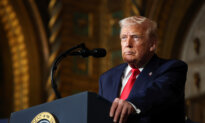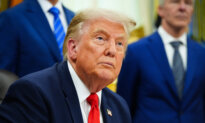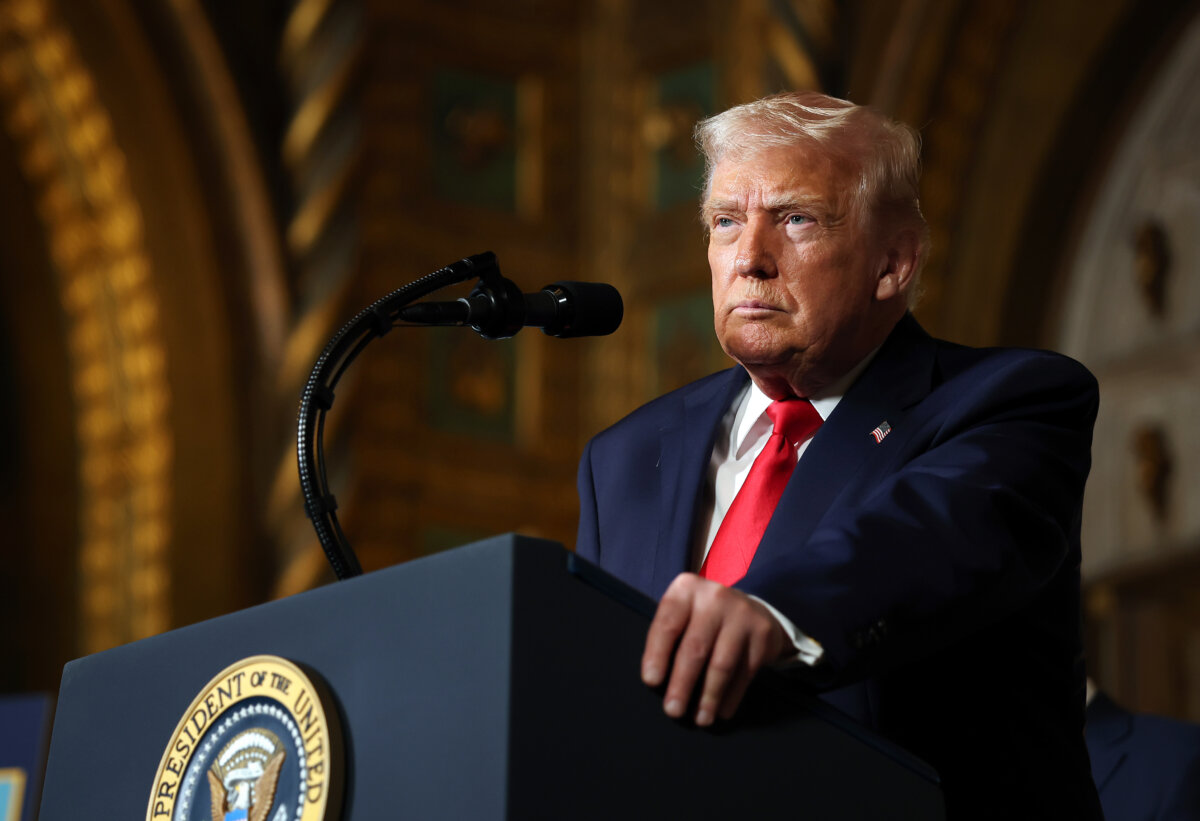
President Donald Trump said he has canceled a previously anticipated second wave of U.S. military strikes against Venezuela after the country’s interim authorities began to release political prisoners, a move he described as a significant gesture toward peace following the U.S. extraction of Venezuelan leader Nicolás Maduro to the United States to face narco-terrorism charges.
In a Jan. 9 post on Truth Social, Trump said Venezuela was freeing large numbers of political detainees as a sign it was “seeking peace,” calling the decision “a very important and smart gesture.”
He said cooperation with U.S. authorities—particularly on plans to rebuild Venezuela’s oil and gas infrastructure—had prompted him to halt further military action.
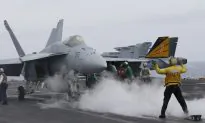
“Because of this cooperation, I have cancelled the previously expected second Wave of Attacks, which looks like it will not be needed,” Trump wrote, adding that U.S. naval assets would remain deployed in the region “for safety and security purposes.”
Trump also said that at least $100 billion would be invested by major oil companies in Venezuela’s energy sector and that he was scheduled to meet with senior executives from large oil firms later on Jan. 9 at the White House.
The president offered more details about the planned investment in a Jan. 8 interview with Fox News’s Sean Hannity, revealing that America’s top 14 oil companies are prepared to enter Venezuela and “rebuild the whole oil infrastructure” to tap the country’s vast reserves for the benefit of both countries.
Venezuela, a founding member of OPEC with the world’s largest proven oil reserves, has seen oil output collapse from more than 3 million barrels per day in the early 2000s to under 1 million in recent years amid mismanagement, underinvestment, corruption, and sanctions.
Trump previously said that U.S. companies could restore output within 18 months, though the cost would be high.
“I think we can do it in less time than that, but it’ll be a lot of money,” Trump told NBC News in a recent interview.
“A tremendous amount of money will have to be spent, and the oil companies will spend it, and then they’ll get reimbursed by us or through revenue.”
Trump’s announcement calling off a potential second wave of attacks against Venezuela followed a Jan. 3 pre-dawn U.S. operation that included airstrikes on Caracas and led to the capture of Maduro and his wife, Cilia Flores. Both were transported to the United States to face drug- and arms-related charges.
Second Wave of Strikes
In the aftermath of the operation, Trump warned that additional military strikes remained possible if Venezuela’s remaining leadership refused to cooperate with the United States.
“We’re prepared to do a second strike, if we need it,” Trump said earlier this week aboard Air Force One. “If they don’t behave, we will do a second strike.”
Trump also issued a warning to Venezuela’s interim leader, Delcy Rodríguez, telling The Atlantic in a Jan. 4 interview that “if she doesn’t do what’s right, she is going to pay a very big price, probably bigger than Maduro.”
Rodriguez, a socialist who served under Maduro as deputy leader before his arrest, said after Trump’s warning that Caracas was prepared to cooperate with Washington.
“We invite the U.S. government to collaborate with us on an agenda of cooperation oriented towards shared development within the framework of international law to strengthen lasting community coexistence,” Rodriguez said in a Jan. 5 statement on social media.
“President Donald Trump, our peoples, and our region deserve peace and dialogue, not war.”
In a sign of such cooperation, Venezuela’s National Assembly President Jorge Rodríguez announced on Jan. 8 that authorities would release “a significant number” of Venezuelan and foreign detainees as a gesture affirming its “broad intention to seek peace.”
Those freed included prominent opposition figures Enrique Márquez and Biagio Pilieri, according to rights groups, while Spain confirmed the release of five of its citizens.
It is unclear how many political prisoners will ultimately be released. Alfredo Romero, director of Venezuela-based advocacy group Foro Penal, said in a Jan. 9 post on X that, so far, just eight political detainees have been freed.
A day earlier, Romero said that 863 people were still in prison for political reasons in Venezuela, including 86 detainees with foreign nationality.
 Friends Read Free
Copy
Facebook
Tweet
Friends Read Free
Copy
Facebook
Tweet