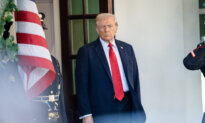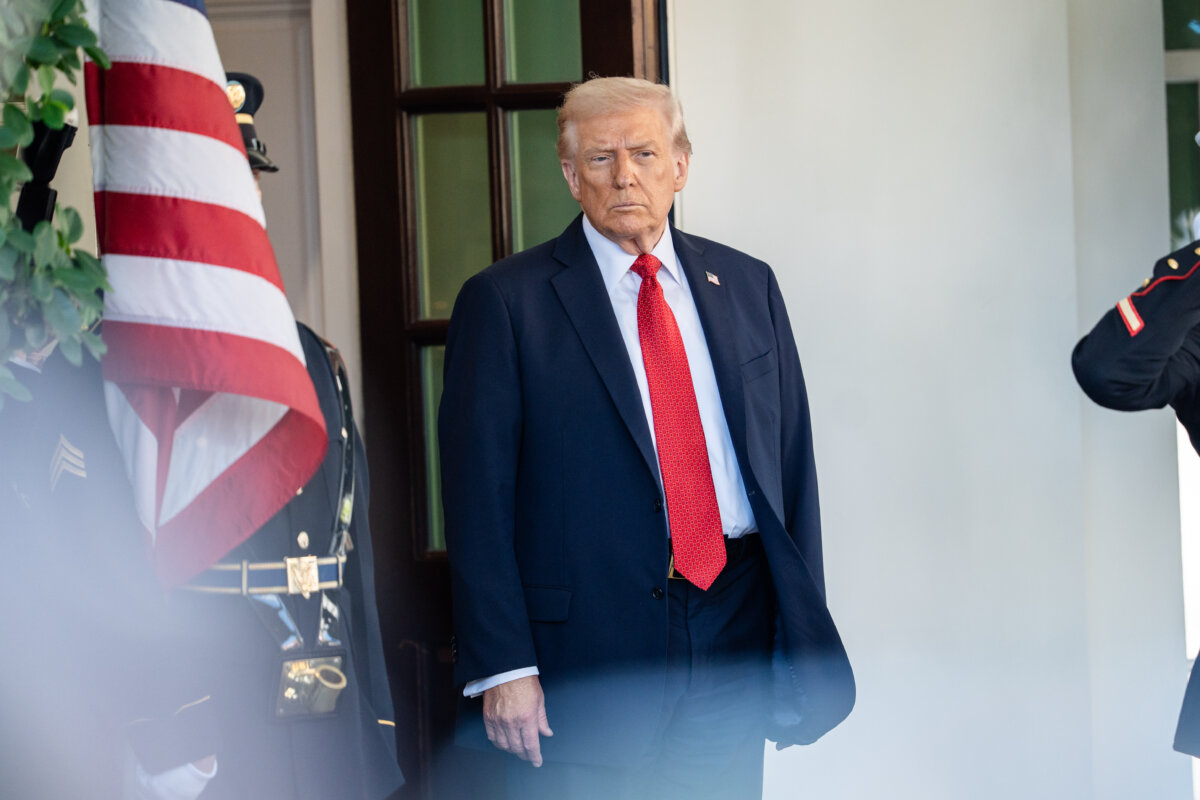

While affirming the United States’ commitment to AUKUS, President Donald Trump said America’s unmatched defence capability remains the region’s ultimate safeguard.
During a joint press briefing with Australian Prime Minister Anthony Albanese at the White House on Oct. 21, Trump was asked if AUKUS, the trilateral security pact between the United States, the UK, and Australia, is necessary to counter Beijing’s military expansion.
“I think it is, but I don’t think we’re going to need it,” Trump responded.
“I think we’ll be just fine with China. China doesn’t want to do that,” he said, downplaying the idea that Beijing’s aggression in the South China Sea poses an immediate risk.
He added that the United States’ defence capabilities continue to serve as the primary deterrent to aggression.
“The United States is the strongest military power in the world by far. It’s not even close, not even close. We have the best equipment. We have the best of everything, and nobody is going to mess with that,” he said.
AUKUS Still on Track
Despite casting doubt on whether AUKUS itself is essential to maintaining peace, Trump reaffirmed that the agreement remains on track and that his administration supports its core objectives.
Trump said the submarine project, which initially moved slowly, was now being accelerated under his leadership.
“We have the best submarines in the world, anywhere in the world, and we’re building a few more, currently under construction,” he said.
AUKUS, established in 2021 under the previous Morrison government, is a long-term strategic partnership aimed at countering the Chinese Communist Party’s (CCP) influence and building collective military capability among the three allies. The deal is valued at roughly A$350 billion (US$227 billion) over 30 years.
Under the agreement, Australia will purchase at least three Virginia-class nuclear-powered submarines from the United States in the early 2030s, with an option to buy two more, before transitioning to a jointly designed SSN-AUKUS model in the following decade.
Diplomatic Tone
While asserting U.S. dominance in defence, Trump adopted a measured tone when speaking about CCP leader Xi Jinping and the broader U.S.–China relationship.
“I think we’re going to get along very well,” he said.
“We have a very good trade relationship. We’re going to have a very good … I think we’ll end up with a very strong trade deal, both of us will be happy.”
Trump is expected to meet Xi later this month in South Korea.
Parallels with Australia’s China Relationship
Trump also drew comparisons between the United States’ and Australia’s dealings with China, describing both relationships as complex but manageable.
“We have a very good relationship with China. But, you know, it’s been, it’s been probably a little bit like your relationship with China. They try and take advantage, but most countries do,” he said.
He pointed to previous trade renegotiations as evidence that the United States could secure fairer outcomes through assertive diplomacy.
“The European Union took advantage, but not anymore. We’ve worked out a very fair trade deal with Japan. We worked out a very fair deal with South Korea, where I’ll be meeting President Xi. We worked out a very fair deal, and I expect we’ll probably work out a very fair deal with President Xi of China,” he said.
The statements come against the backdrop of escalating trade tensions between Washington and Beijing.
Earlier this month, Beijing blacklisted nearly a dozen U.S. defence firms and imposed export restrictions on critical rare earth materials vital for semiconductor production and advanced weapons systems.
In retaliation, Trump announced a sweeping new tariff policy, introducing an additional 100 percent duty on Chinese goods—raising the total to 130 percent.
 Friends Read Free
Copy
Facebook
Tweet
Friends Read Free
Copy
Facebook
Tweet