
U.S. President Donald Trump has reacted to a speech by Prime Minister Mark Carney that took aim at Trump’s policies and American influence, with Carney urging countries and companies to stop complying with the way the global system is evolving.
Trump said he listened to Carney’s speech delivered on Jan. 20 and remarked that it “wasn’t so grateful” toward the United States, adding that Canada “lives because of the United States.”
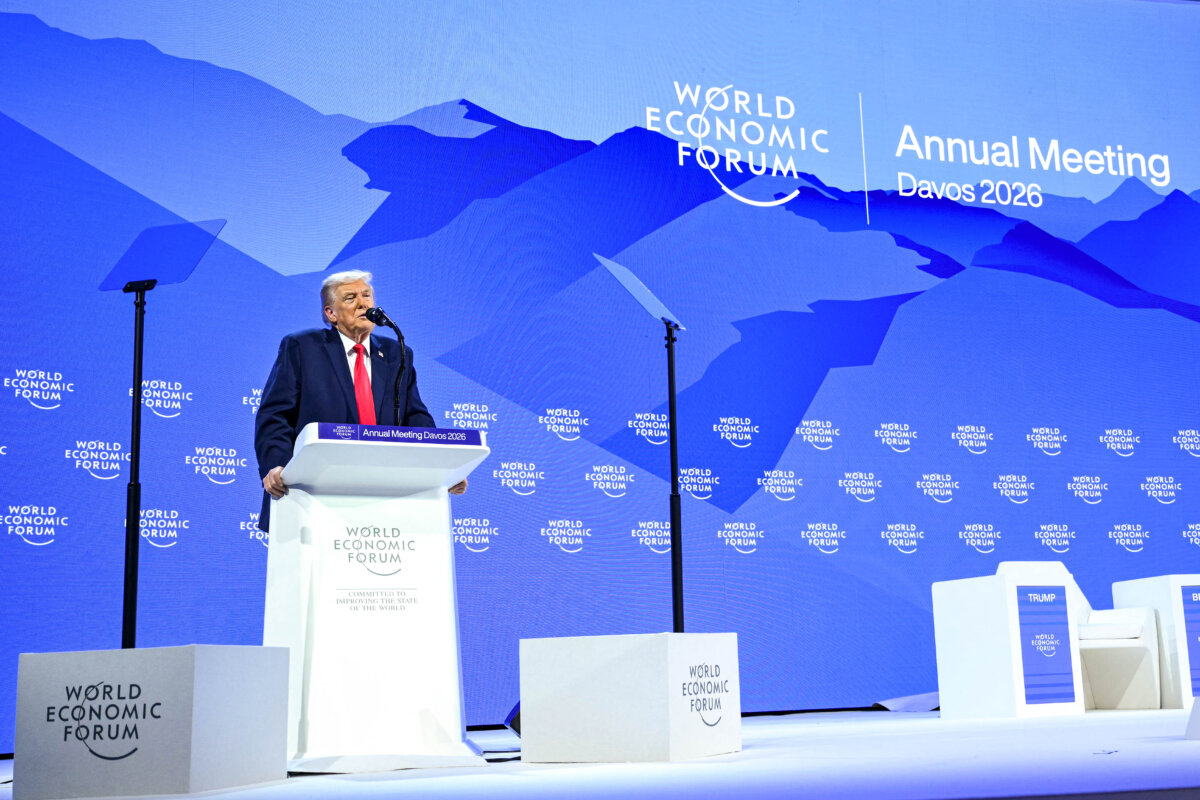
Trump made the comments as he delivered a lengthy speech at the annual meeting of the World Economic Forum (WEF) in Davos on Jan. 21, which touched on the burning geopolitical issues of the day, such as his pursuit of acquiring Greenland.
Trump said the United States requires Greenland for national security, as missiles during a potential war with an adversary would fly over Greenland.
“All we want from Denmark for national and international security, and to keep our very energetic and dangerous potential enemies at bay, is this land on which we’re going to build the greatest Golden Dome ever built,” Trump said. The “Golden Dome” refers to his plan to build a new air defence system to protect against sophisticated missile threats.
After making his case for U.S. acquisition of the Danish territory, for which he said he would not take by force, Trump briefly mentioned Canada.
The president said by the “very nature” of the Golden Dome it would serve to defend Canada as well. Ottawa has previously confirmed being interested in joining the new continental air defence system.
“Canada gets a lot of freebies from us, by the way, they should be grateful also, but they’re not,” Trump added.
“I watched your prime minister yesterday, he wasn’t so grateful. They should be grateful to us, Canada. Canada lives because of the United States. Remember that, Mark, the next time you make your statements.”
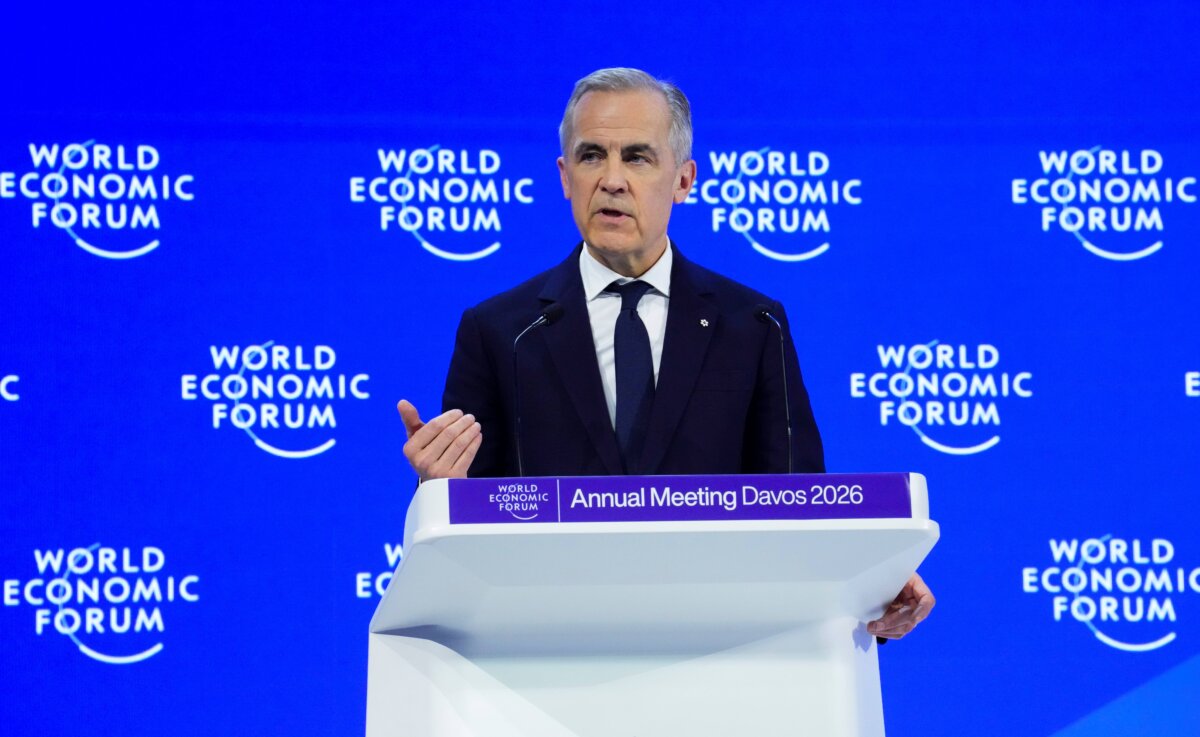
Carney in his Davos speech on Jan. 20 said that the international rules-based order is finished, ceding way to “great power rivalry.”
In that context, the prime minister urged leaders not to comply with the new system which he said uses “coercion.”
Without naming the United States, with which Canada has an integrated economy, Carney said “great powers have begun using economic integration as weapons; tariffs as leverage.”
“You cannot live within the lie of mutual benefit through integration, when integration becomes the source of your subordination,” Carney added.
The prime minister said in response, middle power countries like Canada must forge alliances, build resilience at home, and diversify export markets.
In that vein, Carney pointed to recent visits to Qatar and China, where he said he formed “new strategic partnerships.” In Beijing last week, Carney told Chinese Premier Li Qiang that the “progress we have made in the partnership sets us up well for the new world order.”
Trump Criticism
Trump’s reaction to Carney’s speech marked a rare instance of the U.S. president publicly criticizing the prime minister.
In the past, Trump has heaped praise on Carney during and following their face-to-face meetings.
“I liked him right from the beginning and we’ve had a good relationship,” Trump said as he met with Carney at the White House in October 2025. Trump also called Carney a “good man” and a “world-class leader.”
This was after Carney ran a spring election campaign focused on standing up to Trump, and after a summer of Ottawa and Washington not reaching a deal on tariffs.
The October White House meeting had been described as positive by both sides and generated momentum for the parties to strike a deal to address Trump’s tariffs hitting Canadian steel and aluminum.
The prospect of a deal ended after Ontario Premier Doug Ford ran an anti-tariff TV ad in the United States in late October, with Trump saying it was an attempt to interfere with the U.S. Supreme Court’s review of his tariff policy.
In the following weeks, Carney was asked by reporters when he had last spoken to Trump, to which he responded “who cares?,” saying he didn’t have a “burning issue” to discuss with the U.S. president.
Carney later apologized for his choice of words as the Conservative Opposition criticized his approach, noting the impact of tariffs on Canadian workers. The Tories noted Carney had run an election campaign on saying U.S. tariffs were an “existential crisis,” whereas now he was saying those were “not a burning issue.”
Carney is leaving Davos without meeting with Trump. The prime minister is headed to Québec City on Jan. 22 for the Liberal cabinet retreat ahead of the return of the House of Commons from the holiday break.
 Friends Read Free
Copy
Facebook
Tweet
Friends Read Free
Copy
Facebook
Tweet