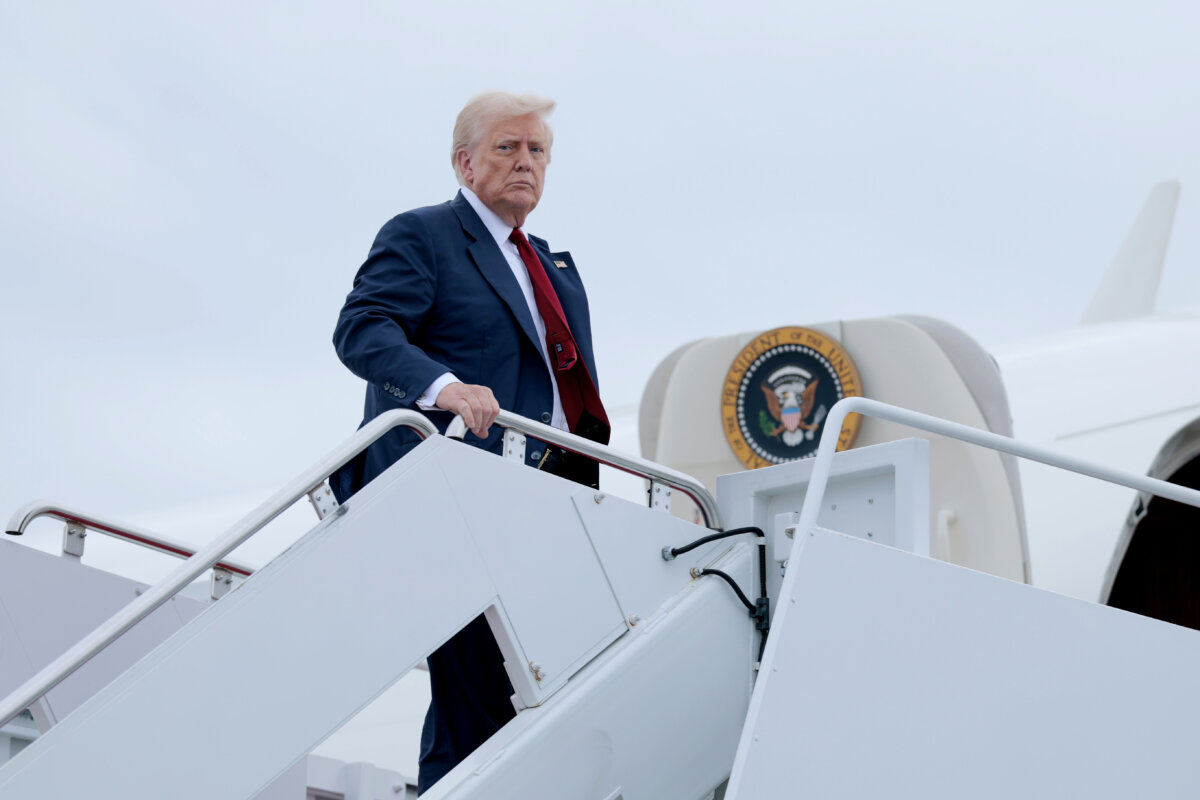

President Donald Trump said Brazilian President Luiz Inácio Lula da Silva is welcome to call him “anytime,” as tensions rise between the two governments over new U.S. tariffs and sanctions on a Brazilian Supreme Court justice.
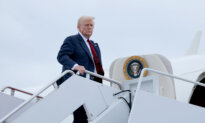
“He can talk to me anytime he wants,” Trump told reporters on Aug. 1 at the White House, speaking of his Brazilian counterpart.
Asked why he would impose a 50 percent tariff on certain Brazilian products, the president responded, “Because the people who are running Brazil did the wrong thing.”
Later that day, Lula wrote on X that Brazil “has always been open to dialogue.” He did not mention Trump or his comments.
“The ones who determine Brazil’s direction are the Brazilians and their institutions,” Lula wrote.
“At this moment, we are working to protect our economy, businesses, and workers, and to respond to the tariff measures of the U.S. government.”
On July 30, Trump signed an executive order raising tariffs on Brazilian goods by 40 percentage points, adding to the baseline 10 percent import duties already being levied. The order includes a list of exemptions, such as civil aircraft and parts, aluminum, tin, wood pulp, energy products, and fertilizers.
Brazil runs a trade deficit with the United States, meaning that it buys more goods from the United States than it sells to the United States. Almost all other countries targeted by Trump’s tariff measures post large surpluses.
The new tariffs are set to take effect on Aug. 6. The White House described the move as a “necessary and appropriate” response to Brazil’s treatment of former President Jair Bolsonaro and Brasília’s attempts to pressure U.S.-based social media companies into censoring Bolsonaro supporters, some of whom are American citizens.
Bolsonaro is on trial for attempted coup charges related to the Jan. 8, 2023, protests at Brazil’s federal government buildings. Authorities allege that the protests were part of a broader conspiracy to overturn the 2022 election results that brought Bolsonaro’s left-wing rival Lula to power.
Bolsonaro has consistently denied wrongdoing or any involvement in the alleged coup plot. He has not been convicted but is barred from running for public office until 2030.
In late July, Brazil’s Supreme Court ordered a search of Bolsonaro’s residence, forced him to wear an ankle monitor, and placed him under a nightly and weekend curfew.
The court also prohibited him from using social media, contacting foreign diplomats, or getting close to foreign embassies. His passport had already been confiscated.
Trump’s order condemned the treatment of Bolsonaro as “political persecution.” On the same day, the U.S. Treasury Department imposed sanctions on Brazilian Supreme Court Justice Alexandre de Moraes, who is presiding over Bolsonaro’s trial.
De Moraes is also leading an aggressive investigation into so-called digital militias accused of spreading disinformation and hate speech during the Bolsonaro administration.
In Aug. 2024, Brazil temporarily banned X across the country after the Elon Musk-owned social media platform refused to remove certain accounts—many linked to Bolsonaro supporters—that de Moraes said had violated Brazilian law.
The Treasury cited its authority under the Global Magnitsky Act, which allows sanctions against individuals accused of serious human rights violations or corruption, accusing de Moraes of having engaged in “judicial overreach” to censor critics of the Brazilian government, including those who are American citizens or reside in the United States.
The measure freezes any assets de Moraes may have in the United States, including indirect business interests, and prohibits anyone in the country from doing business with him. Before that, the Department of State revoked the visas of de Moraes, his close family members, and his political allies.
Lula has denounced both the tariffs and sanctions as “unacceptable” foreign interference in the country’s judicial system.
“Brazil is a sovereign and democratic country that respects human rights and the independence of powers,” he wrote on July 30 on X. “It is unacceptable for the American government to interfere in the Brazilian judiciary.”
Brazil’s embassy in Washington did not respond to a request for comment by publication time.
 Friends Read Free
Copy
Facebook
Tweet
Friends Read Free
Copy
Facebook
Tweet