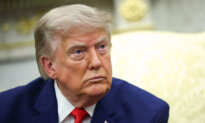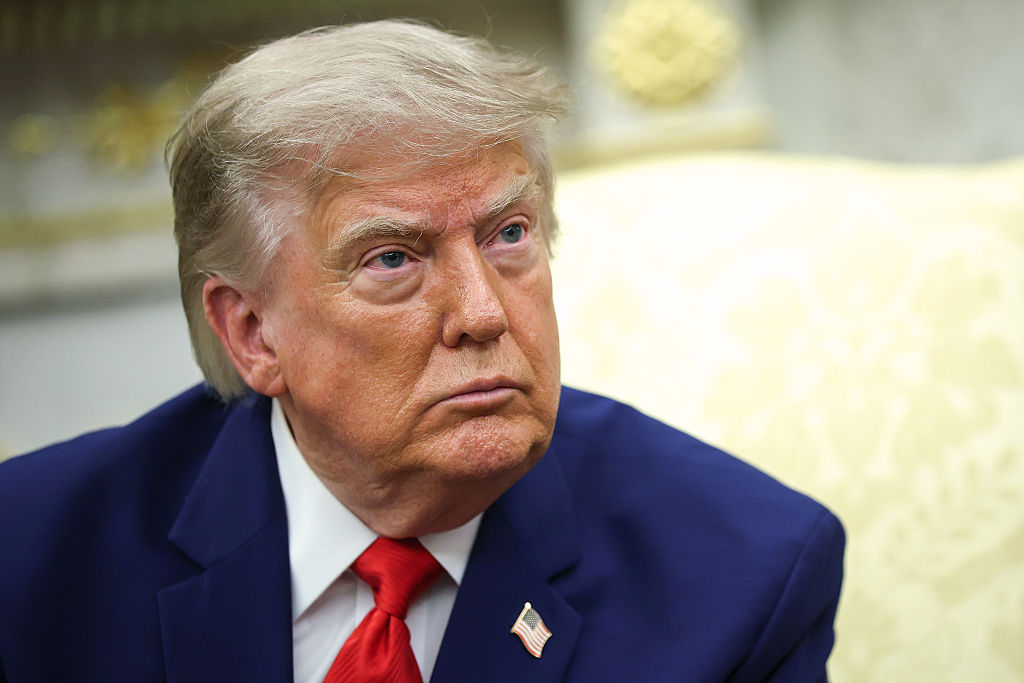

U.S. President Donald Trump said on July 29 that the Iranian regime would “get a beating” after it launched ballistic missiles on U.S. forces based in the Middle East.
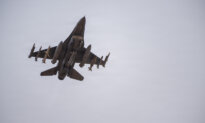
The U.S. Central Command (CENTCOM) confirmed on July 28 that Iran’s Islamic Revolutionary Guard Corps (IRGC) forces had launched multiple ballistic missiles in an attempted surprise attack against U.S. forces. The command noted that all of the missiles were successfully intercepted.
“We’ll be hitting them hard,” Trump told Fox News on July 29. “They’re going to get a beating.”
The surprise attack on U.S. military forces came after the United States paused military strikes on Iran after carrying out 13 consecutive days of attacks following the collapse of a June 17 memorandum of understanding between the two countries. The Iranian regime also paused attacks on U.S. forces before the July 28 surprise attack; however, the regime had denied the Trump administration’s claim that it was seeking peace talks with the United States.
“U.S. forces remain vigilant and at a high state of readiness,” CENTCOM said in response to the attempted surprise attack on July 29.
The IRGC said it launched ballistic missiles at the Muwaffaq Salti Air Base and the CENTCOM headquarters in Jordan, according to the state-run Islamic Republic News Agency. Five Iranian missiles were intercepted and destroyed, Jordan’s military said.
The Epoch Times reached out to the White House for comment but did not receive a response.
CENTCOM said on July 28 that U.S. forces coordinated with the Saudi Arabian Armed Forces to carry out precision strikes against Iran-aligned terrorists in Iraq on July 28. The terrorists had been directed by Iran to attack U.S. forces and Saudi energy infrastructure, the command said.
The joint strikes against the Iran-aligned terrorists targeted logistics and weapons sites in eastern Iraq. CENTCOM said the strikes were launched in response to more than 30 aerial drone attacks conducted by the terrorists over a period of 72 hours.
“The unwarranted attacks against U.S. forces were not successful,” CENTCOM said.
Iran-aligned terrorist groups in Iraq launched more than 600 attempted attacks on U.S. citizens and facilities from February through April of this year, according to CENTCOM.
“The IRGC and its terrorist proxies must cease these attacks to avoid further U.S. military response,” the command warned.
Iraqi President Nizar Amidi’s office condemned the joint airstrikes carried out by the United States and Saudi Arabia. The office said the strikes were an “unacceptable attack and a blatant violation of Iraq’s sovereignty, targeting its official security institutions.”
Amidi’s office called for deescalation and said Iraq should not be used as a “launching pad or arena for attacks against neighboring countries or for settling regional and international scores.”
Trump said on July 28 that the U.S. military will attack Iran’s suspected nuclear site at Pickaxe Mountain if Tehran does not agree to a deal with the United States. He reiterated that Iran would not be allowed to develop or obtain a nuclear weapon.
“If we don’t make a deal, we’ll take it out very easily,” he told Fox News’s “Fox and Friends.”
Trump said on July 24 that the United States is “locked and loaded” for a massive attack against Iran. However, he said that negotiations continue and that the regime is “getting more and more serious as the days go by.”
On July 27, Iranian Foreign Ministry spokesman Esmail Baghaei said that Iran had not requested negotiations with the United States. Baghaei also said that Tehran maintained control of the Strait of Hormuz following the 13 days of U.S. military strikes.
In response to Baghaei’s statement, a U.S. official told The Epoch Times that Iran “begged the United States to halt the devastating strikes” and that the regime was “desperate for a deal.”
The official said, “President Trump has said he prefers a diplomatic solution, but he retains all options if Iran continues terrorist activities in the Strait of Hormuz or against our allies.”
The Associated Press contributed to this report.
 Friends Read Free
Copy
Facebook
Tweet
Friends Read Free
Copy
Facebook
Tweet