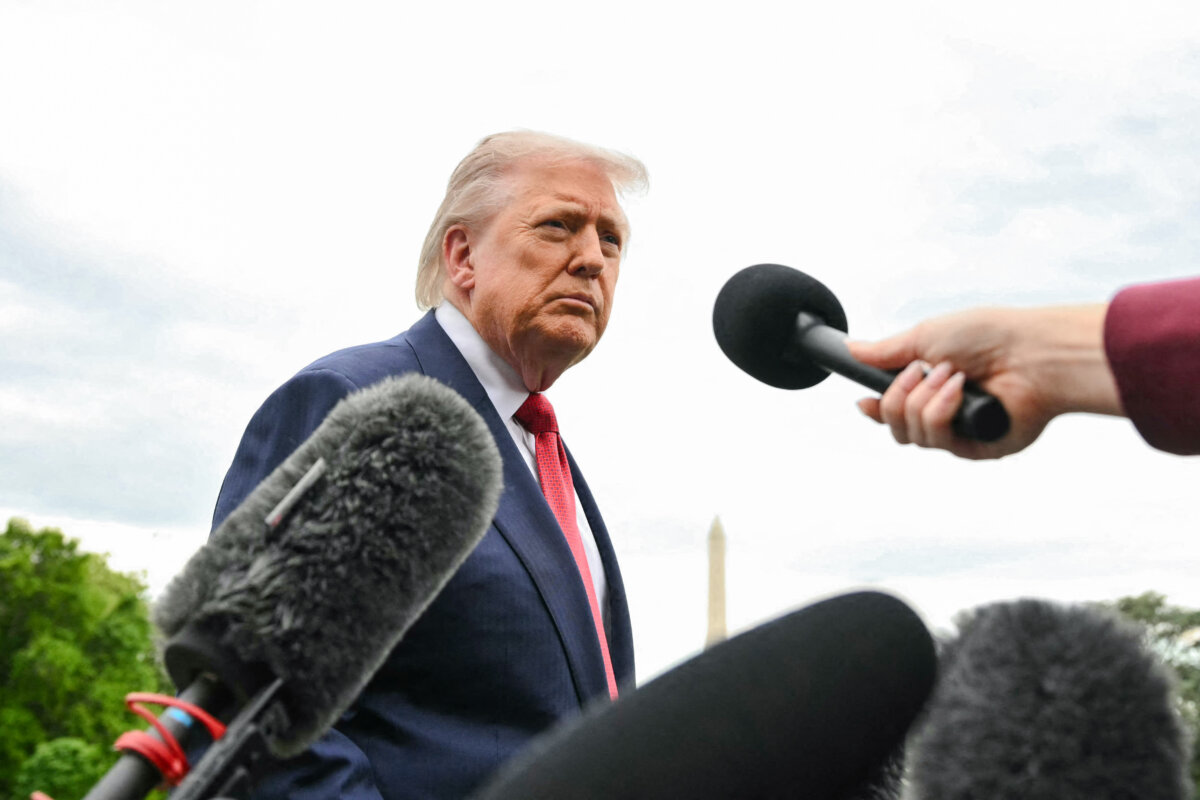

President Donald Trump said on May 10 that he would reject Iran’s latest proposal to end the war, describing the country’s response as unacceptable.
The Iranian regime submitted its response to the United States on Sunday, drawing a response from the president the same afternoon
“I have just read the response from Iran’s so-called ‘Representatives.’ I don’t like it—TOTALLY UNACCEPTABLE! Thank you for your attention to this matter,” Trump wrote on Truth Social.
Also on Sunday, Trump told Axios that he does not “like their letter. It’s inappropriate. I don’t like their response.”
“They have been tapping along many nations for 47 years,” he added, referring to the length of time the clerical theocracy has ruled the country.
The president did not elaborate on what Iran had said in its proposal.
Iranian officials claimed that Tehran’s response to the United States was reasonable.
Iranian Foreign Minister Esmail Baghaei said in a news conference on Monday morning that Tehran “demanded Iran’s legitimate rights” and did not want “any concessions” in ending the conflict, according to state-run PressTV.
“Is our proposal for safe passage through the Strait of Hormuz unreasonable? Is establishing peace and security across the entire region irresponsible?” Baghaei said.
“Everything we proposed in the plan was reasonable and generous, and it is for the good of the region and the world.”
Meanwhile, Iranian President Masoud Pezeshkian wrote in a social media post on Sunday that Tehran would “never bow our heads before the enemy,” and the country would “defend national interests with resolute strength,” according to a translation into English.
On Sunday, the United Arab Emirates said it intercepted two drones launched from Iran, while Qatar, on the same day, condemned a drone strike on a cargo ship in its waters. Kuwait reported that its air defense systems had intercepted hostile drones entering its airspace.
Israeli Prime Minister Benjamin Netanyahu said the war was “not over” during an interview with CBS’s “60 Minutes” that aired on Sunday evening. He said that Israel and the United States have to “re-engage them militarily” if Iran is unwilling to cooperate.
Netanyahu said that the U.S.–Israeli strikes denigrated Tehran’s leadership and that the current leader, Mojtaba Khamenei, lacks the same authority as his father, Ali Khamenei, who was killed during airstrikes in February.
“I don’t think he has the same authority that … his father, the Ayatollah Khamenei, had,” he said. “I don’t think so. That’s also creating … the disruptions in that regime.”
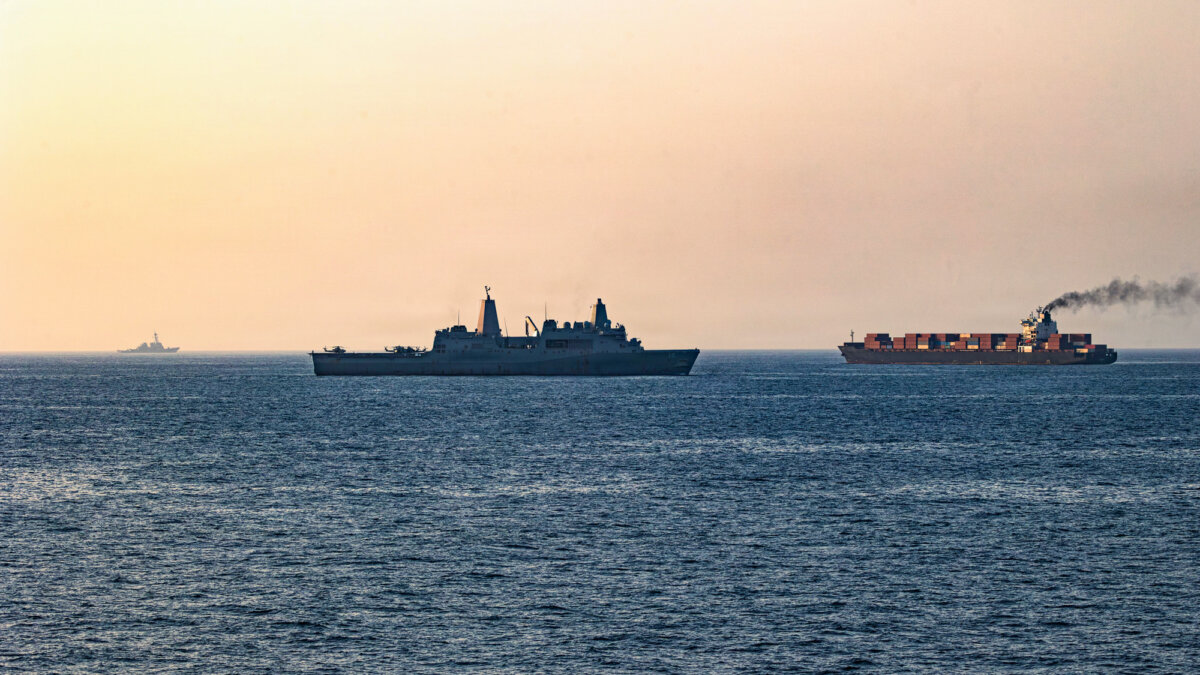
Oil prices rose on Monday before slipping slightly, as the deadlock has left the Strait of Hormuz largely closed. Before the war began on Feb. 28, the narrow waterway carried one-fifth of the world’s oil and liquefied natural gas, and has since become a central pressure point in the conflict.
As of Monday morning, the price for a barrel of Brent crude oil increased by 2 percentage points to $103. Data provided by the American Automobile Association (AAA) show the average cost for a gallon of regular gasoline in the United States averaged to $4.52 on Monday, roughly around the same as Sunday’s average.
Reuters contributed to this report.
 Friends Read Free
Copy
Facebook
Tweet
Friends Read Free
Copy
Facebook
Tweet