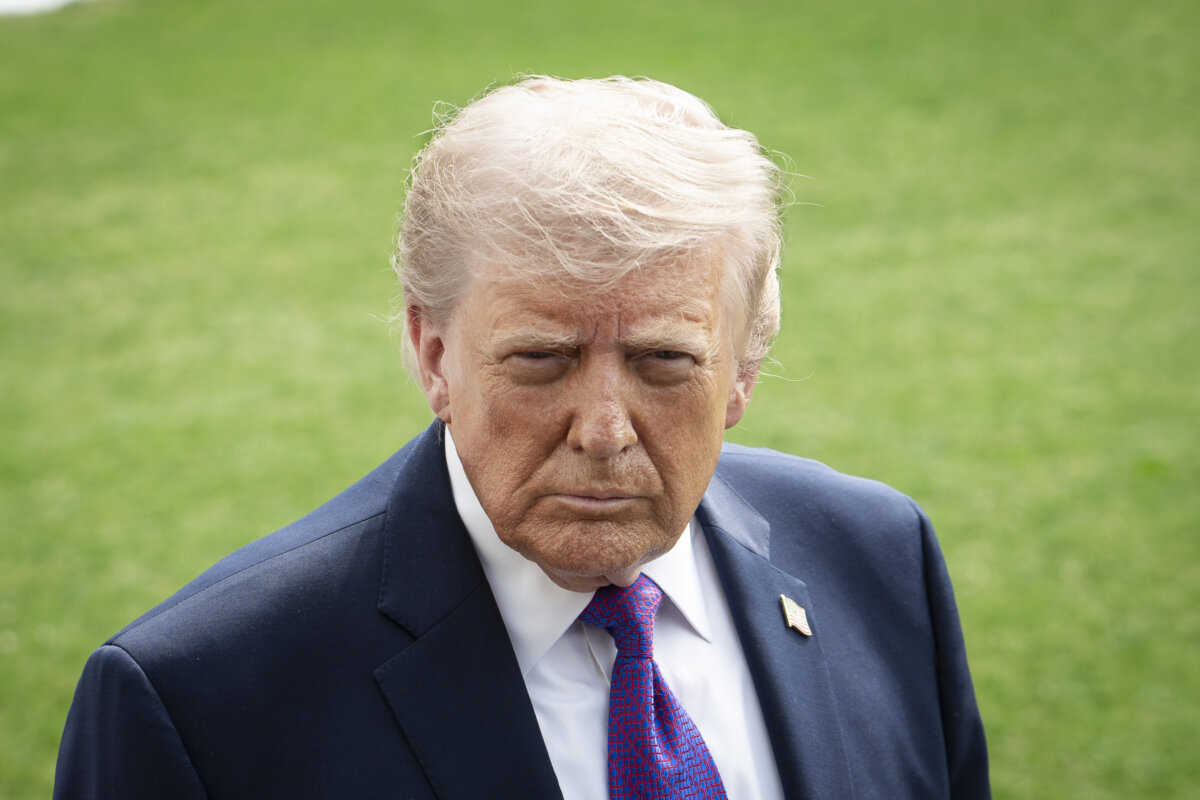

President Donald Trump said on April 14 that a second round of U.S.–Iran peace talks will likely take place in Pakistan over the next two days.
In a phone interview with the New York Post, Trump said that negotiations to end the war in Iran were moving “a little bit slow” and initially suggested the next round of direct talks with Iranian officials could take place in Europe.
The president later called back to say the talks could instead take place in Islamabad, according to the report.
“You should stay there, really, because something could be happening over the next two days, and we’re more inclined to go there,” Trump told the Post in Islamabad.
Trump praised Pakistan Field Marshal Gen. Asim Munir for facilitating discussions between U.S. and Iranian officials, noting that his work makes it more likely the talks will resume there.
The first round of U.S.–Iran peace talks held in Islamabad on April 12 failed to produce an agreement between the two sides. Vice President JD Vance, who led the U.S. delegation, said the stumbling block was Tehran’s refusal to commit to giving up nuclear weapons.
It remains unclear whether a second meeting between U.S. and Iranian officials has been arranged, as the two-week ceasefire deadline approaches its expiry next week.
Pakistan’s foreign minister, Ishaq Dar, said in an April 12 statement that Islamabad will continue its role to “facilitate engagement and dialogue” between the United States and Iran in the coming days.
“We hope that the two sides continue with the positive spirit to achieve durable peace and prosperity for the entire region and beyond,” Dar said. “It is imperative that the parties continue to uphold their commitment to ceasefire.”
In an interview with Fox News on April 13, Vance suggested that the Iranian delegation in the first round of talks may not have been able to finalize an agreement without approval from Iran’s supreme leader.
He noted that the United States had made “a lot of progress” in communicating its “red lines” to Iran in exchange for peace, and that it is now up to Tehran to decide on its next move.
“Whether we have further conversations, whether we ultimately get to a deal, I really think the ball is in the Iranian court, because we put a lot on the table,” he said.
Washington’s red lines, Vance said, stem from the “fundamental premise” of preventing Iran from developing nuclear weapons, which will involve the United States taking possession of Iran’s enriched uranium and putting in place a mechanism to ensure that Tehran does not have the ability to enrich uranium.
After the peace talks in Islamabad fell through, Trump announced on April 12 that the U.S. Navy would enforce its own blockade in the Strait of Hormuz, which U.S. Central Command said was to block ship traffic going in and out of Iranian ports.
The blockade took effect on April 13. The command stated that U.S. forces won’t interfere with freedom of navigation for vessels traveling in the waterway, so long as those ships are not visiting Iranian ports.
Traffic through the critical waterway for global oil and gas shipments has been disrupted since the United States and Israel launched attacks on Iran at the end of February, and Iran retaliated with drone and missile attacks on Israeli and U.S. military assets across Gulf nations and laid sea mines in the strait.
Ryan Morgan contributed to this report.
 Friends Read Free
Copy
Facebook
Tweet
Friends Read Free
Copy
Facebook
Tweet