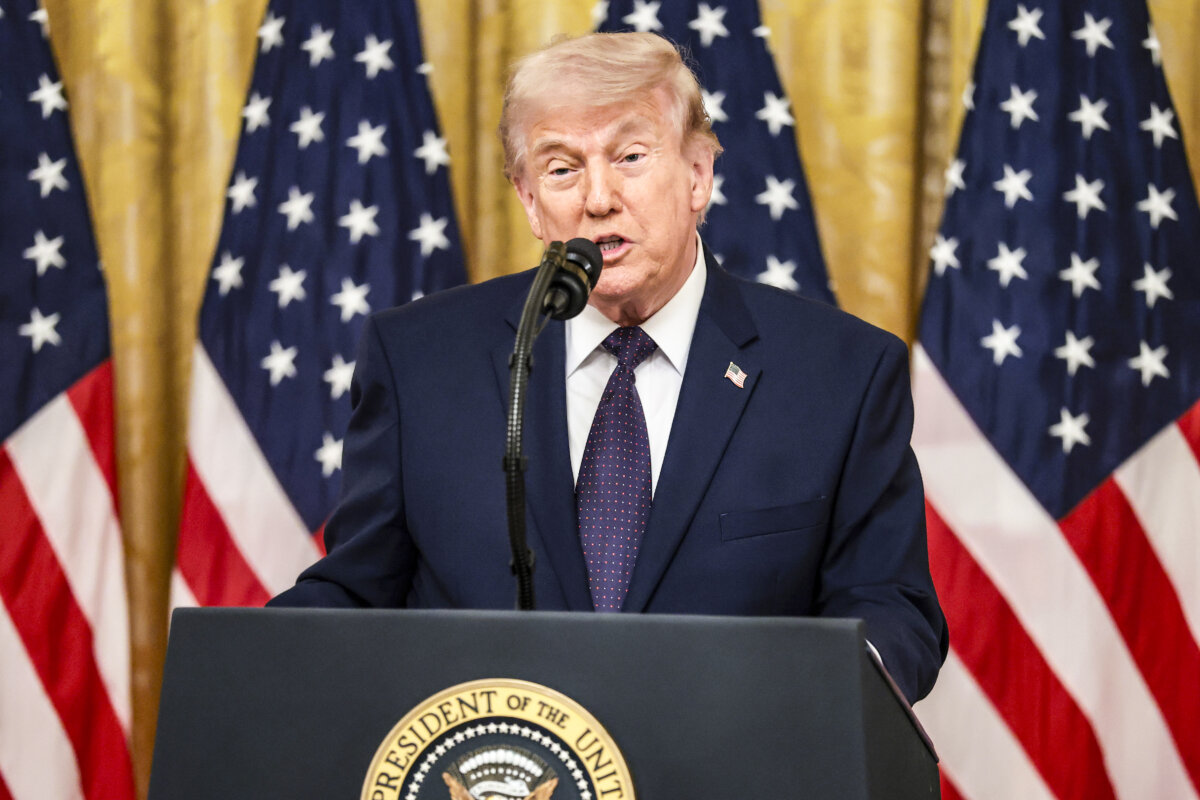

President Donald Trump on June 15 said that commercial ships loaded with oil are transiting the Strait of Hormuz after he announced a deal with Iran to end hostilities.
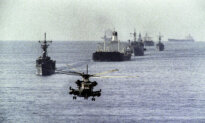
“Ships are starting to move, many loaded up with Oil, out of the Strait of Hormuz,” Trump wrote on Monday morning in a Truth Social post. “They are going along the Southern ‘Highway,’ which is totally safe, secure, and pristine. There are other areas of travel, also!!!”
Trump said on Sunday evening that the United States and Iran reached a tentative deal to end the war, which the United States and Israel initiated on Feb. 28. A ceasefire was announced in April and has largely remained intact.
After Trump announced the deal, Iran’s Supreme National Security Council said it agreed to the memorandum of understanding, according to state-run media outlet IRNA. The council also said that the deal includes an end to fighting between Israel and Hezbollah in Lebanon.
Trump’s Sunday announcement came shortly after Pakistani Prime Minister Shehbaz Sharif, whose country has served as a mediator between the two parties, announced a deal. The U.S.–Iran memorandum of understanding is scheduled to be officially signed on June 19 in Switzerland, Sharif said.
The precise terms were not immediately disclosed, but Sharif wrote on X that the memorandum includes the “immediate and permanent termination of military operations on all fronts, including in Lebanon.”
“With the agreement now in place, mediators will facilitate a series of meetings this week. These pre-implementation discussions will lay the foundation for the technical talks and the official signing ceremony,” Sharif also wrote.
Throughout the negotiations, Trump has pushed for Iran to agree to end its controversial nuclear program, hand over more than 900 pounds of highly enriched uranium, and reopen the Strait of Hormuz. This strategic waterway links the Persian Gulf to the Indian Ocean. U.S., Israeli, and European officials said that Tehran was using the nuclear program to produce nuclear weapons, while Iran has long denied the assertions.
Iran effectively shut down traffic in the strait, sending oil and energy prices skyrocketing, with a barrel of Brent crude oil often trading above $100. As of Monday morning, the price stood at around $83 per barrel.
Israeli Prime Minister Benjamin Netanyahu has yet to respond publicly to the U.S.–Iran agreement that was announced on Sunday. But Defense Minister Israel Katz told Israeli media outlets in a statement on Monday that Israel would resist pressure to withdraw its forces from areas in southern Lebanon.
“Prime Minister Benjamin Netanyahu and I are leading a clear policy that determines that the [Israel Defense Forces] will remain in the security zones in Lebanon, Syria, and Gaza, without any time limit, to protect, from there, the border and Israeli communities against jihadist elements,” he said in the statement.
In a joint statement on June 15, Britain, Germany, France, and Italy said they were prepared to lift sanctions on Iran in response to “clear, verifiable steps” to limit its nuclear program.
“Iran must never acquire a nuclear weapon,” the statement said, adding that the countries “stand ready to work with” the United States, the International Atomic Energy Agency, and Iran.
Meanwhile, they pushed for the “urgent re-opening of the Strait of Hormuz with unconditional and unrestricted freedom,” saying they “are committed to playing our part to achieve this.”
The conditions, however, for that to happen must be “strictly defensive” in nature, involving the clearing of sea mines and protecting commercial shipping through the waterway, it added.
 Friends Read Free
Copy
Facebook
Tweet
Friends Read Free
Copy
Facebook
Tweet