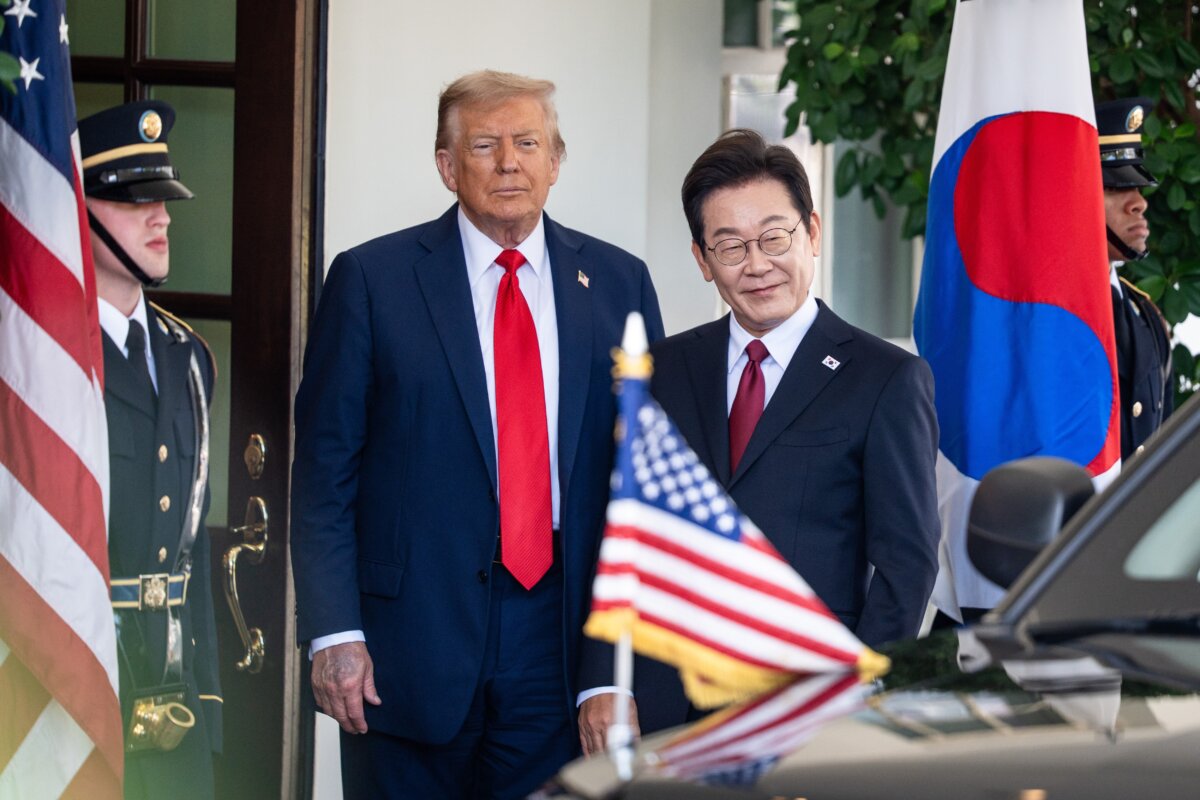

South Korean President Lee Jae-myung and U.S. President Donald Trump spoke by phone on May 17 to discuss the outcome of the recent U.S.–China summit in Beijing and reaffirm cooperation between Washington and Seoul amid growing geopolitical tensions in Asia.
Trump wrapped up a high-stakes two-day summit with Chinese leader Xi Jinping in Beijing on May 15.
The U.S. president shared with Lee the results of his meeting with Xi, including U.S.–China relations, agreements over economic and trade issues, Korean affairs, and the situation in the Middle East, South Korea’s presidential office said.
The summit produced preliminary agreements involving agricultural exports, investment talks, and continued diplomatic engagement.
South Korea remains heavily dependent on imported energy and on commercial shipping routes through the Strait of Hormuz, making regional instability a major economic concern for Seoul.
South Korean presidential chief of staff Kang Hoon-sik said during a government briefing in Seoul on April 15, 2025, that South Korea relied on the Strait of Hormuz for 61 percent of its crude oil imports and 54 percent of its naphtha imports.
Lee wrote in a May 17 post on X that Trump had briefed him on the results of the Beijing summit and that the two leaders had discussed ways to strengthen coordination between South Korea and the United States.
“We shared the understanding that close communication and coordination between our two governments is more important than ever amid rapidly changing global circumstances, and agreed to continue working together for peace and stability on the Korean Peninsula,” Lee said.
Seoul’s Commitment
The South Korean president and Trump previously met during a summit in Gyeongju, South Korea, on Oct. 29, 2025. That meeting focused heavily on defense cooperation, trade, and industrial investment.
After that summit, Trump said the United States would share nuclear propulsion technology with South Korea to support Seoul’s effort to build a nuclear-powered submarine fleet.
Trump said at the time that the decision reflected the strength of the U.S.–South Korea alliance and growing concerns over regional threats from China and North Korea.
“South Korea has agreed to pay the USA 350 Billion Dollars for a lowering of the Tariff’s charged against them by the United States,” Trump wrote in an Oct. 29, 2025, post on Truth Social after the Gyeongju summit.
Lee said on May 17 that Seoul plans to continue implementing agreements reached during the 2025 summit.
“Based on the achievements of the [Republic of Korea–U.S.] summit held last year in Gyeongju, we plan to faithfully implement the joint fact sheet in order to further deepen and advance our bilateral relations,” he said.
Lee described the latest phone call as another sign of the strength of the alliance between Washington and Seoul.
Reuters contributed to this report.
 Friends Read Free
Copy
Facebook
Tweet
Friends Read Free
Copy
Facebook
Tweet