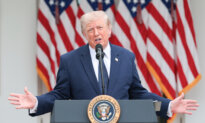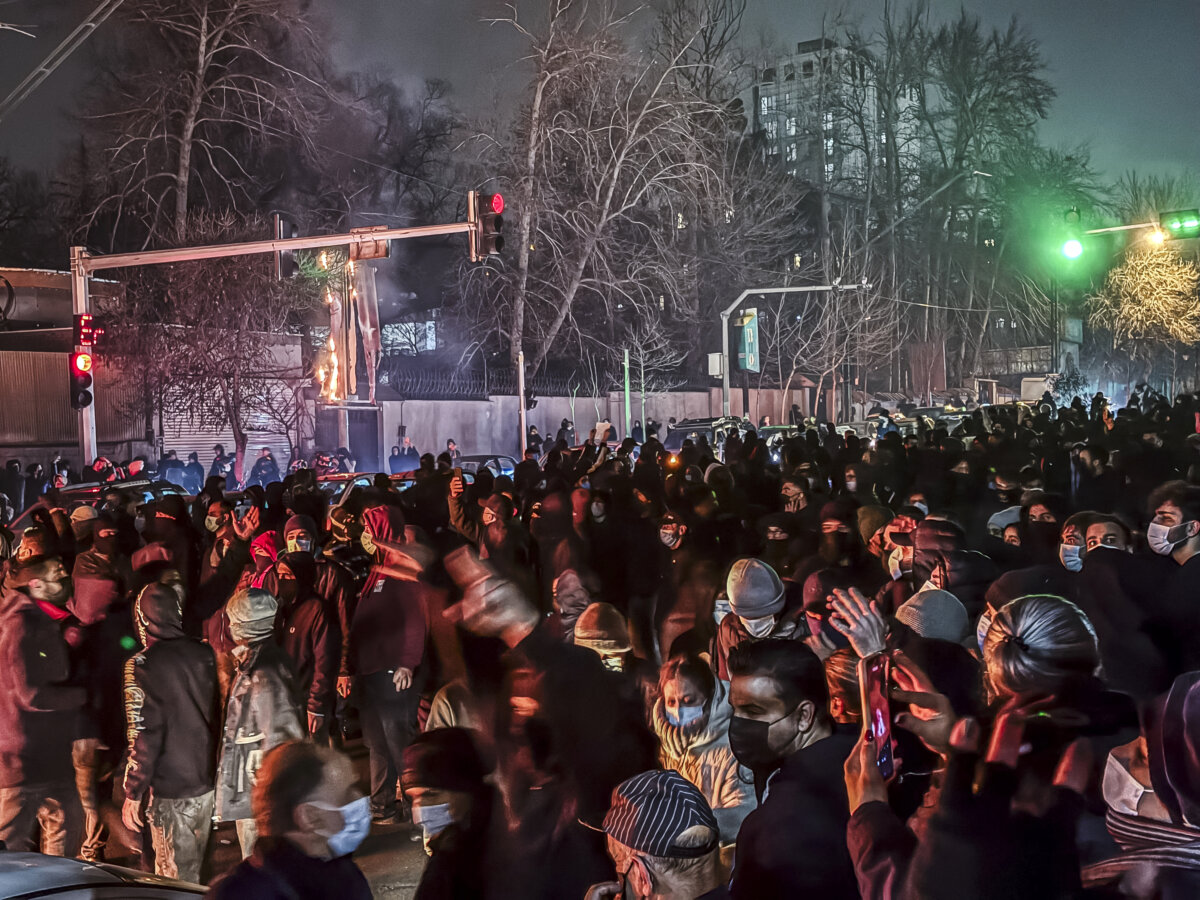

U.S. President Donald Trump threatened Iranian leaders with “very strong action” if reports accusing them of hanging protesters in the country turn out to be true, he said in an interview with CBS News, published online on Jan. 13.
Trump had earlier in the day encouraged protesters, writing on Truth Social to keep up the pressure on the regime and to take over the country’s institutions.
“Save the names of the killers and abusers. They will pay a big price,” he said, adding that all meetings with Iranian officials were canceled until the killing stopped. “HELP IS ON ITS WAY.”
When the interviewer asked about the regime beginning to start “hanging protesters tomorrow … have they crossed your red line, or has the line moved?” Trump responded that he has not “heard about the hanging. If they hang them, … we will take very strong action. If they do such a thing, we will take very strong action.”
When asked about the “end game,” Trump pointed to the examples of ISIS leader Abu Bakr al-Baghdadi, and Iranian General Qasem Soleimani, who were both eliminated during Trump’s first term.
“We don’t want to see what’s happening in Iran happen, and you know, if they want to have protests, that’s one thing. When they start killing thousands of people, and now you’re telling me about hanging, we’ll see how that works out for them. It’s not going to work out good,” Trump said.
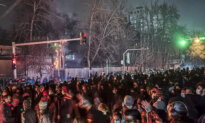
According to the U.S.-based rights group, the Human Rights Activists News Agency, or HRANA, it has been 17 days since the mass protests started in the country.
Based on updated numbers, there are 614 protest gatherings recorded happening in Iran, covering 17 cities and all 31 provinces. Approximately 18,434 individuals have been arrested from available accounts.
Around 2,403 protesters have been killed, according to HRANA, and among these, there were 12 children. The actual death toll is feared to be much higher. Over 1,100 people are reported to be severely injured. Nine non-protesters have been recorded dead since the protests began, along with 147 members of security forces and government supporters also reported to be killed.
The numbers could not be independently verified by The Epoch Times.
Since the protests began to intensify, the regime has blocked internet access to and telephone services in the country. This has made it difficult for international organizations to gauge the intensity of the protests, and government responses.
Since Jan. 13, Iran has eased some restrictions on communications. Tehran has allowed people in Iran to call outside the country but has not activated incoming calls. Restrictions on messaging are still imposed.
Although demonstrations began over high economic inflation, it has since expanded, with people now targeting the Islamic regime, which has maintained an iron grip on the nation since 1979.
Protesters are calling for the fall of the clerical establishment led by Ali Khamenei.
On Jan. 12, Karoline Leavitt told reporters that the United States has many options left on the table regarding Iran. While military airstrikes remain open, “diplomacy is always the first option for the president,” she said.
Meanwhile, the U.S. Virtual Embassy of Iran sent a warning to all Americans still remaining in Iran to leave the country immediately.
“Leave Iran now. Have a plan for departing Iran that does not rely on U.S. government help,” the embassy said. “If you cannot leave, find a secure location within your residence or another safe building. Have a supply of food, water, medications, and other essential items.”
The embassy said the protests were escalating, and may turn violent, which will result in arrests and injuries.
 Friends Read Free
Copy
Facebook
Tweet
Friends Read Free
Copy
Facebook
Tweet