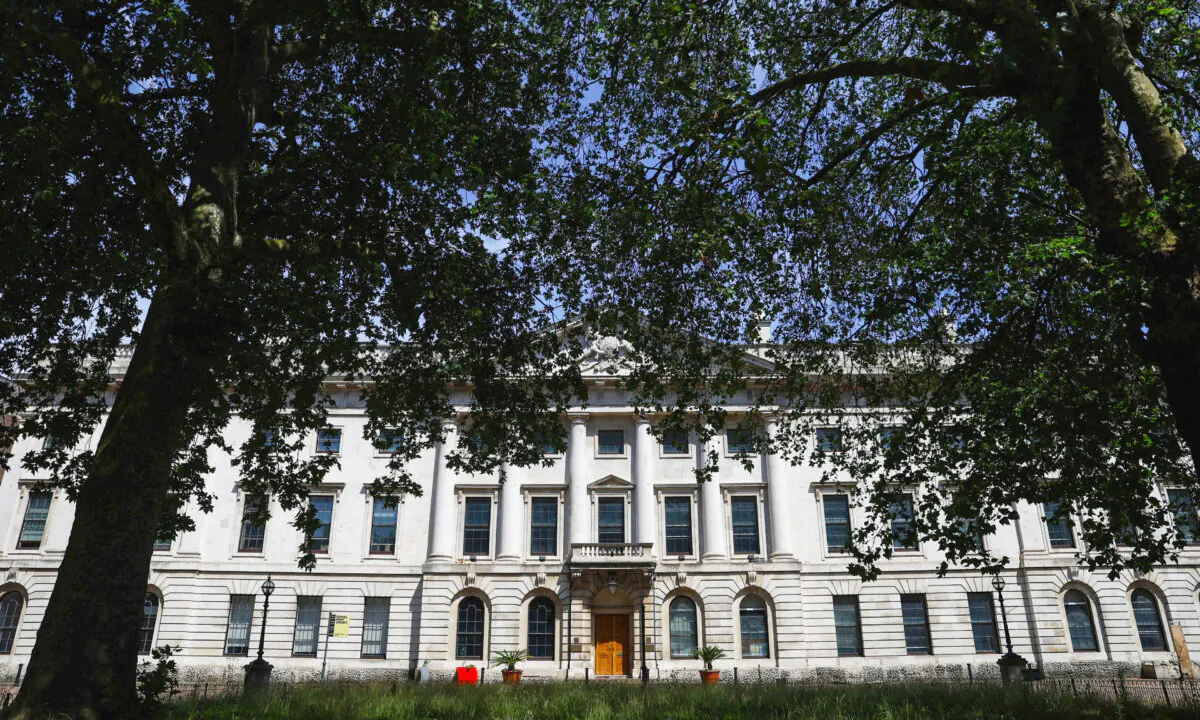

The UK has approved plans for a new, significantly expanded Chinese Embassy in central London, ending a planning dispute and overriding objections from local authorities and lawmakers who raised national security concerns.
The Chinese communist regime purchased the Royal Mint Court site in 2018 and plans to convert it into a much larger embassy than its existing building in London. The site is located in the City of London, the capital’s financial district.
Tower Hamlets Council rejected China’s initial planning application in 2022, citing concerns about security, scale, and local impact. A revised application was submitted in July 2024, shortly after the Labour Party entered government.
The site for the proposed embassy lies close to major data cables and financial infrastructure that underpin the UK’s banking and communications systems, a factor that featured heavily in parliamentary objections.
Approval was granted on Jan. 20 by Secretary of State for Housing, Communities and Local Government Steve Reed.
The UK’s domestic and foreign intelligence agencies said security risks linked to the new embassy could not be fully eliminated but could be managed through mitigation measures.
In a joint letter to Home Secretary Shabana Mahmood and Foreign Secretary Yvette Cooper, MI5 Director General Ken McCallum and GCHQ Director Anne Keast-Butler said it was “not realistic to expect to be able wholly to eliminate each and every potential risk.”
The intelligence chiefs said that the work to develop a package of national security mitigations for the Royal Mint Court site had been proportionate.
Reed said in a Jan. 20 statement that the decision is final unless overturned by a court challenge. He said the approval was based on the recommendation of an independent planning inspector who held a public inquiry between Feb. 11 and Feb. 19, 2025.
Political Backlash
Opposition lawmakers from across the political spectrum criticized the approval.
Shadow Secretary of State for Housing, Communities and Local Government James Cleverly, from the Conservative Party, described it as “a disgraceful act.”
The Conservative Party’s shadow secretary of state for culture, media and sport, Nigel Huddleston, said in a Jan. 20 post on X that there were multiple reasons to oppose the project, including heritage concerns, citing historical sites the new embassy will sit atop, including the Royal Mint and a medieval Cistercian abbey.
The Liberal Democrats said on Jan. 20 that allowing the embassy to proceed was Prime Minister Keir Starmer’s biggest mistake yet. The party’s foreign affairs spokesman, Calum Miller, said the decision “will amplify China’s surveillance efforts” in the UK and endanger the security of UK data.
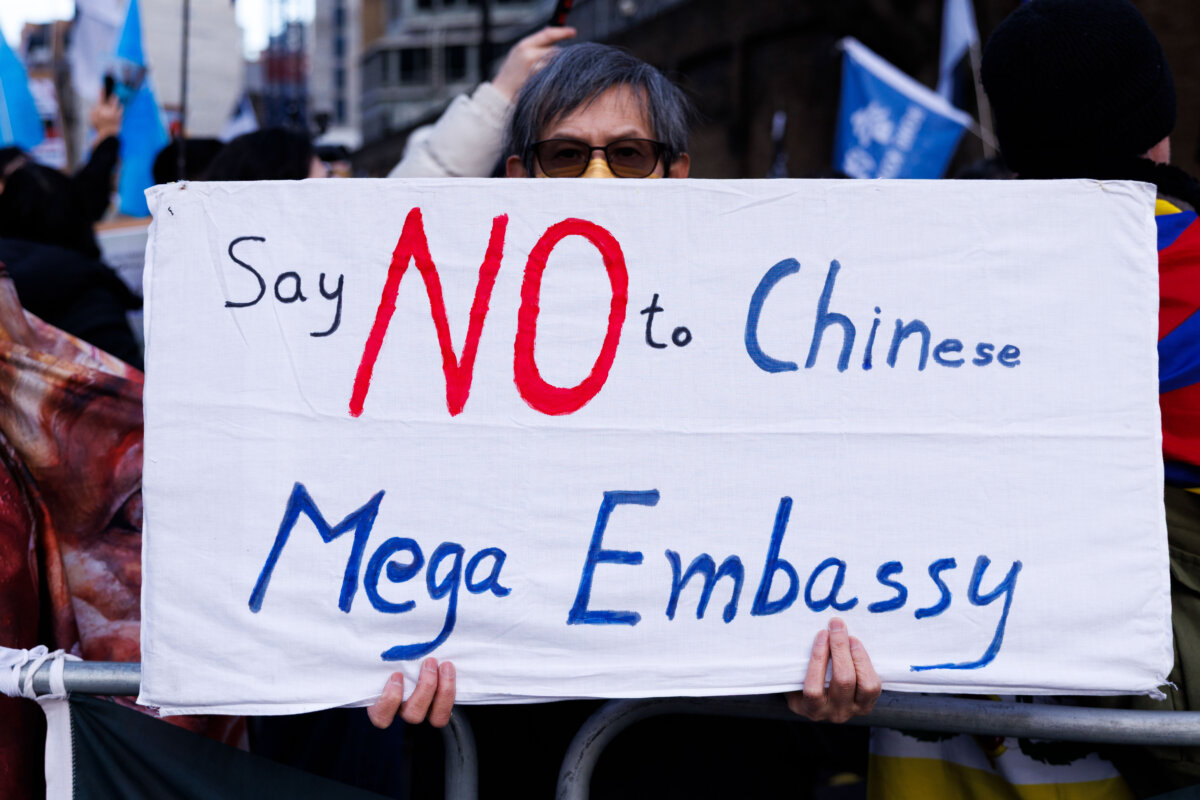
A Reform UK spokesman said the decision to grant the new Chinese embassy planning permission “represents a serious threat to national security.”
Helena Kennedy, Baroness Kennedy of the Shaws, a cochair of the cross-party Inter-Parliamentary Alliance on China, said British lawmakers should take a firmer stance toward Beijing.
“Whilst British parliamentarians, like myself, remain unjustly sanctioned and British citizen Jimmy Lai remains imprisoned on political charges, the UK must take a principled stand,” she said. “We cannot reinforce the dangerous notion that Britain will continue to make concessions—such as granting a mega-embassy—without reciprocity or regard for the rule of law.”
A UK government spokesperson said on Jan. 20 that intelligence agencies had been involved throughout the process and that the planning decision was made independently by the secretary of state for housing. The process began in 2018, when the foreign secretary at the time “provided formal dipolmatic consent for the site.”
The spokesperson said embassy construction was a normal feature of international relations.
“National security is our first duty,” the spokesperson said.
“An extensive range of measures have been developed to manage any risks.”
The spokesperson also said China had agreed to consolidate seven existing diplomatic sites in London into one location, which the government said would provide “clear security advantages.”
 Friends Read Free
Copy
Facebook
Tweet
Friends Read Free
Copy
Facebook
Tweet